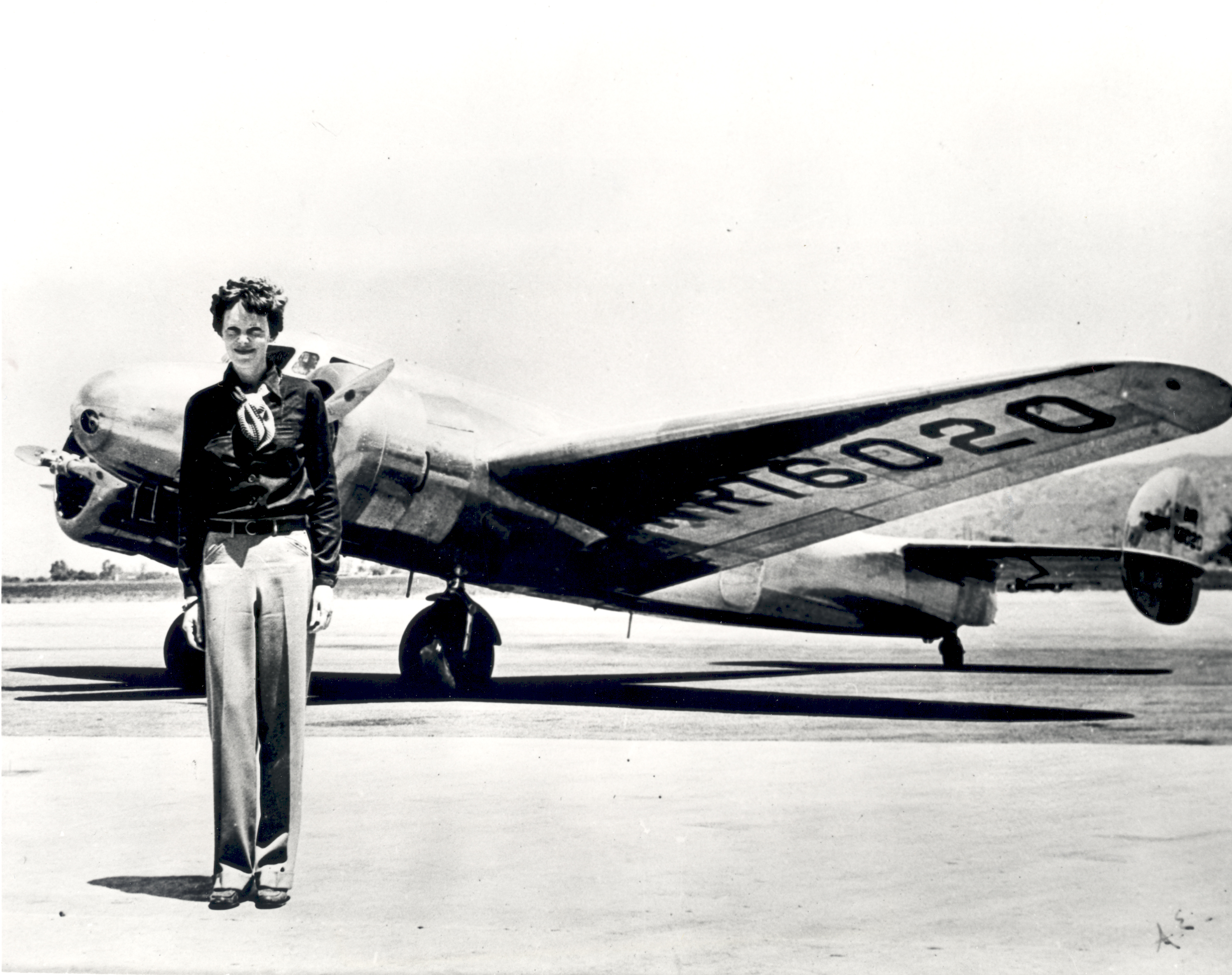
Nearly 90 years after one of aviation’s greatest mysteries captivated the world, a new claim is reigniting debate over what really happened to Amelia Earhart—and this time, the discovery comes from space-age technology.
A veteran pilot says he may have spotted the legendary aviator’s long-lost plane using Google Earth, zeroing in on a remote Pacific island that has long been at the center of speculation.
According to a recent report, Justin Myers, who spent decades flying, began investigating Earhart’s disappearance after watching a documentary about her ill-fated 1937 attempt to circumnavigate the globe. What started as curiosity quickly turned into a detailed analysis—one that combined his aviation experience with satellite imagery.
Instead of simply scanning random locations, Myers approached the mystery from a pilot’s perspective.
He imagined what Earhart and her navigator, Fred Noonan, might have faced in their final moments—low on fuel, disoriented, and searching for a safe place to land. Using that mindset, he focused on Nikumaroro, a small, isolated island in the Pacific Ocean that researchers have long suspected could hold clues to the disappearance.

As he studied high-resolution images of the island, Myers says he noticed something unusual: a dark object measuring approximately 39 feet in length—the same size as Earhart’s Lockheed 10-E Electra aircraft.
That detail immediately caught his attention.
Digging deeper, he claims to have identified additional shapes nearby that could resemble aircraft debris, including what he believes might be part of an engine. While he stops short of confirming the find as definitive proof, Myers says the evidence strongly suggests the remains of a vintage twin-engine plane.
“I can’t say it’s definitely Earhart’s aircraft,” he acknowledged in interviews referenced in the report. “But it matches what you’d expect to see.”
The claim adds a new chapter to a mystery that has fascinated historians, researchers, and aviation enthusiasts for generations.
Earhart and Noonan vanished in July 1937 during a highly publicized attempt to fly around the world. Despite extensive search efforts at the time—and countless theories since—their final location has never been conclusively determined.

Nikumaroro, however, has repeatedly surfaced as a possible answer.
In fact, previous research has pointed to anomalies both on land and underwater around the island. In recent years, even a decades-old aerial photograph from 1938 has been cited as potentially showing wreckage in the area—fueling ongoing investigations.
Myers’ findings, powered by modern satellite imagery, may offer a fresh perspective on those earlier clues.
Still, experts caution that identifying wreckage from space is far from definitive. Environmental factors, natural formations, and image distortions can all create shapes that resemble man-made objects.
For now, the claim remains unverified—but undeniably intriguing.
If proven accurate, it could finally bring closure to one of history’s most enduring mysteries. Until then, the possibility that Earhart’s plane has been hiding in plain sight—visible from above all along—continues to capture the imagination.
Nearly a century later, the search for Amelia Earhart is far from over.