
A sweeping federal fraud case out of California is raising alarming questions about the integrity of hospice care after prosecutors accused a group of healthcare operators of falsely labeling patients as terminally ill—allegedly to cash in on millions in Medicare benefits.
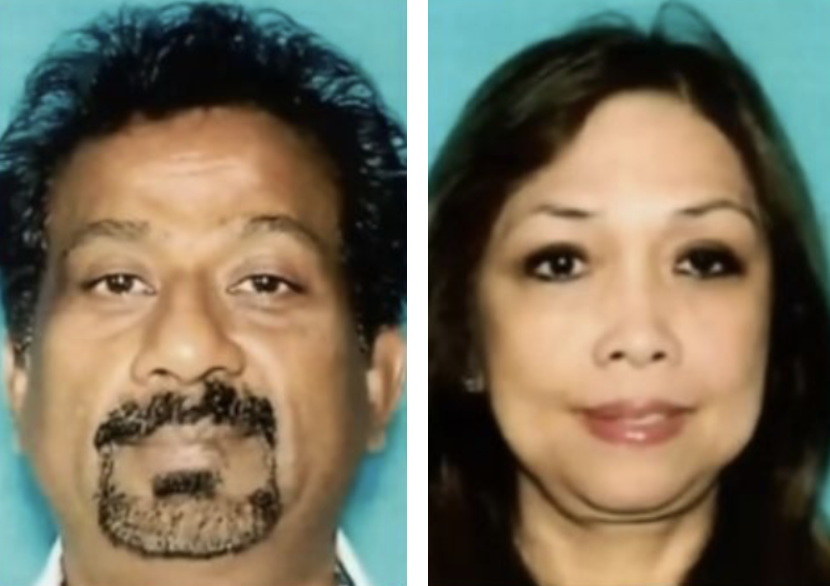
At the center of the case are Gladwin Gill, 66, and his wife, Amelou Gill, 70, who ran a hospice company in the Los Angeles area. According to details first reported by local news outlets and outlined in federal court filings, the couple is accused of orchestrating a scheme that enrolled patients in hospice care even when they were not dying—sometimes without their knowledge.
Prosecutors say the operation, which allegedly involved multiple hospice providers, generated more than $50 million in fraudulent Medicare payments.
One of the most striking examples cited by investigators involves a 95-year-old man identified as V.J., who suffered from Alzheimer’s disease. Despite his age, authorities say there was no medical basis for placing him in hospice care. In fact, his own doctor reportedly never diagnosed him with a terminal condition or referred him for such services.

Instead, V.J. had gone to the hospital for abdominal pain linked to a blockage in his colon. After treatment, he was said to be stable and not in need of end-of-life care. Yet, according to the Justice Department, he was still enrolled—and repeatedly re-enrolled—in hospice services by the company.
Even more troubling, investigators allege that neither V.J. nor his family fully understood he had been placed in hospice care, which typically requires a prognosis of six months or less to live. His daughter reportedly told authorities she had no idea how her father became connected to the hospice provider and said he had never even been seen by one of their doctors.
The complaint suggests this was not an isolated case.
Federal prosecutors claim that numerous patients were similarly enrolled under questionable circumstances. Some were allegedly unaware they had been classified as terminally ill, while others were listed as receiving services that were never actually provided. In certain cases, families reportedly complained that consent forms were not properly explained, leaving patients unaware of what they had agreed to.
Another patient reportedly received routine health checks—such as blood pressure and cholesterol monitoring—but was never told she had a life-limiting condition. Others, investigators say, were confused to learn they had once been told they had only months to live—despite continuing to live years later.
Authorities allege that the defendants falsified medical records and diagnoses to justify hospice enrollment, allowing them to bill Medicare for services intended only for patients nearing the end of life.
The case is part of a broader federal crackdown known as “Operation Never Say Die,” targeting healthcare fraud schemes involving hospice care. Officials say such practices not only drain taxpayer-funded programs but also undermine trust in critical end-of-life services.
“These defendants are accused of exploiting vulnerable patients and the healthcare system for financial gain,” federal officials said in announcing the charges, emphasizing a zero-tolerance approach to such crimes.
Both Gladwin Gill, a psychologist, and Amelou Gill, a registered nurse, now face multiple counts of healthcare fraud and are scheduled to appear in court later this month.
As the case unfolds, it highlights a deeply unsettling possibility: that some patients may have been unknowingly told—on paper, at least—that they were dying, all so others could profit.
For families who rely on hospice care during some of life’s most difficult moments, the allegations are a stark reminder of how critical oversight and accountability remain in the healthcare system.



