
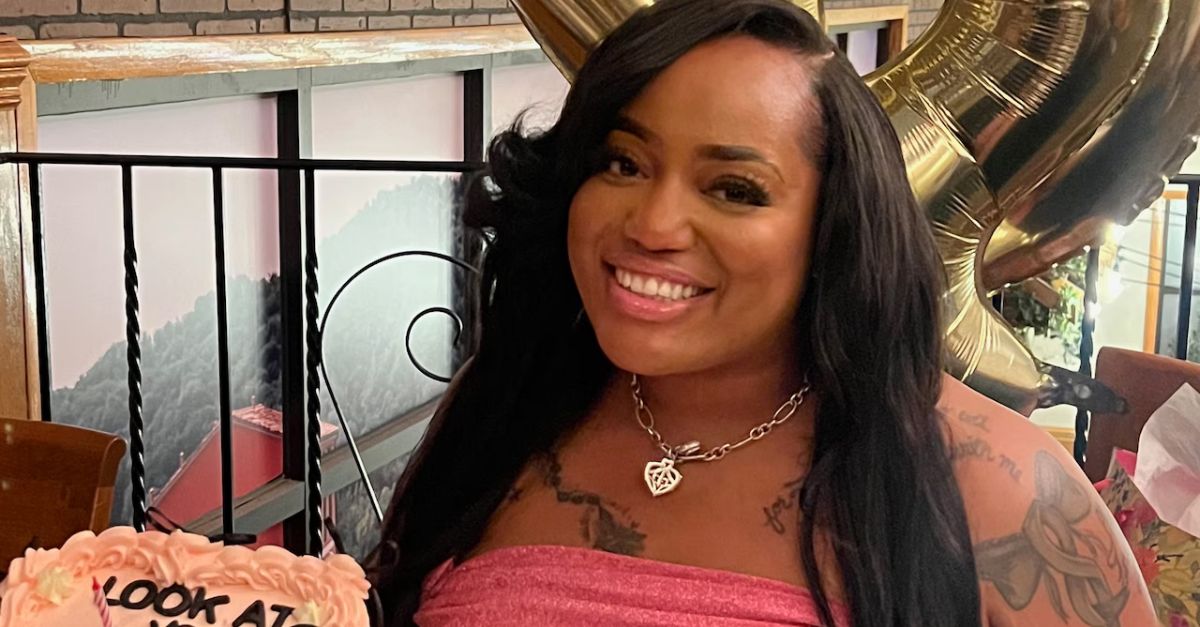
The last thing Tomeka P. Kamwani wanted was to be alone with fear.
By the time the 41-year-old New Jersey mother of four sought legal protection from the man she once planned to marry, she had already endured violence, threats, and a growing sense that something terrible was coming. She did what the system asks victims to do. She reported the abuse. She secured a restraining order. She told authorities she was afraid.
It wasn’t enough.
In the early morning hours of March 28, police in Woolwich Township responded to a home on Broad Street. Inside, they found Kamwani dead from multiple gunshot wounds. The man accused of killing her — her ex-fiancé — was also found dead from an apparent self-inflicted gunshot wound.
Two of Kamwani’s children were inside the home at the time of the shooting. They were not physically injured. But the violence that took their mother now defines the rest of their lives.
Family members remember Kamwani not through the horror of her death, but through the constancy of her love. In a fundraiser created to support her children — Gavyn, Aiden, Bryson, and Ava — she is described as a woman whose entire world revolved around them.
“She poured everything into her children,” her family wrote. “They were her joy, her purpose, and the reason she showed up every single day with strength and love.”
Those who knew her say that wasn’t an exaggeration. Kamwani was present, attentive, and fiercely protective — the kind of mother who built her life around making sure her children felt safe.
That promise of safety was shattered long before the shooting.
According to reports, Kamwani’s ex had been arrested in February after allegedly punching her in the face. Prosecutors said he refused to leave her home and threatened to kill her if she contacted police. During a bond hearing, a prosecutor described chilling details: he allegedly laughed at her fear, told her to “put more locks on the door,” and even showed her a card he used to break into her home.
A judge ultimately allowed him to be released on bond, with the condition that he not contact Kamwani.
By then, she had already taken additional steps to protect herself. She had obtained a restraining order roughly a week before the February arrest. But even that legal barrier — meant to create distance and safety — was allegedly ignored.
What remained was a gap between warning signs and protection.
Now, that gap is measured in absence.
In the days following her death, loved ones gathered for a vigil, holding candles and trying to make sense of what happened. Her aunt, Barbera Brooks Faltz, spoke through disbelief that still hadn’t settled into understanding.
“It’s a shame he had to do that,” she said. “Why would he want to do that? People break up.”
There is no clear answer to that question. What remains instead is the life Kamwani built — and the void left behind.

Four children who were the center of her world must now grow up without the person who anchored it. A family struggles to reconcile the woman they knew with the violence that took her. A community gathers in grief, trying to understand how a series of warnings turned into something irreversible.
In the end, Kamwani is remembered not as a victim alone, but as a mother whose life was defined by devotion.
A woman who did everything she was supposed to do.
And still, it wasn’t enough.



