
She wrote it down before she ever pulled the trigger.
In the end, that may have been the most damning detail of all.
A Washington state woman who meticulously journaled her desire to kill her father — mapping out the act in chilling detail — will now spend decades behind bars after carrying out the plan almost exactly as she described it. Alyssa Bradburn, 33, was sentenced to 28 years and four months in prison for the execution-style killing of her 68-year-old father, Timothy Bradburn, inside their Spokane home.
The case is as disturbing for its violence as it is for its clarity. There was no mystery about who fired the gun. There was no frantic attempt to flee. Instead, there was a notebook — and a confession.
On the night of June 25, 2024, Timothy Bradburn returned home from a trip to Hawaii. As he walked through the front door, he was met with a barrage of gunfire. Prosecutors said his daughter had been waiting for him, weapon ready, after weeks of preparation that included practicing at a local shooting range.
Moments later, she called 911 and calmly reported what she had done.
When police arrived, they found Alyssa Bradburn sitting on the front porch, waiting. She handed officers a journal.
“My journal has my confession and everything in it,” she told them, according to court records. “It’s the result, I killed someone, so you go to jail for that. He wasn’t trying to kill me at the time.”
Those words would echo through the courtroom months later — stark, unflinching, and devastating to any claim of self-defense.
At first, Bradburn tried to justify the killing. She told investigators her father had abused her for years — allegations that included claims he beat her, harmed her dogs, and sexually assaulted her as a child. But those claims were later withdrawn, leaving behind a case defined not by fear in the moment, but by premeditation.
Prosecutors said the journal entries laid bare a calculated plan — not a spontaneous act, not a desperate reaction, but a decision made over time.
“The evidence that was presented during this trial demonstrated an extreme and elaborate degree of planning,” Deputy Prosecuting Attorney Emily Sullivan told the court.
In March, a jury agreed, finding Bradburn guilty of first-degree murder.
By the time she returned to court for sentencing, the focus had shifted from how the crime happened to what it left behind.
In the gallery sat her brother, Trace Bradburn — forced to confront both the loss of his father and the reality of his sister’s actions. He addressed the court directly, his words carrying the quiet weight of someone left to live in the aftermath.
“I just have to live my life with that,” he said. “And it just guts me every day.”
The court issued a no-contact order to ensure he would never have to hear from his sister again.
The defense urged the judge to consider Bradburn’s mental state, arguing she suffers from a condition that blurs the line between fantasy and reality. Her attorney, Brian Raymon, framed the killing as the tragic culmination of untreated mental illness rather than cold calculation.
But the journal told a different story — one of awareness, of consequence, of understanding exactly what she was about to do.
Judge Julie McKay acknowledged that reality as she handed down the sentence.
“Unfortunately, the crime Ms. Bradburn decided to start her criminal history with is the most significant and serious that we have,” she said.
The final sentence — 280 months for the murder, plus an additional 60 months for using a firearm — landed between what prosecutors and defense attorneys had requested. The state had pushed for more than 31 years, citing the deliberate nature of the killing. The defense asked for 25.
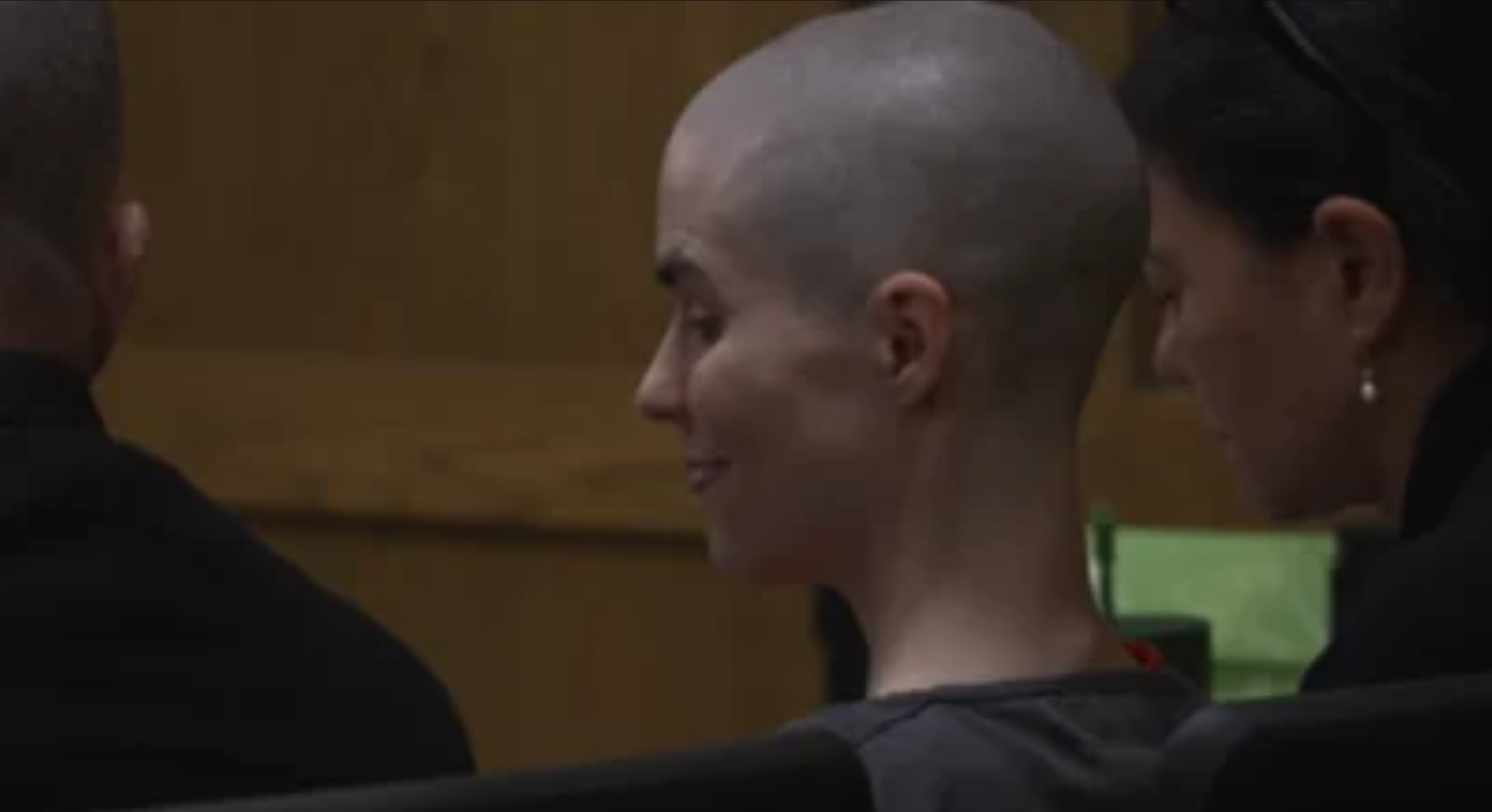
Bradburn declined to speak before sentencing. She offered no explanation, no apology.
According to courtroom reports, she smiled.
It was a small detail, but one that lingered — much like the journal itself. Not just a record of what happened, but a blueprint. A warning written in advance, ignored until it was too late.
In the end, the story of this case is not about a question of who did it. That was never in doubt.
It’s about a plan that existed on paper long before it became real — and a moment when thought turned into action, permanently reshaping a family in the span of a few seconds at the front door.



