
A viral social media controversy is igniting debate about authenticity, race, and the growing role of artificial intelligence in online content after a popular influencer admitted to digitally altering another creator’s image—sparking backlash that continues to intensify.
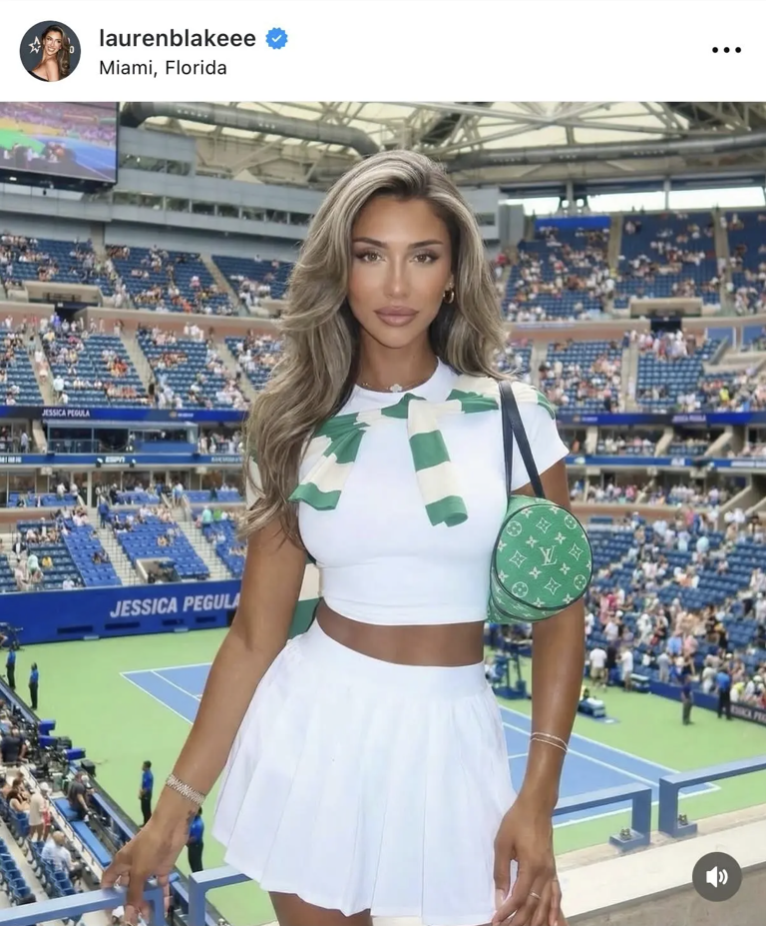
Lauren Blake Boultier, a social media personality with more than 1.6 million followers, is facing criticism after posting a photo that appeared to show her attending a major tennis event. But online users quickly noticed something was off. The image, as first reported by the New York Post, was not original—it had been altered by placing Boultier’s face onto the body of another woman.
That woman was Tatiana Elizabeth, a Black model who had originally posted the image in 2024 after attending the US Open in New York. Side-by-side comparisons shared across social media revealed striking similarities between the two photos, including identical outfits, poses, background details, and even a visible wrist tattoo—indicating the original image had been reused with only the face changed.

As the controversy gained traction, Boultier issued a public apology, acknowledging the post and attributing it to a third-party agency she said handled some of her AI-generated content. In her statement, she said the image did not align with her values and that she had removed it from her account. She also stated she had reached out privately to Elizabeth to apologize and promised to take greater oversight of her content moving forward.
“I take full responsibility,” she said, emphasizing that she would ensure more careful review of future posts.
But the apology has done little to calm the backlash.

Elizabeth has publicly rejected Boultier’s explanation, questioning both the sincerity of the apology and the decision to blame AI tools or external teams. In interviews and social media posts, she argued that the issue goes beyond a single edited image and reflects a broader pattern of Black creators not receiving proper credit or recognition.
“This was something I worked for,” Elizabeth said, referring to her original appearance at the US Open—an opportunity she described as a major milestone in her career. She expressed frustration that her work could be repurposed so easily without acknowledgment, particularly given the challenges she says Black women often face in gaining visibility in the industry.
At the same time, Elizabeth has made it clear she does not support harassment directed at Boultier, though she believes the criticism is a direct consequence of the influencer’s actions.
The incident has also reignited conversations about the use of AI in content creation. As digital tools become more advanced, the ability to manipulate images—sometimes convincingly—has grown rapidly. While some creators use these tools for creative expression, others warn that the lack of transparency can blur the line between originality and appropriation.

For many observers, the controversy highlights a larger issue: who gets credit in the digital age, and how easily someone else’s work can be repackaged for mass audiences.
As the debate continues, Boultier’s case serves as a high-profile example of how quickly online content can spark real-world consequences—and how audiences are increasingly demanding accountability in an era shaped by technology and influence.



