
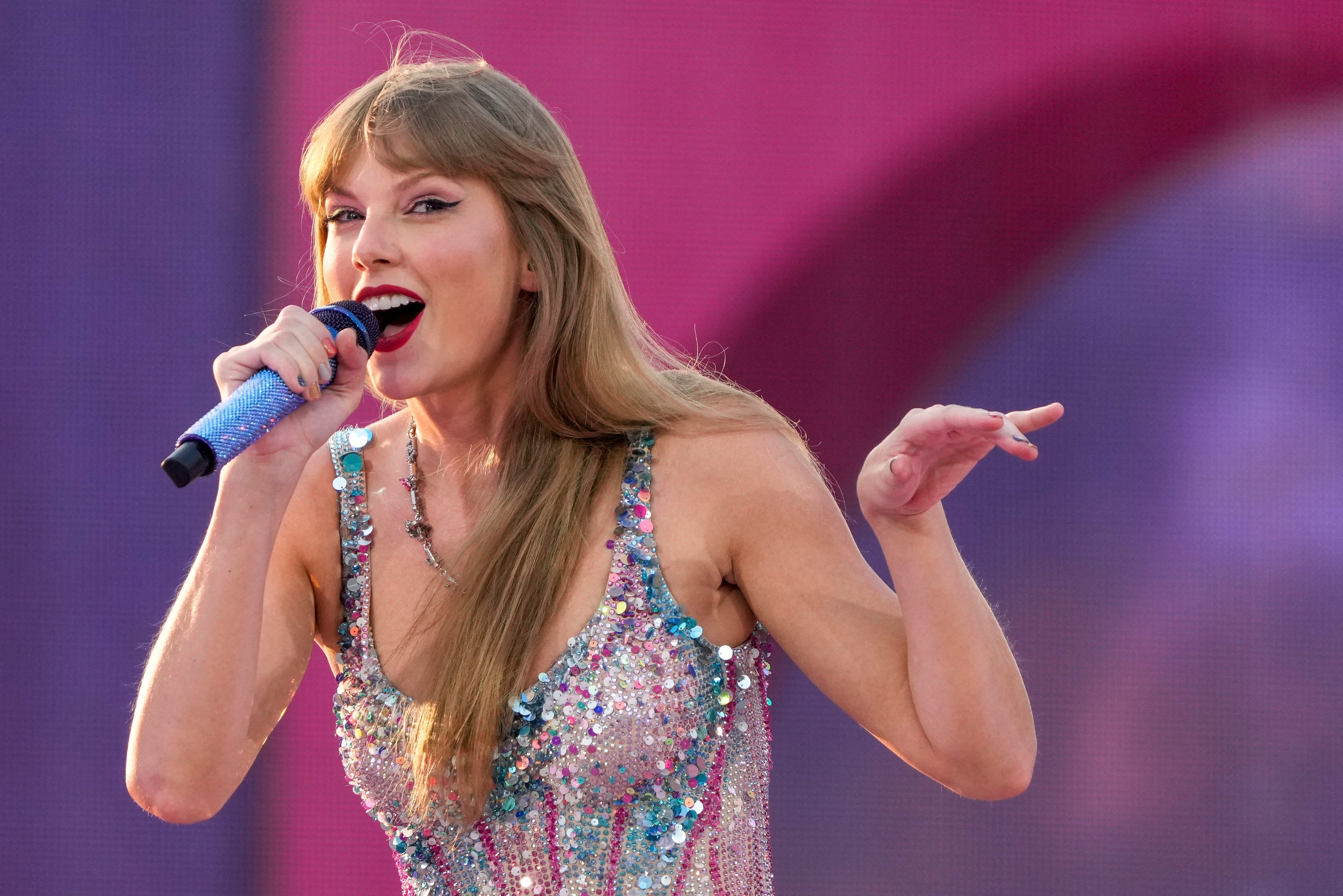
The stage is set.
And this time, it’s a courtroom.
Taylor Swift is facing a federal lawsuit over the title of her 2025 album, The Life of a Showgirl — a name that a Las Vegas performer says doesn’t just overlap with her brand, but threatens to erase it.
The suit was filed by Maren Wade, a former showgirl who has spent more than a decade building a persona and business around the phrase “Confessions of a Showgirl.” What began as a column in 2014 has since expanded into a podcast, live performances, and a broader entertainment identity — one she formally trademarked.
Now, she says that identity is being overshadowed.
According to the complaint, when Swift and her label released The Life of a Showgirl, the rollout was anything but subtle. The phrase quickly appeared across merchandise, packaging, and promotional materials — saturating the same cultural and commercial space Wade had been cultivating for years.
The core of the dispute comes down to a familiar legal question: confusion.
The U.S. Patent and Trademark Office has already weighed in, declining Swift’s attempt to trademark the album title on the grounds that it is too similar to Wade’s existing mark. The shared phrase “of a Showgirl,” combined with overlapping use in musical and theatrical contexts, raised the possibility that consumers could assume a connection between the two.
That’s exactly what Wade claims is already happening.
Despite her earlier use of the name, she argues that the scale of Swift’s platform has flipped perception — making it seem as though Wade is the one borrowing from Swift, rather than the other way around. In the filing, her legal team warns that this “erosion” of her trademark could jeopardize the entire brand she has spent years building.

For Swift, the options are stark.
Fight the claim in court — or buy it out.
It’s a familiar tension in entertainment law: the collision between an independent creator’s long-built identity and the gravitational pull of a global superstar. One built slowly, over years. The other capable of redefining a phrase almost overnight.
Swift has not publicly responded to the lawsuit.
But the stakes are clear.
Because this isn’t just about a title.
It’s about who gets to own the story behind it.



