
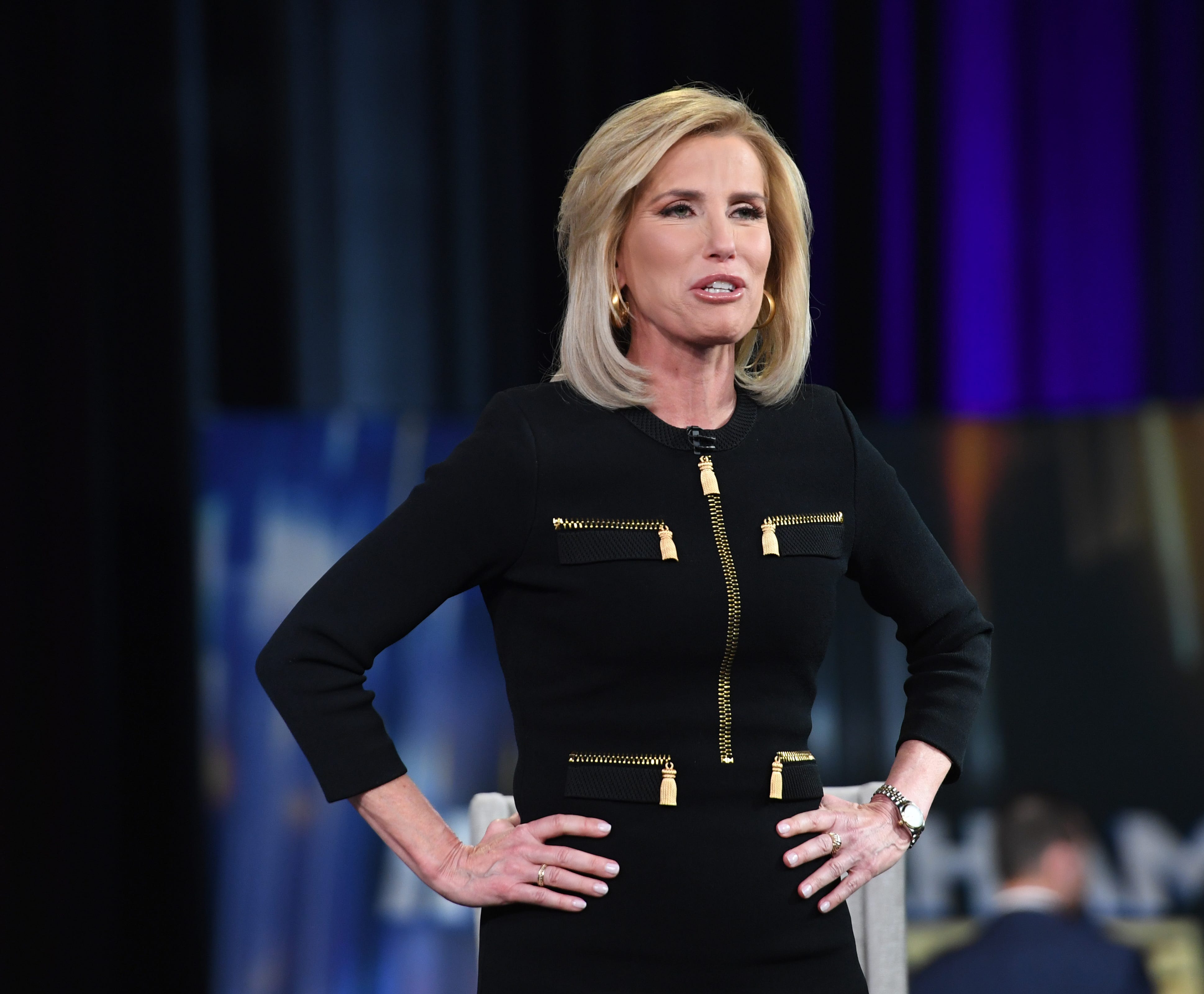
A familiar voice in President Donald Trump’s media orbit is now asking a question that once seemed unthinkable: did the president fully understand the risks of war with Iran before the United States moved toward escalation?
On Monday night, Laura Ingraham—one of Trump’s most consistent allies on Fox News—used her primetime show to openly question whether the administration had grasped the potential consequences of a rapidly intensifying conflict in the Middle East.
“With different leaders in place, Iranian negotiators may have little knowledge about what their government is willing to concede,” Ingraham said on The Ingraham Angle. “So if we cannot come to some type of peace deal with people who can’t be trusted, then what?”
The question hung in the air, but it was what came next that signaled a shift.
“Was the president fully briefed about the risks of all of this from the beginning?” she asked. “And was he then able to take it all in and understand the complexity of this?”
For a figure who has long defended Trump through political firestorms, the tone was notable—not a rebuke, but a public airing of doubt.
The moment comes as the administration faces growing scrutiny over how the conflict with Iran has been handled behind closed doors. A report from CNN on Tuesday suggested that key risks may have been minimized during internal discussions, particularly in a meeting led by Defense Secretary Pete Hegseth.
According to the report, “nobody in the room” emphasized how quickly the situation could spiral out of control—a revelation that appears to echo Ingraham’s concerns.
That sense of uncertainty is now bleeding into the broader conservative movement.
Trump himself has struck an increasingly aggressive tone. In a post on Truth Social, he warned that if Iran does not agree to a deal and reopen the Strait of Hormuz, U.S. forces could escalate dramatically—targeting critical infrastructure including power plants, oil facilities, and desalination systems.
The rhetoric has fueled fears that what began as a limited engagement could expand into a far more destructive conflict.
Behind the scenes, frustration is reportedly mounting. According to a report from Politico, younger and more ideologically hardline staffers inside the White House are increasingly uneasy with both the war itself and the administration’s messaging.
“They didn’t love the war to start with,” one source told the outlet, describing internal communications as “brutal” and inconsistent.
On Capitol Hill, that unease is becoming more explicit.
Representative Nancy Mace said she would not support sending U.S. troops into Iran following a classified briefing.
“I will not support troops on the ground in Iran,” she wrote, signaling a clear line that some Republicans are unwilling to cross.
Similarly, Representative Tim Burchett suggested there is little appetite in Congress for a ground war, noting bipartisan resistance to such a move.
Taken together, the comments point to a rare moment of fracture within Trump’s political coalition—one driven not by scandal or personality, but by the tangible risks of military escalation.
For years, Trump’s relationship with his media allies has been defined by alignment, with figures like Ingraham often serving as both defender and amplifier of his agenda. Her willingness to raise doubts, even cautiously, suggests that the war is testing that alignment in new ways.

Still, Ingraham stopped short of outright criticism. Her questions were framed less as accusations and more as an attempt to understand how the administration arrived at this moment—and whether it fully grasped what might come next.
But in the current political climate, even that level of uncertainty carries weight.
As the conflict continues to unfold, the key question may not just be what happens on the ground in Iran, but how much support the president retains at home—particularly among those who have, until now, rarely broken ranks.
Because when even the most loyal voices begin asking whether the risks were understood, it signals something deeper than disagreement. It signals doubt.



