
A quiet memo, stamped with urgency and partially locked behind “top secret” classification, is now fueling fresh accusations that a top Trump official misled Congress about the safety of America’s airports.
Kristi Noem, who was recently ousted as head of the Department of Homeland Security, is facing scrutiny after an internal watchdog contradicted her sworn testimony about security fixes at TSA checkpoints.
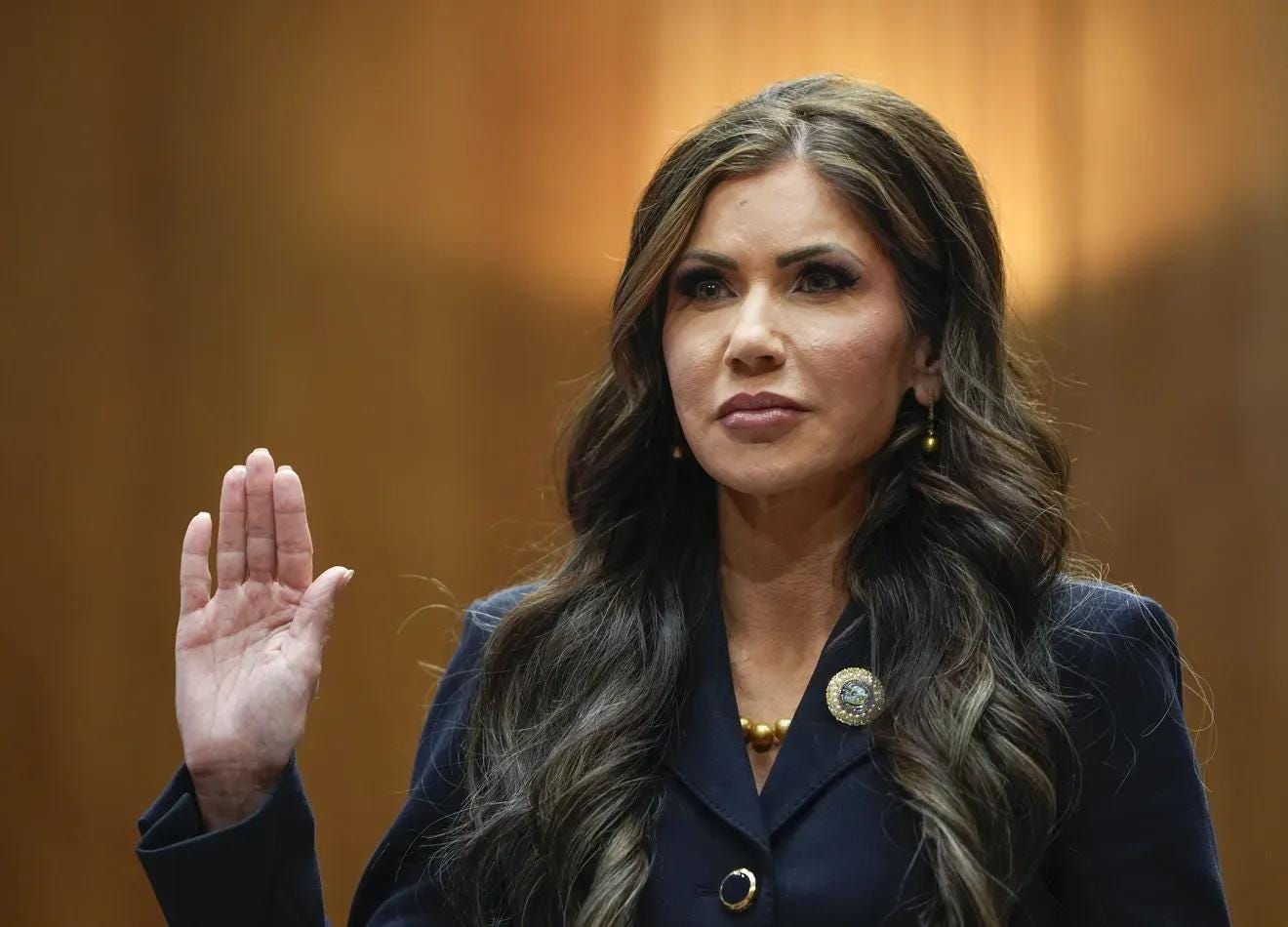
During a congressional hearing, Noem assured lawmakers that “all of the recommendations” from an inspector general report on airport vulnerabilities had been addressed.
But according to Joseph Cuffari, that claim doesn’t hold up.
In a March 4 memo, Cuffari wrote that his office had received no evidence — “written or oral” — showing that the Department of Homeland Security or the Transportation Security Administration had implemented the recommended fixes.
The disconnect raises a stark question: were lawmakers given a false sense of security?

The inspector general’s report flagged “serious vulnerabilities” in airport screening procedures, including concerns tied to a policy allowing passengers to keep their shoes on at security checkpoints — a change that has drawn quiet concern within the agency.
One of the most alarming findings remains largely hidden. A key portion of the report was designated “top secret,” with access restricted to just 13 individuals across the federal government — including a small number of members of Congress, DHS personnel, and a single official within the Executive Office of the President.
Even within those limited circles, the message appears to have been clear.
Cuffari’s memo explicitly states that repeated requests for documentation showing corrective action went unanswered. “OIG has not received such information,” he wrote, urging officials to provide proof of any steps taken to address the vulnerabilities.
The timeline only deepens the concern. The watchdog’s warnings were issued months earlier, yet by the time of Noem’s testimony, there was still no documented response.
The controversy adds to mounting questions about accountability inside the agency — and whether political assurances are outpacing operational reality.
For travelers, the implications are unsettling.
Airport security is designed to project certainty: a system that, while imperfect, is constantly tightening its defenses. But internal warnings left unresolved — and potentially misrepresented — suggest cracks that are harder to see from the passenger line.
For now, the gap between what was said publicly and what was documented privately is at the center of the storm.
And in a system built on trust, that gap may prove to be the most dangerous vulnerability of all.



