
The doors closed on a classified briefing — and moments later, the political fallout spilled into public view.
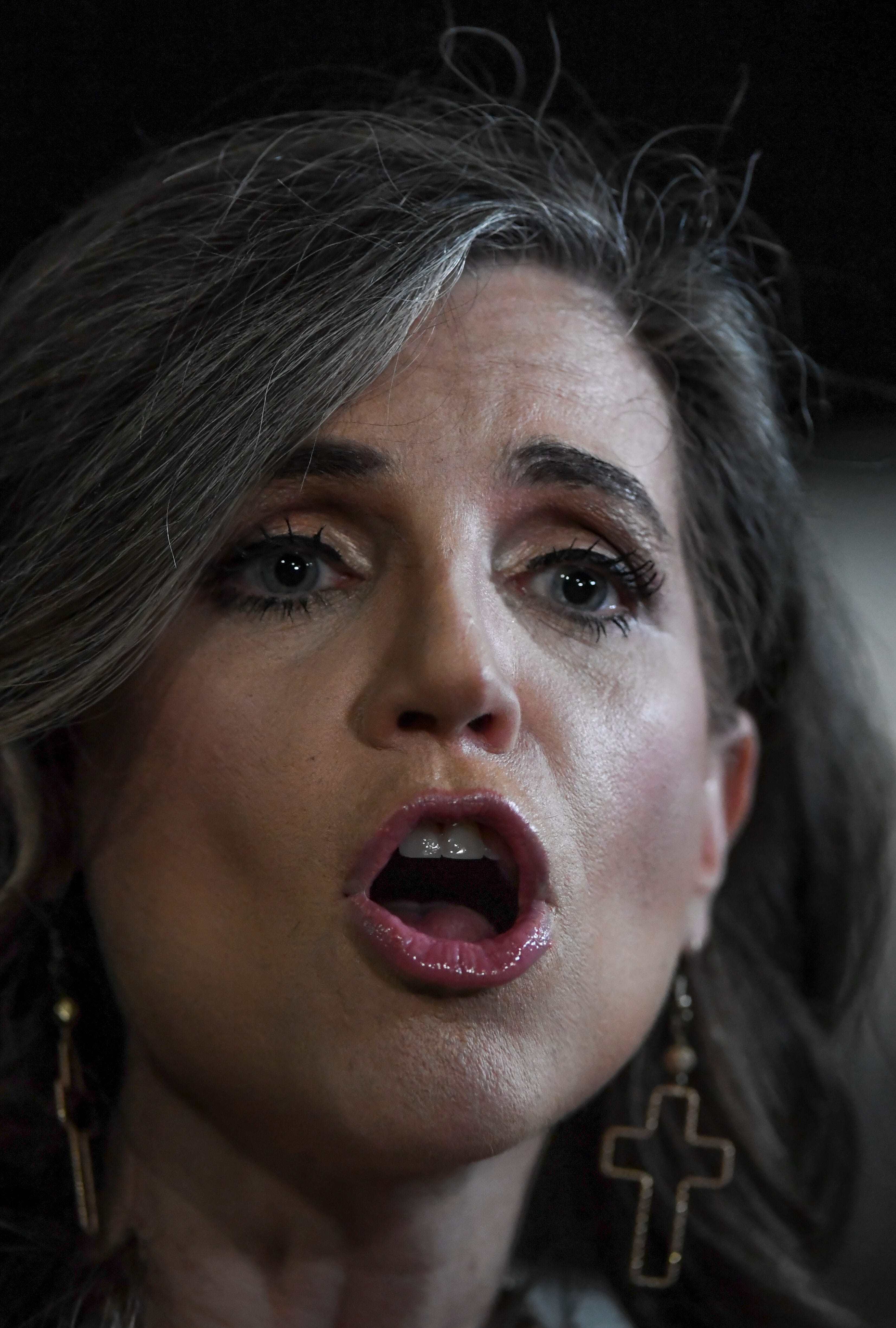
Nancy Mace walked out of a House Armed Services Committee briefing on Iran and immediately went on the offensive, accusing Washington of steering the United States toward a deeper war.
“I will not support troops on the ground in Iran,” she wrote, warning that what she heard behind closed doors only hardened her opposition.
Her message was blunt: this looks too familiar.
Mace compared the current U.S.-Israel campaign against Iran to the Iraq War — a conflict that defined a generation of American foreign policy and left lasting political scars.
“Washington’s war machine is hard at work,” she wrote. “They are trying to drag us into Iran to make it another Iraq.”
The comments mark a growing rupture within the Republican Party, particularly among figures aligned with the “America First” movement that helped propel Donald Trump back to power. Trump campaigned on ending foreign conflicts, famously promising, “I’m not going to start a war. I’m going to stop wars.”
Now, with the Iran conflict entering its fourth week, some of his own allies are openly questioning whether that promise still holds.
Mace went further than most, suggesting that lawmakers are being told one story in private and another in public.
“The justifications presented to the American public… were not the same military objectives we were briefed on,” she said, calling the discrepancy “deeply troubling.”
Her concerns echo a broader wave of skepticism inside Trump’s base. Media figures like Tucker Carlson and Megyn Kelly have also criticized the conflict, while former counterterrorism official Joe Kent has gone further — claiming Iran posed “no imminent threat” before resigning over the war.
Public opinion appears to be shifting as well. Recent polling shows only about a third of Americans believe the war is justified, with nearly half opposing it.
Meanwhile, the military footprint is growing.
Roughly 2,000 troops from the 82nd Airborne Division have been ordered to deploy to the Middle East, joining thousands of Marines already moving into the region. Officials have not disclosed exactly where those forces will be positioned.
For critics like Mace, that escalation raises a familiar fear: that a limited operation could quietly expand into something far larger.
Inside Washington, the divide is no longer subtle.
On one side are those backing the administration’s argument that Iran posed an imminent threat tied to nuclear ambitions and missile development. On the other are voices like Mace, warning that the country is drifting toward another prolonged conflict without clear public consent.



