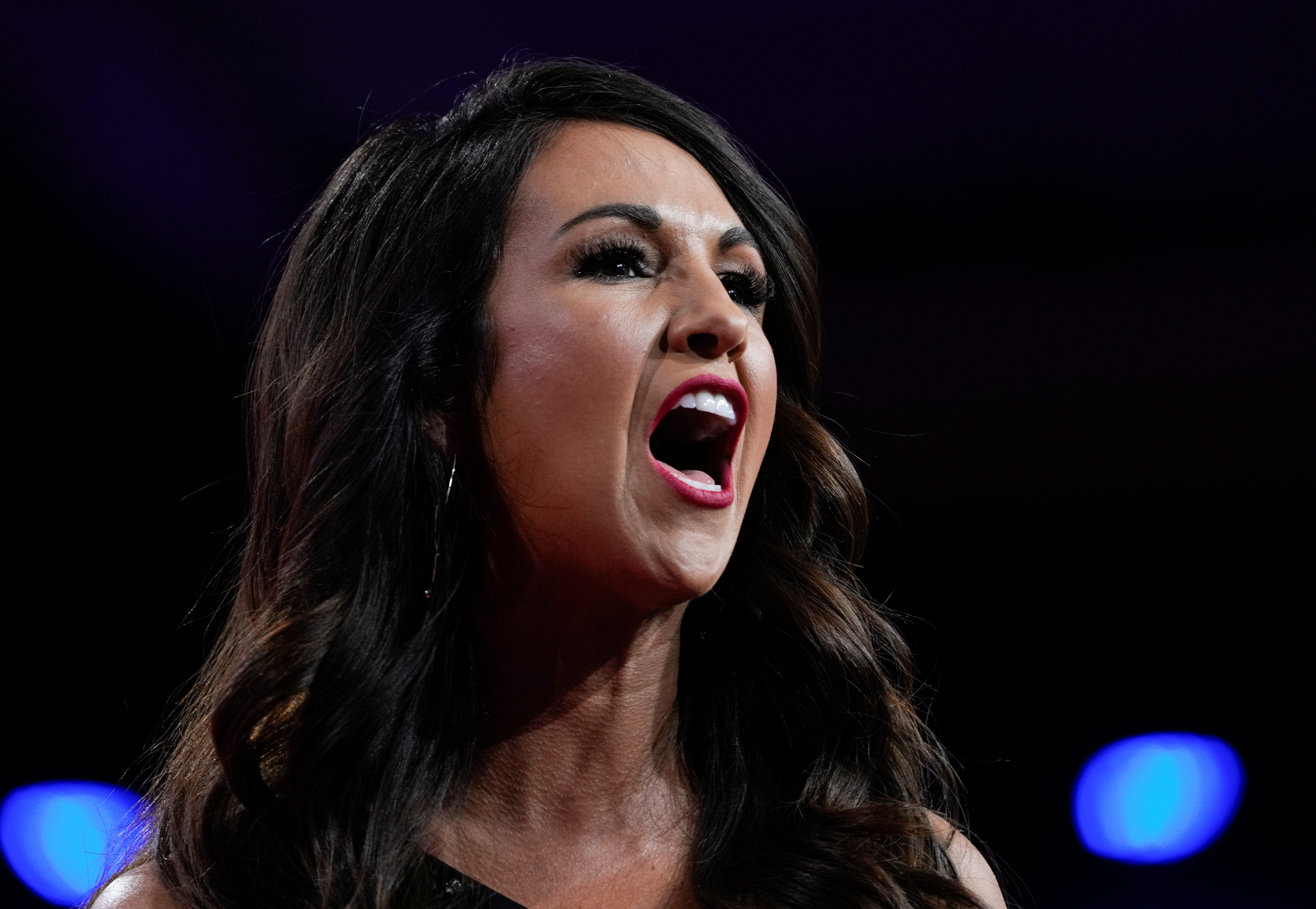
The MAGA coalition is showing fresh cracks under the heat of war.
Representative Lauren Boebert, one of President Donald Trump’s most reliable allies, has once again broken ranks — this time over a staggering $200 billion proposal to fund the administration’s escalating conflict with Iran. And unlike the usual quiet dissent, Boebert made her rebellion loud, blunt, and unmistakable.
“No. I am a no,” she told CNN’s Manu Raju, drawing a hard line against any war supplemental. “I am so tired of spending money elsewhere. I am tired of the industrial-war complex getting all of our hard-earned tax dollars.”
The comments land like a political flare in a Republican Party that has largely marched in lockstep behind Trump’s aggressive posture abroad. But as the price tag for war balloons, even loyalists are starting to flinch.
According to reports, the first six days of the conflict alone burned through more than $11.3 billion — a figure that doesn’t include the massive deployment of troops and military hardware now crowding the Middle East. Behind closed doors, Pentagon officials have warned Congress that the total cost could climb to $200 billion.
Defense Secretary Pete Hegseth offered little apology for the price. “It takes money to kill bad guys,” he said flatly, signaling the administration’s intent to return to Congress for full funding.
But Boebert isn’t buying it — and she’s framing her opposition in stark, populist terms.
“I have folks in Colorado who can’t afford to live,” she said. “We need America First policies right now, and that? I’m not doing that.”
Her defiance echoes a familiar strain of MAGA politics — one that distrusts foreign entanglements and rails against what she called the “industrial-war complex.” It also places her in rare alignment with a small but growing faction of Republicans uneasy with the scale of the proposed spending.
Congressman Scott Perry went even further, suggesting the U.S. shouldn’t be footing the bill at all. “I would actually like to see Iran pay for this,” he said, dismissing the projected costs outright.
Others struck a more cautious tone. Senator Roger Marshall called the $200 billion estimate “a high number,” a diplomatic understatement that nonetheless signals discomfort inside the GOP.
Still, Trump himself has brushed aside concerns about the cost, calling it “a small price to pay to make sure that we stay tippy-top” — a remark that underscores the widening gap between the party’s leadership and its increasingly restless rank-and-file.

For Boebert, this isn’t the first time she’s crossed the president. She previously broke with Trump over demands to release the Epstein files — a move that rattled MAGA circles and raised questions about loyalty in a movement built on it.
Soon after, Trump vetoed a bipartisan Colorado water project tied to Boebert’s district, prompting her to publicly question whether the decision was political retaliation.
“I sincerely hope this veto has nothing to do with political retaliation for calling out corruption and demanding accountability,” she said at the time.
Now, with billions on the line and a war intensifying overseas, the stakes are far higher — and the fractures harder to ignore.
What was once a unified front is beginning to splinter, as the cost of war collides with the promise of “America First.” And in that collision, even Trump’s fiercest allies are starting to ask a dangerous question:
How much is too much?