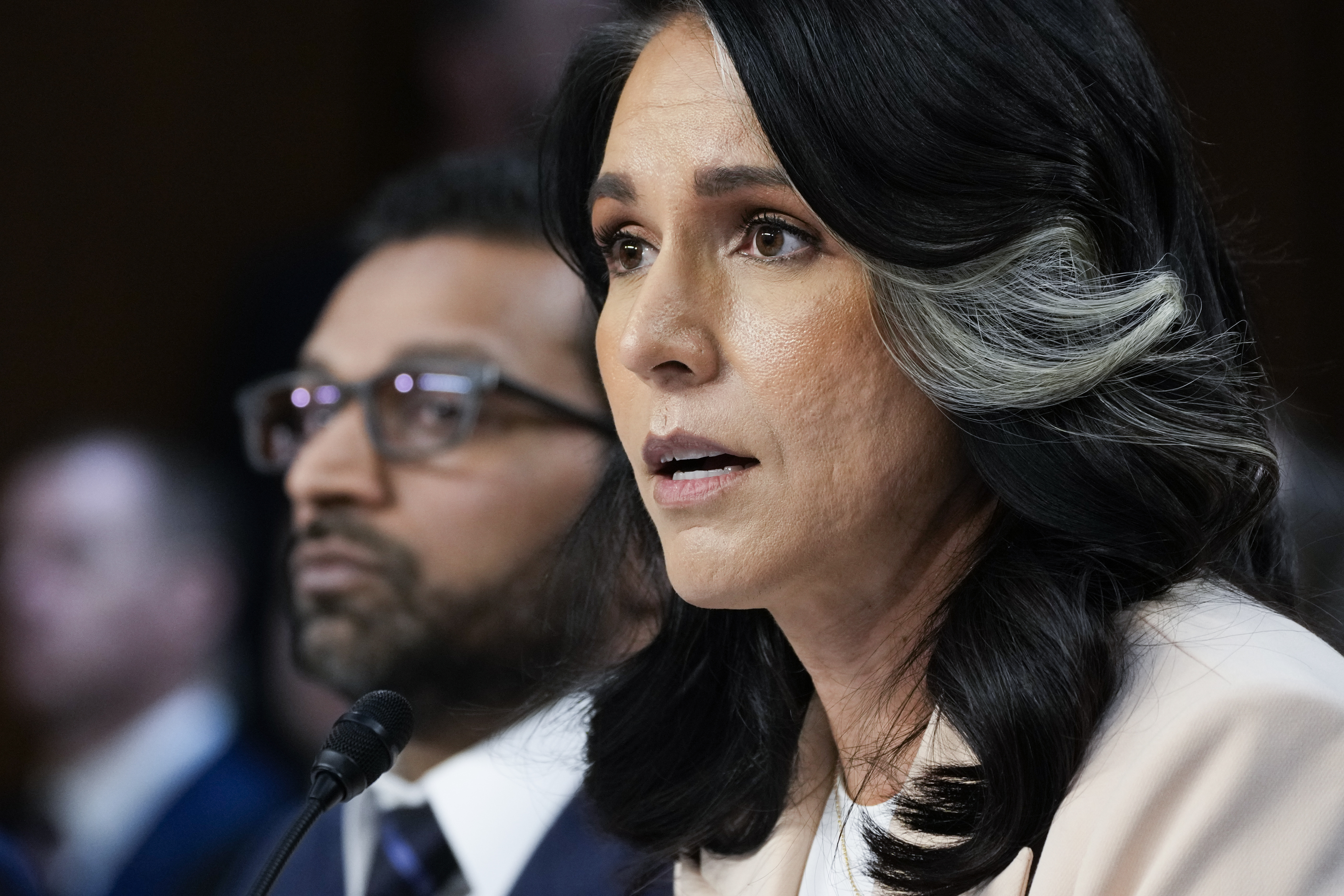
The lights were still burning inside the Office of the Director of National Intelligence when Joe Kent walked out and Tulsi Gabbard ducked for cover.
Kent, the head of the National Counterterrorism Center, handed in a resignation letter that read like a live grenade: “I cannot in good conscience support the ongoing war in Iran.” No apology. No ambiguity. Just a straight shot through the heart of Washington’s endless war machine.
But the explosion didn’t come from Kent. It came from what Tulsi Gabbard didn’t say next.
Hours later, the former congresswoman-turned-DNI offered a statement that felt like smoke on glass: “President Trump concluded that the terrorist Islamist regime in Iran posed an imminent threat, and he took action based on that conclusion.”
That was it. No word on whether she agreed. No judgment on the war itself. Just a careful nod toward the Commander in Chief while the room filled with static.
To some, it was silence. To others, betrayal.
Libertarian firebrand Glenn Greenwald called her “pathetic, craven, desperate for power — a total and permanent drain of integrity.”
Former Obama national security aide Tommy Vietor was blunter: “A statement clearly made in response to Kent, but one that never says if she supports the war.”
Sam Stein at The Bulwark said it plain: “This neither contradicts Kent nor defends Trump. It says nothing.”
ABC’s Jonathan Karl drilled in deeper: “Nowhere in this statement does she say she agrees Iran posed an imminent threat — or that the intelligence supports it. She just says the president said so.”
And then came Richard Hanania, low and lethal as a midnight whisper: “What a worm this woman is. Of all the people who’ve grabbed onto the Trump train, she’s done so with the least to show for it — and the least plausible story of how it fits with her principles.”
It wasn’t just what she didn’t say. It was the way she said it — sterile, bloodless, buried in bureaucracy while missiles flew and Kent walked out of the building.

The irony was thick enough to spread on toast. Tulsi Gabbard, once the anti-war darling, now the intelligence chief parroting war-speak without saying the word herself. Her fans said she was playing chess. Her critics said she’d folded into the machine.
Either way, her silence echoed louder than Kent’s departure.
The question still lingers like cordite in the air: Did the Director of National Intelligence believe the war was justified? Or did she just believe in keeping her job?
Because in the smoke and mirrors of D.C., sometimes the most dangerous answer is the one you never give.