
The long-simmering battle over the government’s handling of the Jeffrey Epstein files has erupted into a full-blown confrontation, with Congress now compelling Attorney General Pam Bondi to answer for what lawmakers describe as possible “mismanagement” of one of the most controversial investigations in modern memory.
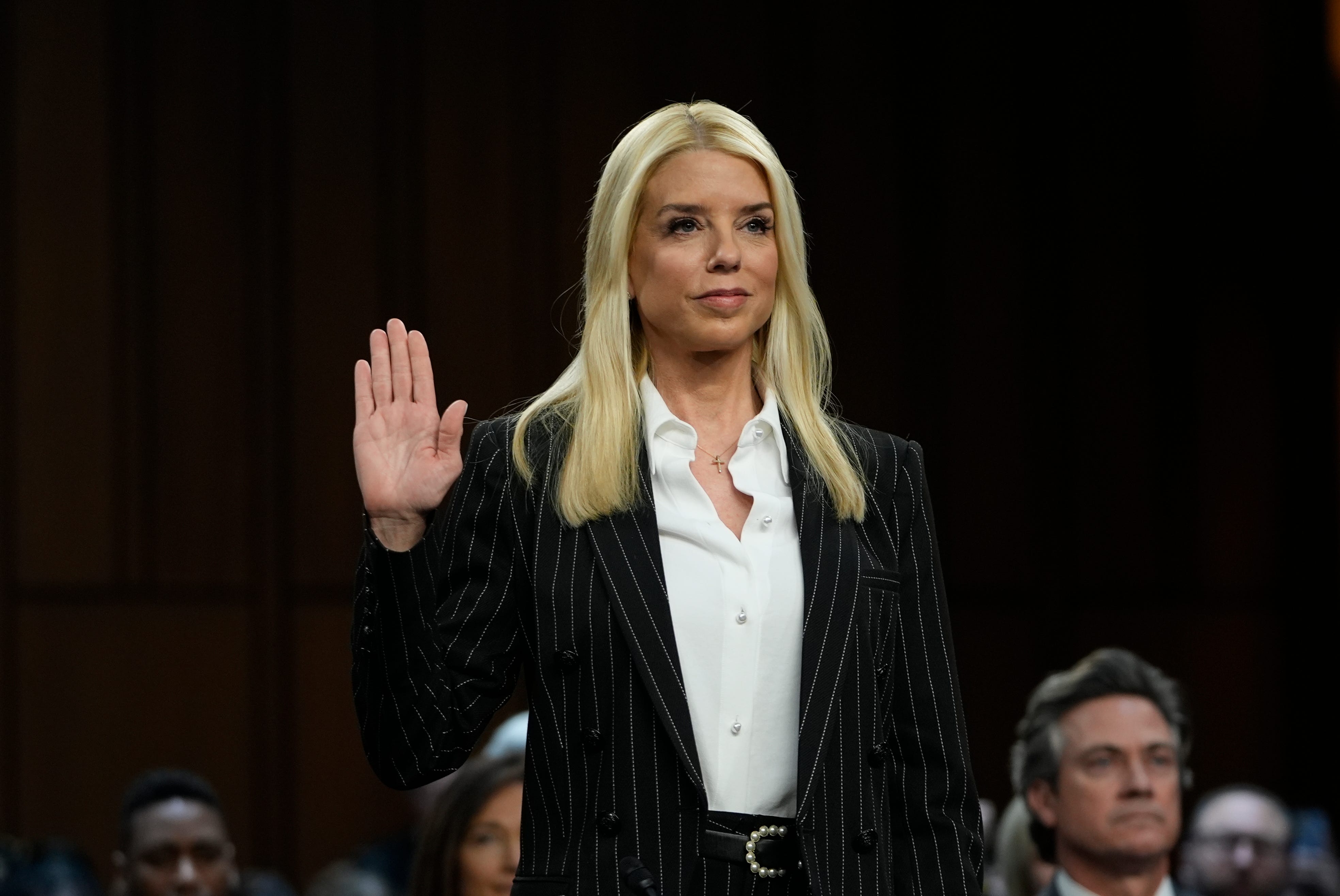
House Oversight Committee Chair James Comer issued a formal subpoena Tuesday ordering Bondi to sit for a deposition on April 14, escalating tensions between the Department of Justice and lawmakers demanding greater transparency.
At the heart of the dispute: how the Justice Department has handled millions of pages of documents tied to Epstein and his associate, Ghislaine Maxwell, who was convicted in 2021 on sex trafficking charges.
In a sharply worded letter accompanying the subpoena, Comer said the committee is reviewing whether the investigation — and the release of related records — has been mishandled. He emphasized that Bondi, as attorney general, is “directly responsible” for overseeing both the review and disclosure of those files.
Lawmakers say the inquiry could shape future legislation aimed at strengthening federal efforts to combat sex trafficking and reform the use of non-prosecution and plea agreements in cases involving sexual exploitation.
The Justice Department, however, is pushing back — hard.
A DOJ spokesperson dismissed the subpoena as “completely unnecessary,” arguing that Bondi has already made herself available to lawmakers and that Congress has been invited to review unredacted materials directly at the department.
The department also noted that Bondi and Deputy Attorney General Todd Blanche are scheduled to brief committee members behind closed doors, signaling that at least some cooperation is ongoing even as the public dispute intensifies.
Still, the subpoena reflects months of mounting frustration on Capitol Hill.
Earlier this month, the House Oversight Committee voted to compel Bondi’s testimony, with five Republicans breaking ranks to join Democrats — a rare bipartisan rebuke that underscored the political pressure surrounding the Epstein files.
Criticism of Bondi has centered on the chaotic rollout of the documents. While millions of pages have been released under the Epstein Files Transparency Act, the process has been plagued by controversy.
At one point, the Justice Department was forced to pull thousands of documents after they were released with insufficient redactions, exposing names and identifying details of victims — a move that drew sharp condemnation from lawmakers and advocates alike.
Compounding the backlash, tens of thousands of files remain out of public view. The DOJ has acknowledged that roughly 47,000 documents were taken offline for further review, raising fresh questions about what remains hidden and why.
The issue has dogged Bondi since she took office.
In early 2025, she publicly stated that the Epstein files were “on her desk,” raising expectations of a sweeping disclosure. But months later, the department withheld additional materials and issued a memo stating there was no evidence of a so-called “client list” and insufficient grounds to charge other individuals.
That apparent reversal only intensified scrutiny — and ultimately helped drive Congress to pass legislation forcing broader transparency.

The files themselves, sprawling and politically sensitive, have drawn attention for their references to high-profile figures, including President Donald Trump. While his name appears in the records, he has repeatedly denied any wrongdoing and has not been accused of a crime. Epstein, the financier at the center of the case, died by suicide in a New York jail cell in 2019 while awaiting trial.
Now, with Bondi under subpoena and lawmakers pressing for answers, the fight over what the government knew — and what it chose to reveal — is entering a new phase.
Behind closed doors and soon under oath, one of the most scrutinized document troves in recent history is back at the center of Washington’s power struggle.



