
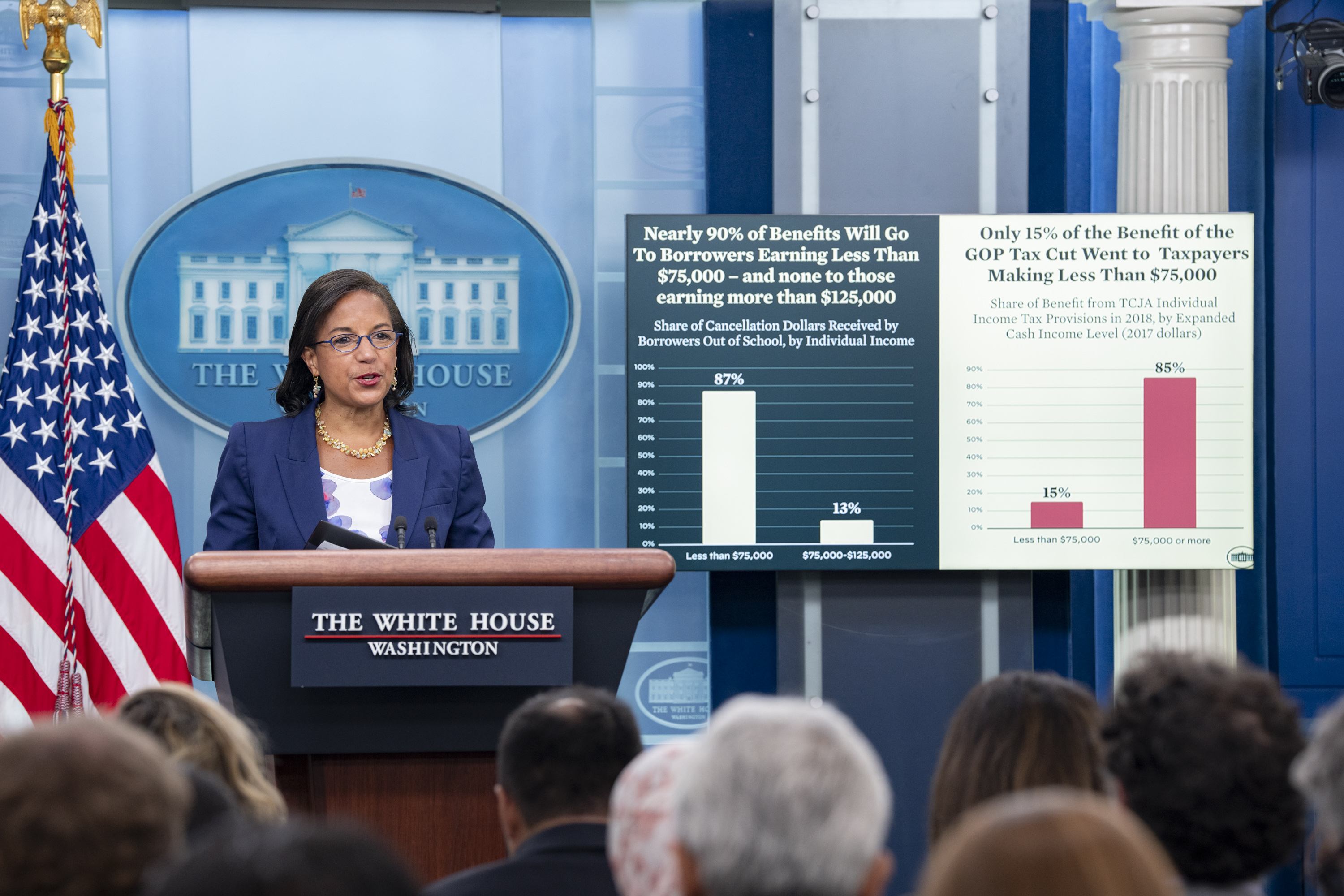
A political firestorm is brewing after comments from a former top Biden administration official sparked accusations of potential “payback” against companies tied to former President Donald Trump.
The controversy centers on remarks made by Susan Rice, who previously served as domestic policy adviser under President Joe Biden and held key roles during the Obama administration. In a recent podcast appearance referenced in Fox News reporting, Rice suggested that corporations, universities, law firms, and media organizations that aligned with Trump-era priorities could face consequences if Democrats return to power.
Rice emphasized what she described as a “long game,” warning that those institutions could be “held accountable” by political opponents who win future elections. While she did not outline specific actions, critics interpreted the comments as a signal of potential political retaliation.
Among the most vocal critics is Sen. John Kennedy (R-La.), who condemned the remarks as troubling and warned against using government power to target political adversaries. Kennedy argued that such rhetoric fuels a dangerous cycle, suggesting that both parties risk escalating a pattern of retribution.

“What Ms. Rice is talking about is payback,” Kennedy said, according to the report, adding that using legal or governmental systems against opponents undermines democratic norms.
The senator also broadened his criticism beyond one party, noting that concerns about political weaponization are not limited to Democrats. He acknowledged that Republicans, including Trump, have also faced accusations of using federal agencies to pursue political rivals—highlighting ongoing investigations and disputes involving high-profile figures.
Kennedy urged both sides to step back from what he described as a growing trend of political retaliation, warning that continuing down that path could erode public trust in government institutions.
Rice has not publicly responded to the backlash, and it remains unclear how her comments will shape future political discourse. Still, the debate underscores a broader concern in Washington: whether political power is increasingly being viewed as a tool not just for governance, but for settling scores.
As tensions rise ahead of future elections, the episode highlights the fragile balance between accountability and partisanship—and the risks when that line begins to blur.



