
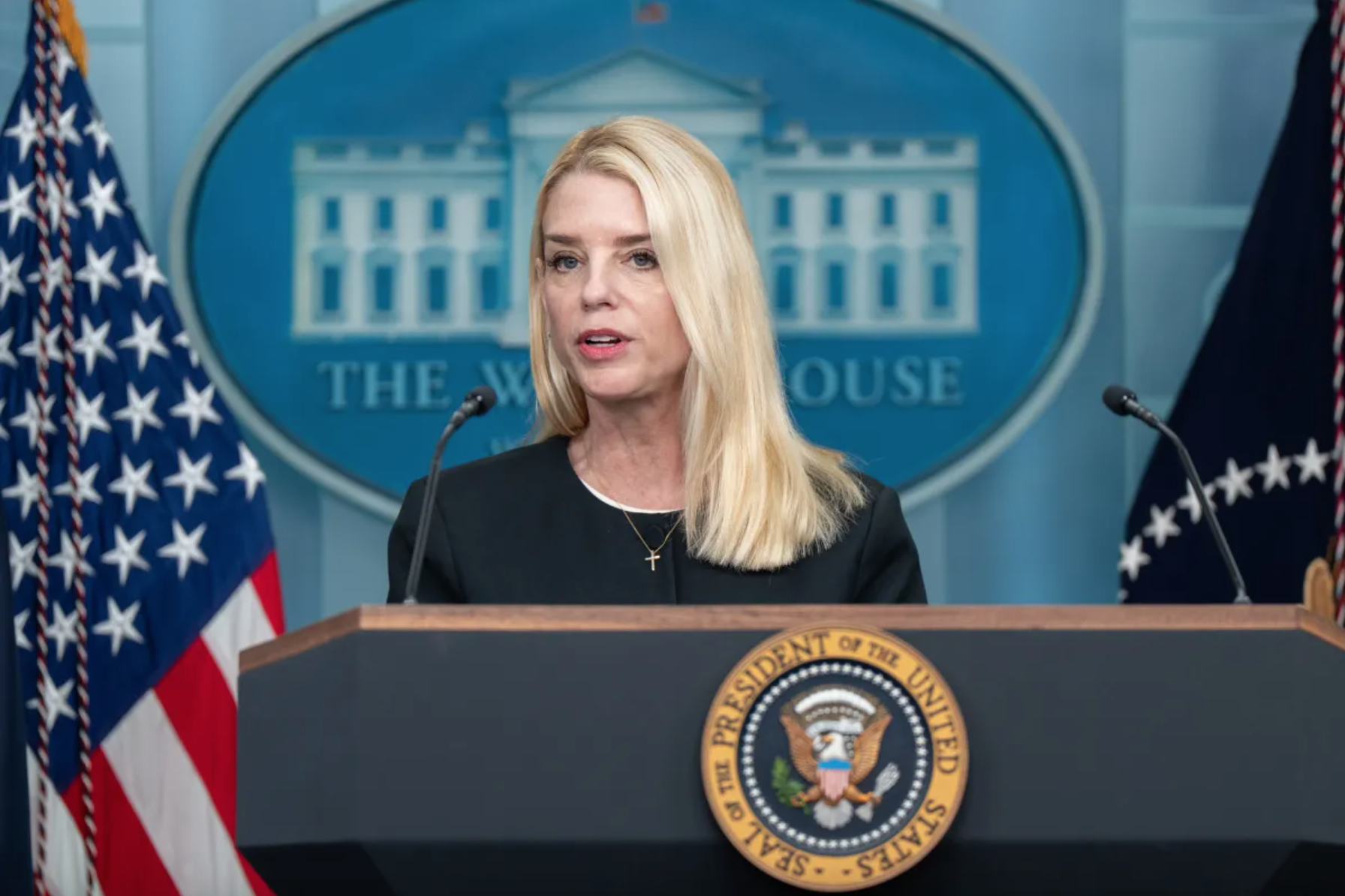
Attorney General Pam Bondi has reportedly been moved into secure housing on a military base near Washington, D.C., after federal officials flagged threats against her tied to both drug cartels and growing outrage over her handling of the Jeffrey Epstein case.
According to a report by The New York Times, Bondi was quietly relocated sometime in the past month after security officials determined that the threats against the nation’s top law enforcement officer had intensified.
The move required Bondi to leave her apartment in Washington and relocate to a military installation in the D.C. area. The exact location of the base has not been publicly disclosed.
Sources familiar with the situation told the newspaper that Bondi began receiving threats following a dramatic foreign policy move earlier this year — the Trump administration’s capture of Venezuelan President Nicolás Maduro in January.
While details about the specific threats were not revealed, officials reportedly considered them serious enough to warrant the heightened security.
Bondi is not the only high-profile figure from President Donald Trump’s administration to receive this level of protection.
Several of the administration’s most visible officials have also been moved into secure housing on military bases amid escalating security concerns.
Those reportedly include Deputy Chief of Staff Stephen Miller, widely viewed as the architect of the administration’s aggressive immigration policies.
Secretary of State Marco Rubio, Defense Secretary Pete Hegseth and former Department of Homeland Security Director Kristi Noem have also been placed in protected housing.
Each of those officials has played a major public role in some of the administration’s most controversial initiatives — including foreign policy decisions, immigration enforcement efforts and military operations.
Bondi has also become a lightning rod for criticism in recent months, particularly over the Justice Department’s handling of records related to the late financier and convicted sex offender Jeffrey Epstein.
In January, the Justice Department released more than 3.5 million documents connected to the Epstein investigation.
However, the release came roughly six weeks after the government was legally required to publish the material under the Epstein Files Transparency Act.
The rollout quickly sparked controversy.
It later emerged that some Epstein-related records were not included in the document dump, fueling accusations that the administration had withheld information.
Bondi’s office also faced backlash after thousands of the documents had to be removed because they contained identifying details about victims.

Survivors of Epstein’s crimes condemned the release in a statement.
“This latest release of Jeffrey Epstein files is being sold as transparency, but what it actually does is expose survivors,” victims wrote.
They argued that the disclosure had once again placed victims under public scrutiny while the powerful figures connected to Epstein remained shielded.
“Once again, survivors are having their names and identifying information exposed, while the men who abused us remain hidden and protected,” the statement said.
“This is a betrayal of the very people this process is supposed to serve.”
The controversy even spilled into national television during this year’s Super Bowl.
During the broadcast, survivors aired a public service announcement urging Bondi to release all remaining Epstein-related documents.
“Stand with us. Tell Attorney General Pam Bondi it’s time for the truth,” the message read.
Despite the criticism, housing federal officials on military bases for security reasons is not unprecedented.
During Trump’s first administration, former Secretary of State Mike Pompeo and Defense Secretary James Mattis also lived on military installations for safety reasons.
Other senior officials have done the same during past administrations.
Former Defense Secretary Robert Gates stayed in naval housing during the George W. Bush administration, and Congress designated the U.S. Naval Observatory as the official residence of the vice president in 1974.
For now, officials have not said how long Bondi will remain in the secure housing or whether the threats against her have been resolved.
It is also unclear whether she and other officials staying on bases are paying rent for the accommodations.



