
Voters in northwest Georgia headed to the polls Tuesday in a closely watched special election that could reveal how much political influence former President Donald Trump still holds — and whether Democrats can gain unexpected ground in one of the state’s most reliably Republican districts.
The race is being held to fill the congressional seat vacated earlier this year by Rep. Marjorie Taylor Greene, whose tenure made Georgia’s 14th Congressional District one of the most politically visible — and controversial — districts in the country.
The election uses a “jungle primary” format, meaning all candidates appear on the same ballot regardless of party. The top two vote-getters advance to a runoff scheduled for April 7, if no candidate wins an outright majority.
Early expectations suggest that Republican Clay Fuller, a former prosecutor and Air National Guard lieutenant colonel, will likely move forward from the primary. Fuller has received Donald Trump’s endorsement and entered the election with more than $1 million in campaign fundraising, positioning him as one of the leading contenders.
He may face Democrat Shawn Harris, a retired Army general and cattle rancher who previously challenged Greene in the district during the 2024 election. Harris lost that race but drew significant support, earning roughly 135,000 votes, a record for a Democrat in the district.
While Georgia’s 14th District remains strongly conservative — rated R+19 by the Cook Political Report — Democrats believe the crowded Republican field could create an opening, especially as multiple GOP candidates split the vote.
More than a dozen Republicans entered the race, including former state senator Colton Moore, known for his outspoken and combative political style. Although several Republican candidates dropped out ahead of the vote, the remaining field still reflects divisions within the party.
The special election follows a dramatic political break between Greene and Trump, who were once closely aligned. According to reporting by The Guardian, Greene began distancing herself from Trump after criticizing his military strike on Iran and raising concerns about domestic policy decisions, including potential cuts to health care subsidies.

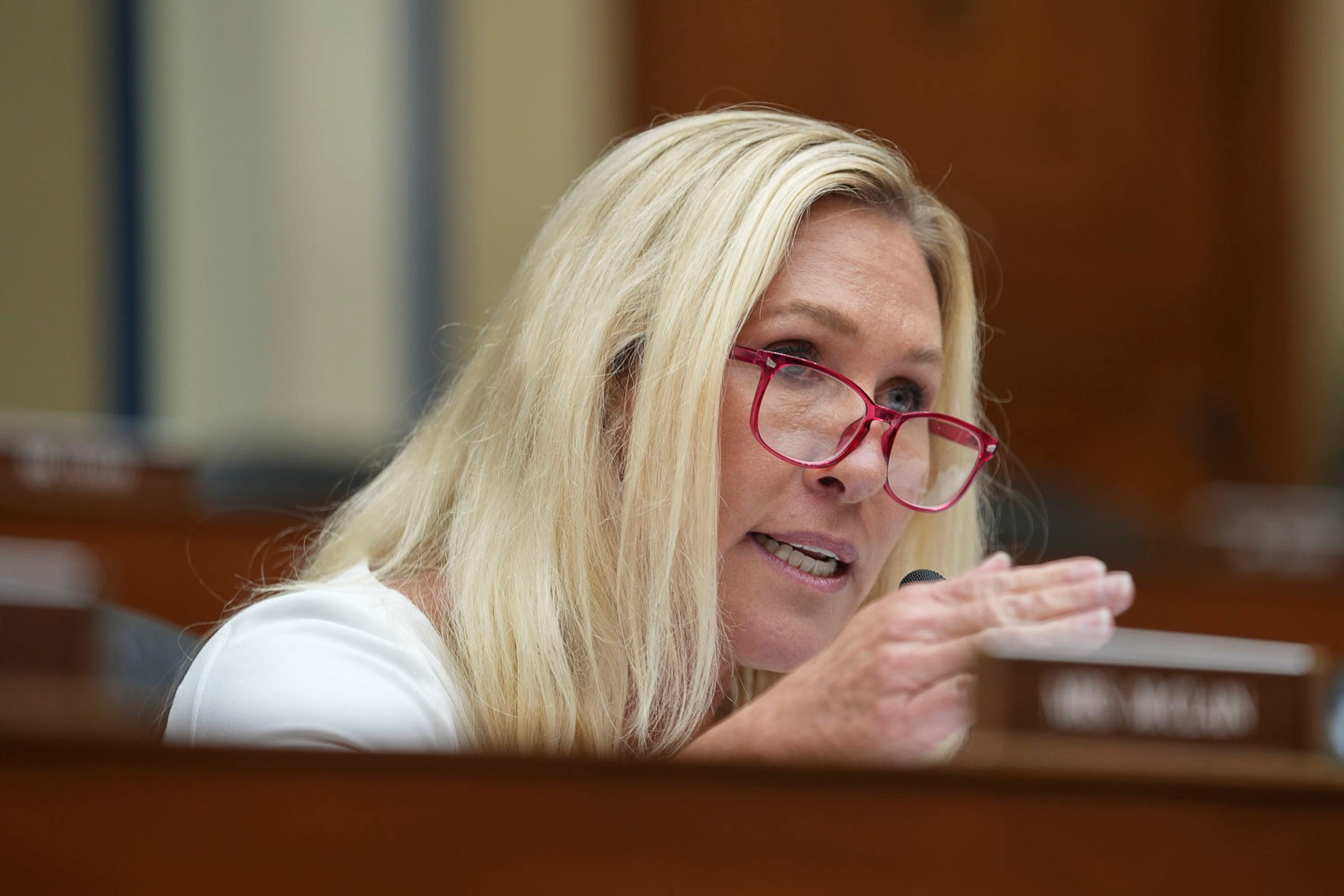
Rep. Marjorie Taylor Greene asks questions during a congressional hearing in 2024. / Imagn
Tensions escalated further over disagreements related to government transparency issues, ultimately leading to a public split between the two political figures. Greene eventually resigned her seat in January rather than face what was expected to be a bitter primary challenge.
For Harris, the Democratic candidate, the campaign message has focused less on foreign policy and more on everyday economic pressures facing voters.
In a recent interview, Harris argued that residents in the district are increasingly concerned about rising living costs, including groceries, housing, and utilities.
“The economy is very bad,” Harris said, adding that many families are struggling to pay basic bills.
Even in a traditionally conservative district, political analysts say the race will offer valuable insight into how voters are responding to national politics, economic concerns, and shifting party dynamics ahead of the next election cycle.
The results of Tuesday’s vote will determine who moves forward to the decisive runoff — and whether Georgia’s 14th District remains firmly Republican or becomes an unexpected battleground.



