
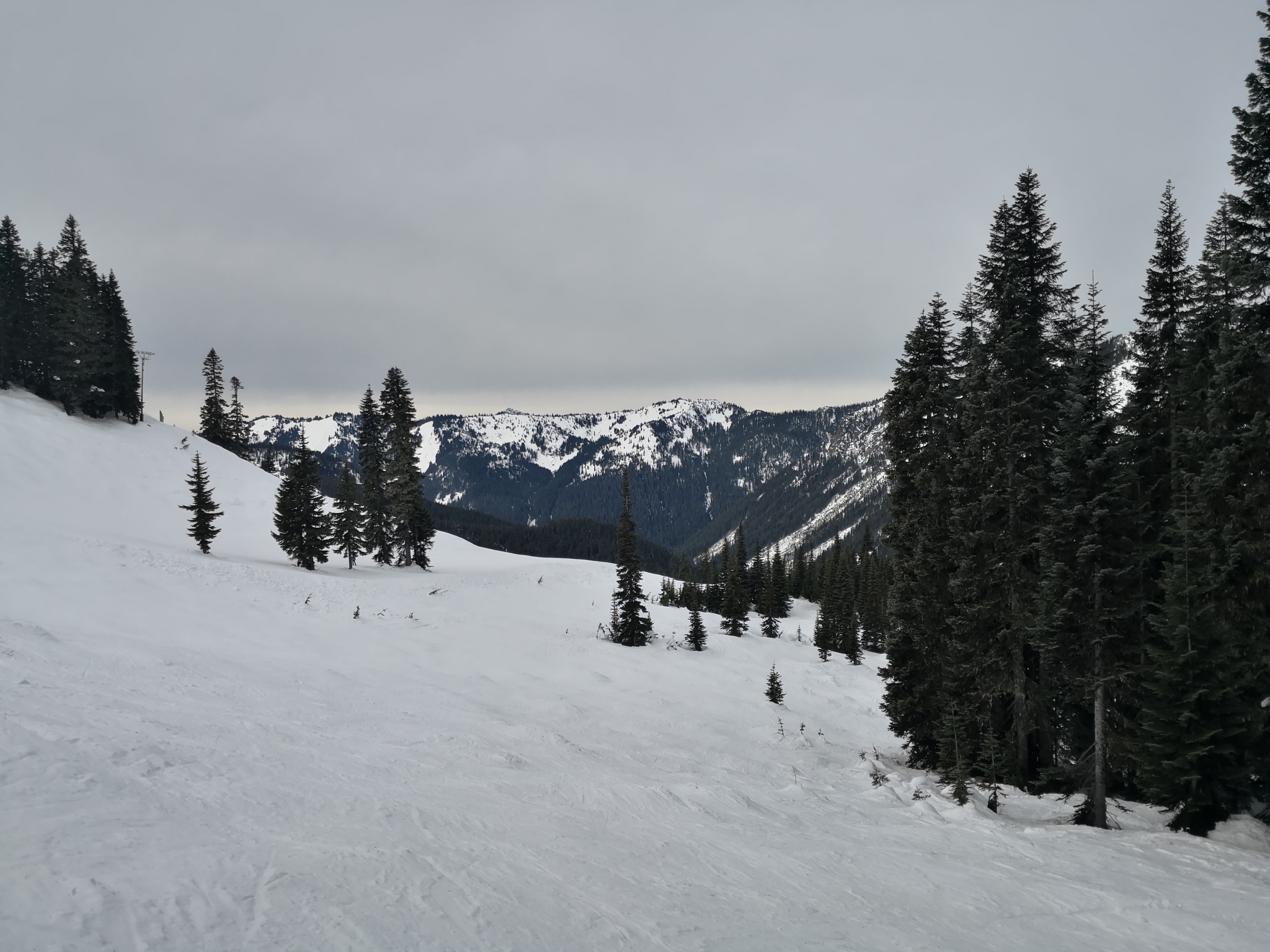
A routine day on the slopes in Washington’s Cascade Mountains turned into a dramatic survival story after a skier was buried beneath an avalanche for hours—only to be rescued thanks in part to a smartphone tracking app.
According to reporting from KING 5, skier Michael Harris was riding the Double Diamond chairlift at Stevens Pass when he decided to take what he expected would be his final run of the day through Big Chief Bowl. But as he began carving fresh tracks through the snow, conditions suddenly shifted.
Harris said he had followed another skier down the slope and moved only a short distance away to find untouched powder when the mountainside gave way.
“I moved maybe 10 or 15 feet across the bowl,” Harris recalled. “That’s when everything changed.”
Within seconds, large slabs of snow broke loose above and below him. The avalanche swept him downhill, burying him beneath several feet of snow. Drawing on basic avalanche safety training, Harris tried to “swim” through the moving snow—an emergency technique meant to keep victims near the surface or create breathing space if buried.
He later realized the effort likely saved his life.
Harris managed to form a small air pocket roughly the size of a beach ball in front of his face before the snow hardened around him.

“It felt like being encased in cement,” he said, describing how he was unable to move his arms or legs beneath the packed snow.
Meanwhile, miles away at home, Harris’ wife Penny Harris sensed something was wrong. When her husband stopped responding to texts and calls, she grew increasingly alarmed. Hoping to figure out where he might be, she checked her phone and opened Apple’s “Find My iPhone” feature.
The app still showed his last known location on the mountain.
Realizing the urgency of the situation, Penny drove from their home in Bothell, Washington, to the ski resort and shared the location data with ski patrol teams.
Using the coordinates from the phone’s signal, rescuers and an avalanche dog searched the Big Chief Bowl area. After hours of digging, they finally reached Harris—who had been buried under the snow for more than four hours.
Rescue crews were stunned to find him alive and conscious.
Avalanche experts often say survival chances drop dramatically after about 15 minutes of burial. Harris himself knew those statistics.
“The math doesn’t add up,” he said of surviving for hours beneath the snow.
By the time rescuers pulled him free, Harris was suffering from severe hypothermia, with his body temperature dropping into the 70-degree range. He was rushed to medical care and later underwent surgery for a serious leg injury that required seven screws, a plate and a bone graft.
Despite the ordeal, Harris says his thoughts while trapped focused on one thing—his family.
“The only thing I thought about was my wife and our four kids,” he said.
Since the rescue, members of the skiing community have rallied around Harris and his family, raising more than $30,000 through an online fundraiser to help cover medical expenses.
Now recovering at home, Harris has embraced the nickname friends and rescuers have given him: “Miracle Mike the Avalanche Man.”



