
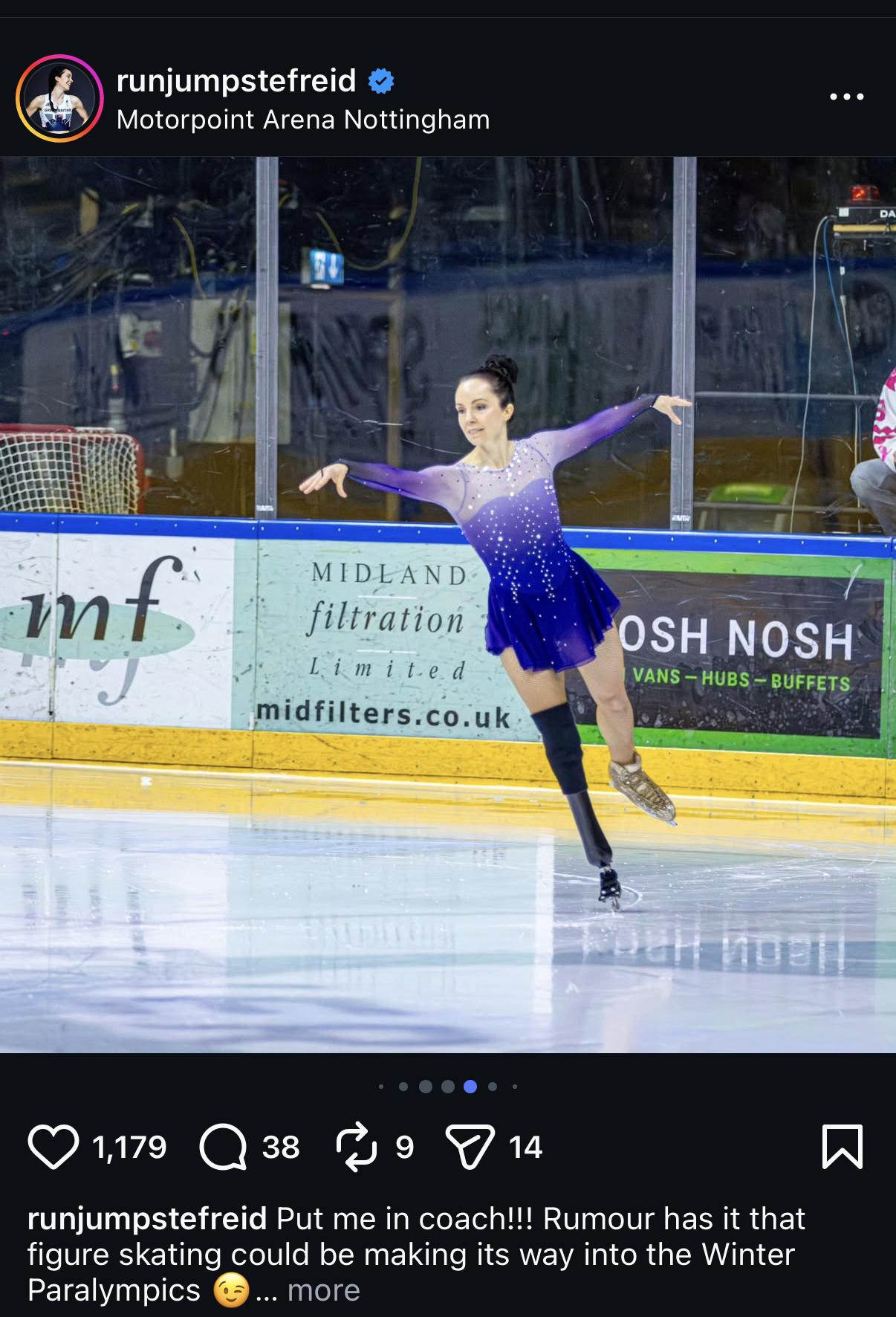

Stef Reid built her name soaring through the air as a Paralympic long jumper. Now, she’s chasing a different kind of flight — gliding across the ice with hopes of helping bring figure skating to the Winter Paralympics.
When the Winter Games begin this week, one major category will be missing: skating sports. For Reid and a growing community of athletes, that absence represents both a gap and an opportunity.
Reid, a triple Paralympic medalist who lost her right leg in a boating accident at 15, never imagined figure skating would be part of her story. The idea only surfaced when she was invited to compete on the 2022 season of the British TV show Dancing On Ice.
“It never crossed my mind,” Reid has said. Skating, she noted, isn’t typically seen as accessible — even for able-bodied athletes.

Jul 21, 2018; London, United Kingdom; Stef Reid (GBR) wins the women’s paralympic long jump at 18-2 1/2 (5.55m) during the London Anniversary Games at Olympic Stadium at Queen Elizabeth Olympic Park. Mandatory Credit: Kirby Lee-Imagn Images
Reinventing How to Skate
Learning to skate required more than courage. It meant rethinking biomechanics from the ground up.
Because Reid uses a prosthetic leg, she had to train her hip muscles to take on roles usually handled by knees and ankles. Her prosthetist developed custom designs to help her glide, but progress was anything but smooth.
Each new prototype changed how pressure hit her leg, often forcing her to start from scratch. For weeks, improvement felt out of reach. Then, something clicked. Her body adapted, and she began building momentum — eventually reaching the quarterfinals of the televised competition.
That experience opened a new door.
Challenging the Image of Skating
Reid is now a leading competitor in Inclusive Skating, an organization pushing for Paralympic recognition of the sport. She competes at British adult national events alongside non-disabled skaters, challenging long-held ideas about what figure skaters “should” look like.
While Olympic skating has faced criticism over diversity, Reid says most coaches have been supportive — often eager but unsure how to adapt training techniques.
Inclusive Skating founder Margarita Sweeney-Baird says not everyone has been welcoming. Some skaters have faced outright discrimination, told they don’t belong on the ice because disability doesn’t fit a narrow vision of beauty.
To counter that mindset, Inclusive Skating created a judging system focused on rewarding what athletes can do, rather than penalizing physical limitations. Programs are adapted — fewer jumps, shorter routines — to accommodate different needs, including prosthetic use or spinal conditions. Same-gender pairs are allowed, broadening opportunities.

Why Paralympic Recognition Matters
Getting figure skating onto the Paralympic program would unlock funding, visibility and global support. It would also mark the first “performance-based” sport centered on artistry at the Winter Games.
For now, the movement grows online. Reid shares her progress with tens of thousands of followers, while athletes swap training innovations and breakthroughs.
Recently, she spotted a video of another amputee skater using a prosthetic that allowed ankle movement — a development she described as game-changing.
For Reid, the mission goes beyond medals.
It’s about proving that artistry, athleticism and disability can coexist — and that the ice belongs to everyone willing to step onto it.



