
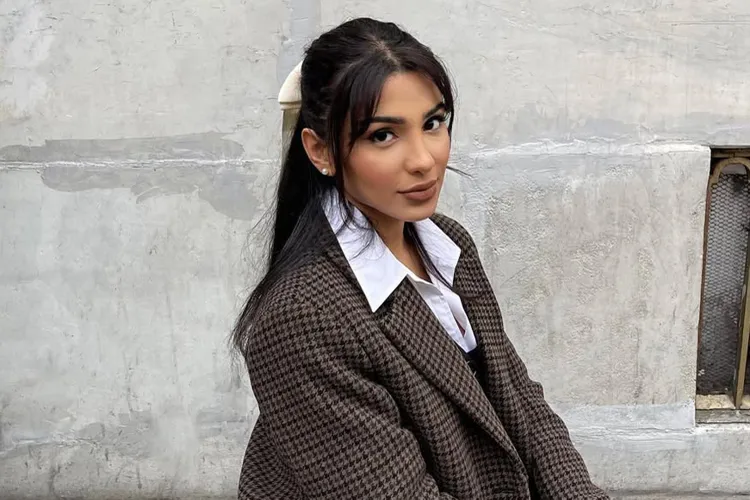
At 6:30 a.m. Thursday, as most of Columbia University slept, federal immigration agents entered a residential building and detained a neuroscience researcher just months before her graduation.
By late afternoon, she was free.
But the arrest of Ellie Aghayeva — and the circumstances surrounding it — have reignited fears across campus and beyond that international students remain vulnerable to sudden federal enforcement actions.
In a message to the Columbia community, acting university President Claire Shipman said Homeland Security agents detained a student after allegedly “made misrepresentations” to gain access to a non-public building.
“Our understanding at this time is that the federal agents made misrepresentations to gain entry to the building to search for a ‘missing person,’” Shipman wrote. “We are working to gather more details.”
The Columbia Spectator identified the detained student as Aghayeva, a neuroscience researcher from Azerbaijan enrolled in the School of General Studies and set to graduate this year.
Aghayeva herself posted a desperate message on Instagram shortly after her detention: “Dhs illegally arrested me. Please help,” alongside a photograph from the back seat of a vehicle.
A Department of Homeland Security spokesperson later said her student visa had been terminated for failing to attend classes in 2016 and stated that the building manager and her roommate had allowed agents into the apartment.
Columbia officials emphasized that federal agents are not permitted to enter non-public university spaces without a judicial warrant. New York Governor Kathy Hochul publicly stated that the proper warrant was not furnished.
“Let’s be clear about what happened: ICE agents didn’t have the proper warrant, so they lied to gain access to a student’s private residence,” Hochul wrote on social media.
The detention set off immediate protests. Students and faculty organized an emergency rally midday Thursday, demanding clarity and stronger protections for international students.
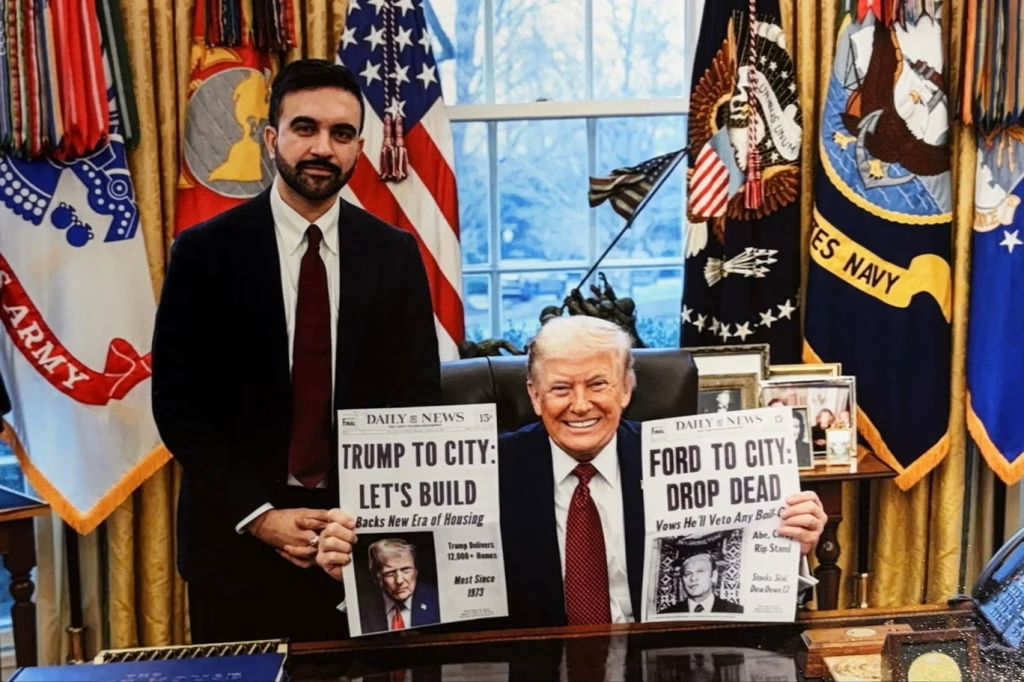
By the afternoon, New York Mayor Zohran Mamdani said he had raised concerns about Aghayeva’s arrest directly with President Donald Trump during a White House meeting. According to the mayor, Trump told him she would be “released imminently.”
Soon after, Aghayeva confirmed her release.
“I am safe and okay,” she wrote on Instagram. “I am so sorry but I am in complete shock over what happened and my phone is blowing up with calls from reporters. I need a little bit of time to process everything.”
Her relief was palpable — but so was the broader unease.
Aghayeva, who shares campus life and study content with more than 100,000 followers on Instagram and TikTok, described the arrest as “upsetting and unsettling for our community.”
The incident echoes last year’s high-profile detention of Columbia graduate student Mahmoud Khalil, a Green Card holder and leader of pro-Palestine campus protests. Khalil was detained for three months without charges and missed the birth of his son. In September 2025, a judge ruled the federal government had violated his constitutional rights.
Another student activist, Mohsen Mahdawi, also faced detention before his case was terminated. Yet Khalil remains entangled in deportation efforts after a judge overturned a prior order requiring his release.
For many on campus, Aghayeva’s arrest feels less like an isolated incident and more like part of a pattern.
Columbia reiterated that “all law enforcement agents must have a judicial warrant or judicial subpoena” to enter housing and other nonpublic areas. Administrative warrants are not sufficient, Shipman said.
“Do not allow them to enter or accept service of a warrant or subpoena,” she wrote.
Aghayeva’s swift release is being credited to political pressure and public attention. But advocates note that not every student has a mayor intervening on their behalf or a social media following amplifying their story.
For one student, the nightmare ended within hours. For many others, the underlying fear remains: a knock at dawn, a badge at the door, and a system that can upend a life before breakfast.



