
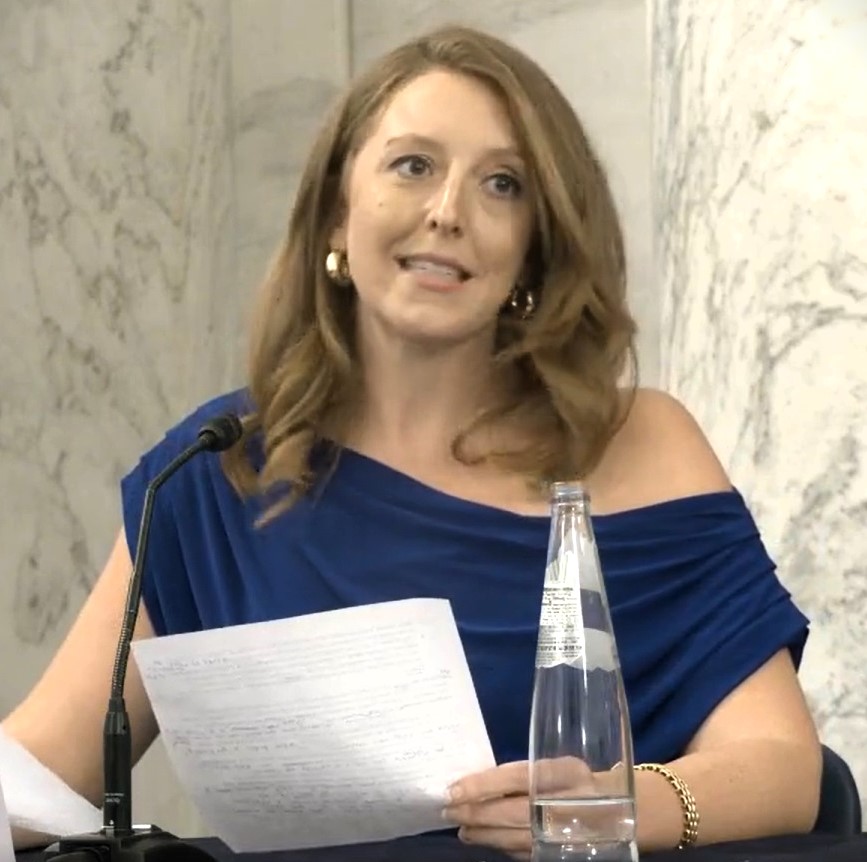
President Donald Trump’s nominee for U.S. surgeon general faced pointed questions on vaccines Tuesday, as senators pressed Dr. Casey Means on everything from measles outbreaks to the long-debunked theory linking vaccines and autism.
The confirmation hearing before the Senate Health, Education, Labor and Pensions Committee quickly zeroed in on immunization policy — a flashpoint issue amid rising measles cases in parts of the country and recent changes to federal vaccine guidance.
Committee Chair Sen. Bill Cassidy, a Louisiana Republican and physician, asked Means directly whether she would encourage mothers to vaccinate their children against measles using the MMR vaccine.
Means responded broadly at first, saying she believes vaccines “save lives” and are an essential tool in fighting infectious diseases. But when pressed to explicitly encourage the MMR shot, she pivoted toward emphasizing conversations between families and pediatricians, saying parents should discuss any medication — including vaccines — with their child’s doctor.

She delivered a similar message when questioned about the flu vaccine, underscoring the importance of “informed consent” and shared decision-making between patients and providers. That language mirrors recent moves by the Department of Health and Human Services to shift some vaccine recommendations from blanket endorsements to individualized discussions.
The hearing intensified when senators turned to autism — a topic that has fueled controversy for decades.
Means acknowledged that autism diagnoses have increased and described it as a growing crisis for families. She said the medical community still does not fully understand the causes and argued that continued research is necessary. However, when confronted with the extensive scientific evidence showing vaccines do not cause autism, Means said she accepts that research — while adding that “science is never settled” and that questions should remain open.
Sen. Bernie Sanders also challenged her on whether she has contributed to anti-vaccine rhetoric. Means pushed back, stating that she does not identify as anti-vaccine and does not intend to “complicate” public health messaging.
Her answers are drawing scrutiny in part because of her ties to Health Secretary Robert F. Kennedy Jr., who has long advocated for renewed investigation into autism’s causes and has been criticized for amplifying vaccine skepticism. Kennedy has directed HHS to examine autism rates more closely, a move that aligns with Means’ call for expanded research.
If confirmed, Means would assume one of the nation’s most visible public health roles. The surgeon general, often described as “America’s doctor,” issues advisories, reports and calls to action on major health issues, and leads the U.S. Public Health Service Commissioned Corps.
Means’ path to the nomination has also sparked discussion. A Stanford-trained physician, she began a surgical residency in otolaryngology but did not complete it. Her medical license lapsed in 2019. In recent years, she has built a following in the wellness and metabolic health space and co-founded a glucose-monitoring technology company.
Originally scheduled to testify in October, her hearing was postponed when she went into labor. Now back before senators, her confirmation hinges not only on her résumé, but on whether lawmakers are satisfied with her answers on one of the most politically charged issues in modern medicine.
The debate is far from over — and for many Americans watching, the stakes feel personal.



