
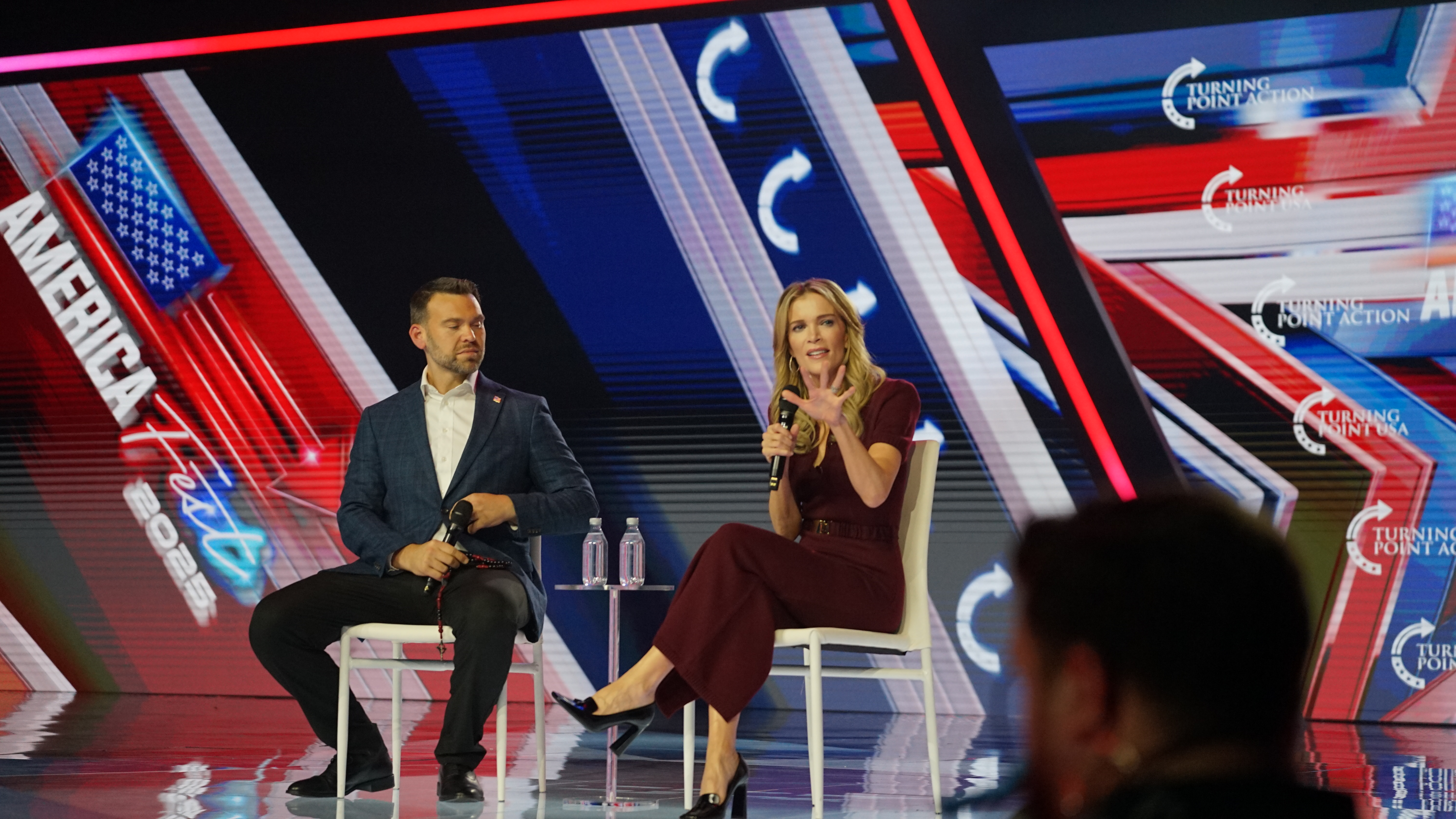
Media personality Megyn Kelly is criticizing plans by several Democrats to protest or skip President Trump’s upcoming State of the Union address, arguing that such actions reflect a broader erosion of political norms and civility.
On her program, Kelly framed the speech as a traditional moment of national unity, with the president addressing Congress and the country about the state of affairs. She suggested that while partisan disagreements are expected, attending the address has historically been viewed as part of lawmakers’ institutional responsibilities.
According to Kelly, some Democrats appear poised to forgo that tradition this year, choosing instead to stage alternative events or demonstrations.
Kelly referenced incidents from prior State of the Union addresses, including moments when Democratic lawmakers displayed protest signs during Trump’s remarks and declined to applaud guests highlighted in the speech.
She contended that those actions were widely perceived as counterproductive and embarrassing for the party. In her telling, internal tensions emerged between more moderate Democrats and progressive members over the optics of such protests.
This year, Kelly said, some progressive lawmakers — including Rep. Alexandria Ocasio-Cortez — are reportedly considering skipping the address altogether. She also pointed to plans for alternative programming hosted by liberal commentators as a sign that parts of the party prefer counter-events to direct participation in the speech.
Kelly argued that such decisions send a message about party leadership and priorities.
In addition, she discussed the Democratic selection of Virginia Gov. Abigail Spanberger to deliver the party’s official rebuttal. Kelly characterized the rebuttal role as politically risky, noting that past responses from both parties have sometimes drawn criticism or overshadowed the speaker’s broader message.
She questioned whether Spanberger, a former CIA officer and congresswoman who recently won the Virginia governorship, is the right figure to energize Democrats nationally.
Kelly also mentioned California Sen. Alex Padilla and other Democratic lawmakers who may take part in protests or related events. She cited reports of a gathering organized by activist groups on the National Mall during the speech, including participation by lawmakers such as Sens. Adam Schiff, Chris Murphy, Tina Smith and Chris Van Hollen.
One protest group, she noted, is known for appearing at demonstrations in inflatable frog costumes — a detail she highlighted as emblematic of what she views as the unserious tone of some opposition efforts.
Throughout her commentary, Kelly argued that boycotting or staging protests during the State of the Union breaks with longstanding expectations that elected officials attend major constitutional events regardless of party affiliation.
She compared current tensions to previous controversies, such as when then-House Speaker Nancy Pelosi tore up a copy of Trump’s speech in 2020 or when former President Barack Obama publicly criticized the Supreme Court during a State of the Union address. In Kelly’s view, such moments have contributed to a steady weakening of political decorum.

While acknowledging sharp policy disagreements between Democrats and Republicans, Kelly urged lawmakers to separate institutional traditions from partisan battles.
She suggested that members of Congress can oppose a president’s agenda vigorously while still attending formal addresses and acknowledging nonpartisan moments, such as honoring invited guests.
Ultimately, Kelly framed the planned protests and counter-events as symptomatic of deep political polarization. She argued that symbolic gestures of defiance risk further dividing the country and diminishing respect for shared civic rituals.
Whether Democrats attend, protest or hold parallel events, she said, the episode underscores the increasingly combative tone surrounding major political moments in Washington.



