
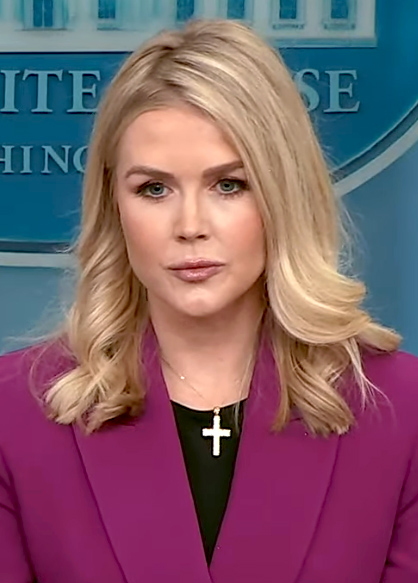

White House press secretary Karoline Leavitt used her Feb. 18 briefing to project momentum on three fronts at once: a packed presidential schedule, a rosy economic storyline, and an aggressive posture on immigration and foreign policy—while sparring with reporters over everything from Gaza funding to sewage in the Potomac.
Leavitt opened with a run-of-week preview. President Trump would host a Black History Month reception that afternoon, then chair a “Board of Peace” meeting the next day at the Donald J. Trump Institute of Peace. She said member states had pledged more than $5 billion for Gaza humanitarian relief and reconstruction and committed personnel for an “International Stabilization Force” and local policing to maintain security. Trump would then travel to Georgia for a speech focused on affordability, host a governors’ breakfast Friday, and attend the annual governors’ dinner Saturday with the first lady.
From there, Leavitt pivoted into a long list of economic claims meant to validate Trump’s “pro-growth” agenda. She highlighted a January jobs report showing 172,000 new private-sector jobs, emphasized that “100%” of job creation in Trump’s second term has been in the private sector, and argued federal employment had fallen to its lowest level since 1966, saving taxpayers billions annually. She also pointed to inflation cooling—citing 2.4% year-over-year CPI in January and lower core inflation—while insisting wages were outpacing prices. Housing affordability, she said, was improving through lower mortgage costs and falling rents, which she partly credited to deportation efforts reducing pressure on housing. She added a grocery-store list of falling prices (including eggs and dairy) and claimed gas prices were down, with some states under $2 a gallon. Prescription drug savings, she argued, would expand if Congress advanced Trump’s preferred healthcare plan.
Reporters quickly tested how those claims translate into policy. Asked why natural gas prices remain high in the Northeast, Leavitt blamed “Democrat policies” and said the federal government could streamline permitting but needed cooperation from blue-state governors—specifically pointing to the long-disputed Constitution Pipeline. When pressed on a proposed ICE detention facility in New Hampshire facing local pushback, she defended expanded detention capacity as a consequence of prior border policies and framed it as necessary to arrest and deport “criminal illegal aliens.”
On Iran, Leavitt refused to outline strike planning but stressed Trump’s preference for diplomacy “first,” while reminding the room he believed a prior operation had “obliterated” Iranian nuclear facilities. She declined to set deadlines for negotiations or preview how Iran might be addressed in the coming State of the Union. She also acknowledged “a little bit of progress” in talks but said the sides remained far apart.

Domestic political flashpoints popped up throughout. Leavitt said she wasn’t familiar with an appeal involving slavery-related displays at Independence Hall but promised to follow up. When asked about Trump’s comment that he has been falsely labeled racist, she reacted incredulously and offered to provide examples, while also citing administration actions she said benefited Black Americans, including support for HBCUs and veterans’ services.
The briefing also touched a partial DHS shutdown, which Leavitt blamed squarely on Democrats, warning that workers like FEMA staff, TSA personnel, and Coast Guard members could be affected. She said Trump had not personally contacted Democratic leaders recently, though she claimed White House representatives were negotiating and called a Democratic counterproposal “unserious.”
Foreign policy questions ranged widely: Leavitt described ongoing Ukraine-Russia-Ukraine talks as showing “meaningful progress,” responded to Trump’s Truth Social post on the Chagos Islands by saying the post itself should be treated as policy, and offered tough talk on Cuba, describing the government there as collapsing and urging “dramatic changes.” She also noted the Vatican would not join the Board of Peace, calling the decision “deeply unfortunate.”
The briefing ended with smaller—but telling—moments: Leavitt said Trump was exploring legal options for a voter ID executive order but wanted Congress to pass the SAVE Act; she brushed off questions about aliens as “news to me”; and she confirmed Trump would sign an executive order later that afternoon, without specifying what it was.



