
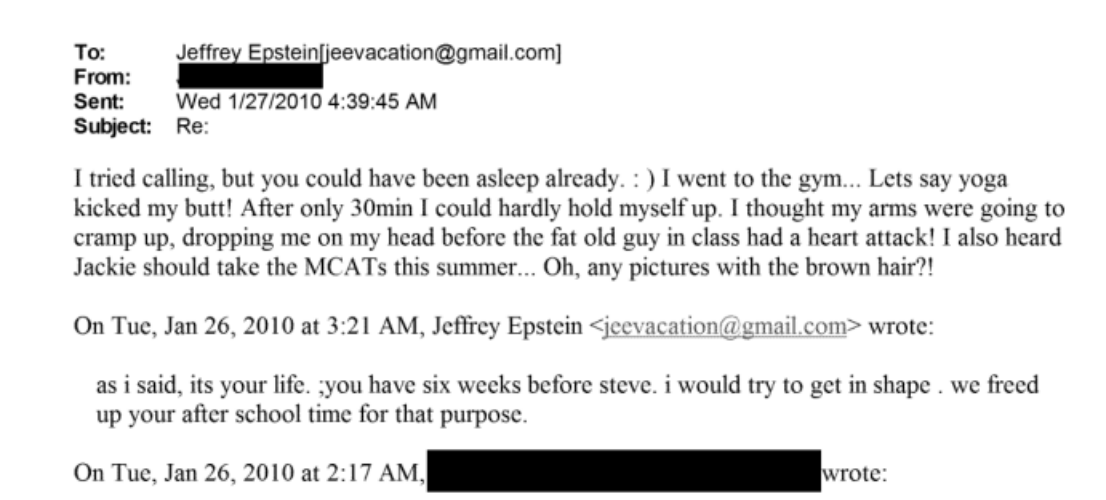
Emails from Jeffrey Epstein’s account, dated January 2010, shows Epstein communicating with an individual about school, daily activities, exercise routines, and future plans. In one message sent late on January 25, Epstein wrote bluntly: “get your *** to the gym.”
Hours later, in an email sent just after 3 a.m., he added: “as i said, its your life. ;you have six weeks before steve. i would try to get in shape . we freed up your after school time for that purpose.”

The replies reflect a far lighter tone on the surface. The recipient described going to the gym and taking a yoga class, joking that it “kicked my butt” and that after 30 minutes she could “hardly hold” herself up. She also referenced seeing a movie and mentioned hearing that someone named Jackie should take the MCATs that summer. In a separate message, she noted plans to attend gym classes and possibly play volleyball.
While the exchange does not reference criminal conduct directly, it adds to a broader pattern seen in previously released communications tied to Epstein — informal late-night emails, comments about physical appearance and fitness, and indications that he exerted influence over young women’s time and activities.
Context is critical when evaluating such emails. Without additional details about the recipient’s age or relationship to Epstein, the messages alone do not establish wrongdoing. However, investigators and advocates for victims have long argued that Epstein’s communications frequently masked coercive dynamics beneath everyday conversation.
The 2010 exchange underscores how even seemingly routine emails can take on new significance when viewed through the lens of Epstein’s later criminal prosecution — and the ongoing effort to understand the scope of his influence.



