

West Michigan could soon find itself at the center of a growing national push to build more data centers — and local leaders say residents should understand both the promise and the pressure these facilities bring.
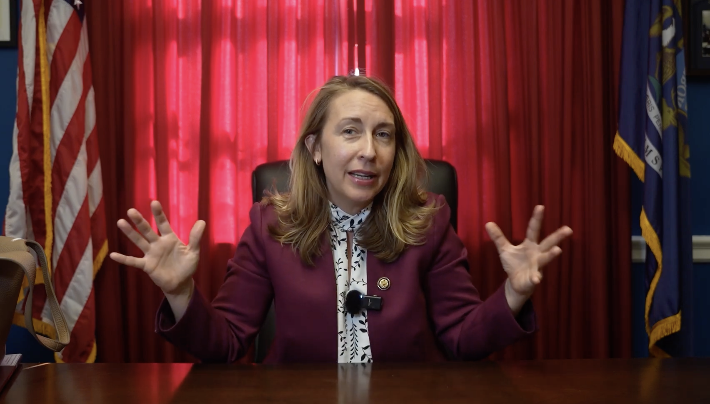
In the latest episode of Straight Talk With Scholten, Congresswoman Hillary Scholten explained that data centers may not be visible in everyday life, but they are essential to nearly everything modern consumers rely on. From cloud storage and credit card transactions to telehealth appointments and remote work, data centers serve as the backbone of the digital economy. With the rapid rise of artificial intelligence and other advanced technologies, demand for these massive facilities is expected to surge in the coming years.
That growth is now reaching West Michigan, where new data center projects are being proposed in Kent County. Scholten emphasized that these developments could create opportunities, but only if communities make informed decisions and avoid rushing into projects without clear safeguards.

The episode focused on two major concerns tied to data center expansion: water usage and energy demand.
Scholten explained that data centers are essentially large brick-and-mortar buildings filled with powerful computing systems that store and process enormous amounts of information. As those systems run, they generate significant heat, meaning cooling becomes one of the biggest challenges — and one of the biggest drivers of environmental impact.
Some older cooling methods withdraw huge volumes of water, use it once, and then release or evaporate it. Scholten described this as inefficient and harmful, arguing it should not be acceptable in a state like Michigan where protecting water resources is critical. However, she pointed to newer technologies that can dramatically reduce water consumption, such as closed-loop cooling systems, which recycle water inside sealed systems instead of constantly drawing more.
Scholten also highlighted the possibility of capturing heat generated by data centers and repurposing it for other energy needs. If used effectively, that could potentially reduce overall energy costs and improve efficiency for surrounding communities.
The second major issue raised was the enormous energy demand required to operate data centers. Scholten noted that these facilities consume large amounts of electricity at a time when utility costs are already rising for many families. She stressed that a key question is who pays for the additional strain placed on the energy grid.

According to Scholten, data center operators should be required to cover the full cost of the infrastructure and power demands they create, rather than passing those expenses onto local ratepayers. She argued that consumers should receive strong protections so that residents aren’t forced to subsidize massive corporate projects through higher bills.
Beyond cost, Scholten said these projects must strengthen the grid, improving reliability for everyone rather than creating new vulnerabilities.
She also called for transparency and community engagement, saying residents deserve a real voice in whether and how data centers are built. Scholten urged local, state, and federal leaders to hold public meetings, clearly communicate development details, and ensure community concerns are genuinely reflected in the final decisions.
While warning of risks, Scholten acknowledged that data centers can also bring real benefits, including job creation, economic growth, innovation, and stronger national security. Still, she argued that progress must be shaped responsibly — with clear environmental standards, protections for farmland and natural resources, and policies that prioritize communities over corporate profits.
Ultimately, Scholten framed the moment as a major crossroads: West Michigan can lead in the digital economy, but only if it “does data centers right.”



