
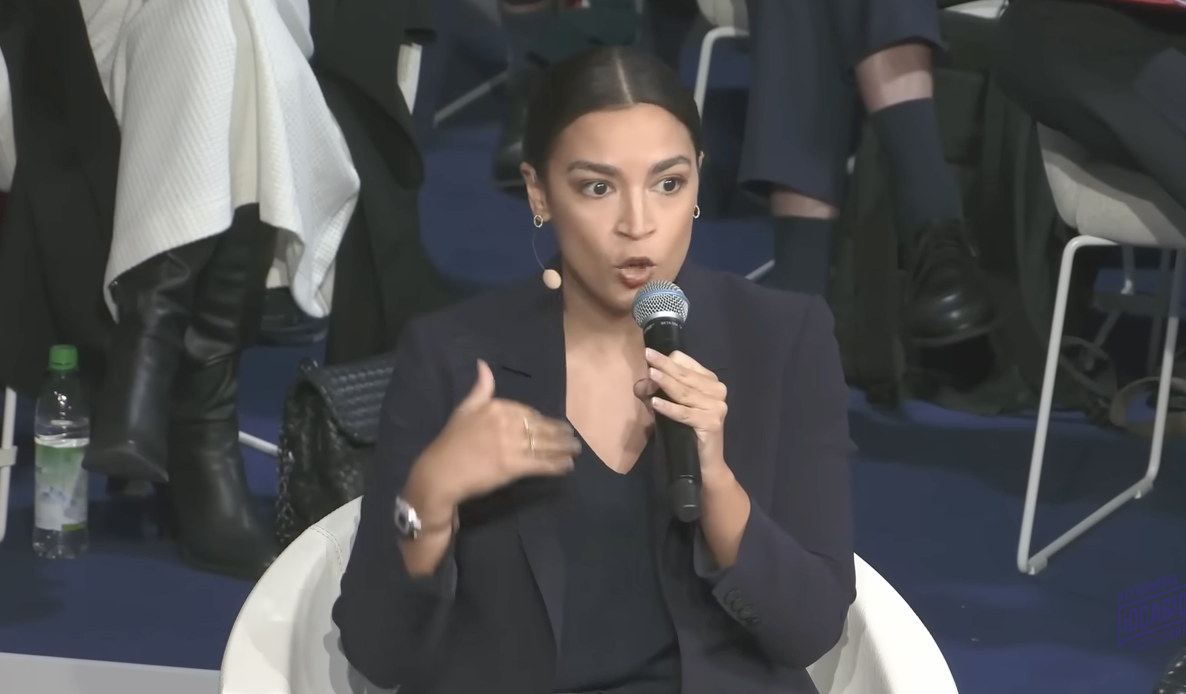
At the Munich Security Conference, Rep. Alexandria Ocasio-Cortez framed the fight against authoritarianism not as an abstract geopolitical struggle, but as a deeply economic one rooted in working-class disillusionment.
Speaking before an international audience, the New York Democrat reflected on her own entry into politics in 2018, when she was a waitress in New York City without health insurance and struggling to pay rent. At the time, she said, much of the Democratic establishment was signaling that the economy was strong and that “everything is fine,” even as many working people were experiencing the opposite.
That disconnect, she argued, created fertile ground for political backlash.
Ocasio-Cortez recounted how, after defeating a 20-year Democratic incumbent, she encountered resistance within her own party to the populist demands that fueled her campaign. Proposals such as a $15 minimum wage, tuition-free public colleges and universities, and expanded health insurance coverage were dismissed behind closed doors as too extreme or politically risky.
Yet those were the very issues she had campaigned on — and won on.
For Ocasio-Cortez, that moment symbolized what she described as a broader sense of betrayal among working-class voters. When political parties appear more responsive to elite interests than to economic pain, she said, voters look elsewhere — sometimes toward leaders who promise sweeping change while offering scapegoats for rising inequality.
She situated today’s political turbulence within a longer arc that includes bipartisan support for the Iraq War and trade agreements like NAFTA, policies she said contributed to economic instability in rural and industrial communities. Over time, she argued, those decisions eroded trust and fueled resentment.
Authoritarian movements, she warned, often capitalize on that resentment by channeling anger toward vulnerable groups rather than addressing structural inequality.
If democracies want to withstand those pressures, she said, they must center working-class priorities — wages, health care, housing, and education — in both policy and messaging. The United States, she noted, is in a political pendulum phase where whichever party is viewed as betraying working people tends to face electoral consequences. Currently, she observed, Republicans hold governing power, but the underlying dynamic remains.
During the discussion, Ocasio-Cortez was also pressed about whether a future presidential campaign should pursue a wealth tax. She responded that such reforms should not depend on waiting for any single president and argued they should be enacted swiftly.
Addressing a common objection — that wealthy individuals would move their assets abroad — she pointed out that the United States taxes based on citizenship rather than residency. Even Americans who relocate overseas remain subject to U.S. taxation, and those who renounce citizenship face an exit tax on unrealized capital gains, she noted, underscoring the country’s unique position to implement such measures.
Her broader message to the Munich audience was clear: defeating authoritarianism requires more than rhetoric about democratic values. It demands tangible economic policies that convince working people their governments are acting in their interest.
Without that shift, she suggested, the political conditions that give rise to strongman politics will persist.



