Newly released documents tied to the case of Marimar Martinez are intensifying scrutiny of how federal officials handled a shooting that left the Chicago teaching assistant wounded and later criminally charged.
Martinez, a U.S. citizen, was shot five times by a Border Patrol agent during an immigration enforcement operation in October. In the aftermath, Department of Homeland Security officials accused her of attempting to ram federal agents with her vehicle and charged her with a felony. Those charges were ultimately dismissed after video evidence surfaced showing that an agent — not Martinez — appeared to steer his vehicle into hers.
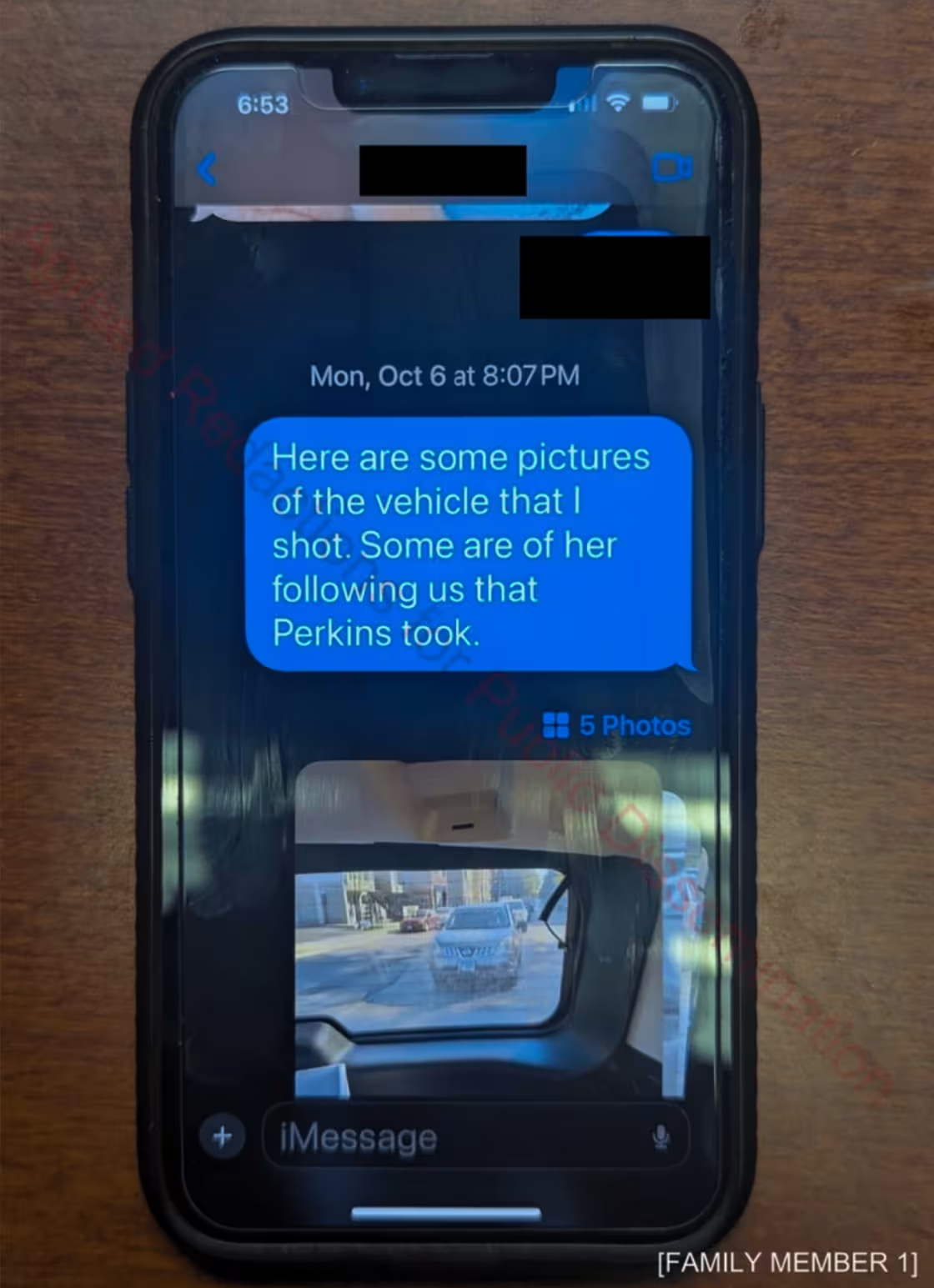
Now, her attorneys have made public emails, text messages, internal diagrams and other records they say contradict the government’s version of events and reveal misconduct within the investigation. The materials were released Wednesday after U.S. District Judge Georgia Alexakis lifted a protective order that had restricted access to the dissolved criminal case file.
Among the documents is an October 4 email from Gregory Bovino, then a Border Patrol commander, praising agent Charles Exum shortly after the shooting. In the message, Bovino wrote, “In light of your excellent service in Chicago, you have much yet left to do!!” Group text messages between agents congratulated Exum, referring to him as a “legend” and offering to buy him a beer. In previously disclosed communications, Exum boasted about his gunfire, writing to colleagues: “I fired 5 rounds and she had 7 holes. Put that in your book boys.”
Martinez’s attorney, Christopher Parente, said the newly released materials undermine federal officials’ public statements and raise broader concerns about transparency. At a press conference, Parente argued that portions of the investigation were mishandled and pointed to a Border Patrol agent’s hand-drawn diagram of the scene that he described as inaccurate, including vehicles that “don’t exist.” He added that the U.S. Attorney’s Office released many of the emails, texts and videos only shortly before the hearing.
Federal prosecutors had opposed lifting the protective order, contending that making the documents public would damage Exum’s reputation. Judge Alexakis rejected that argument, writing that the government showed “zero concern” for the reputational harm Martinez endured after being labeled a “domestic terrorist.”
U.S. Customs and Border Protection stated Wednesday that all use-of-force incidents are thoroughly investigated. Exum has been placed on administrative leave pending review.
The shooting took place amid an escalation of immigration enforcement activity in and around Chicago that included arrests, protests and confrontations between residents and federal agents. Weeks before Martinez’s encounter, agents fatally shot a suburban Chicago man during a traffic stop. Martinez’s attorneys noted similarities between her case and the recent fatal shooting of Minneapolis resident Renee Good, whose family has also raised concerns about use of force.
According to body camera footage from the October incident, Martinez followed a vehicle believed to be driven by immigration agents and honked her horn to alert neighbors. Video shows agents exiting their vehicle with weapons drawn. One agent can be heard saying, “It’s time to get aggressive and get the (expletive) out.”
After she was hospitalized for her injuries, Martinez was taken into FBI custody. Authorities continue to retain her vehicle as evidence. Officials publicly suggested she was armed during the encounter. Martinez does have a valid concealed-carry permit, and her handgun — stored in a pink holster at the bottom of her purse — remained secured throughout the incident. Her attorneys presented a photograph they say confirms the weapon was never removed.

In the months following the shooting, Martinez has spoken before lawmakers, including members of Congress, about what she describes as systemic issues within immigration enforcement operations. She is expected to attend President Donald Trump’s upcoming State of the Union address as a guest of U.S. Representative Jesus “Chuy” Garcia.
Her legal team has announced plans to file a claim under the Federal Tort Claims Act, which allows individuals to seek damages from federal agencies. If the claim is denied or goes unanswered for six months, they intend to file suit in federal court.
Martinez has said the experience left lasting physical and emotional scars, and that her trust in federal law enforcement has been deeply shaken. Her attorneys argue the newly unsealed records demonstrate that the official narrative of the shooting does not align with the evidence now available to the public.