
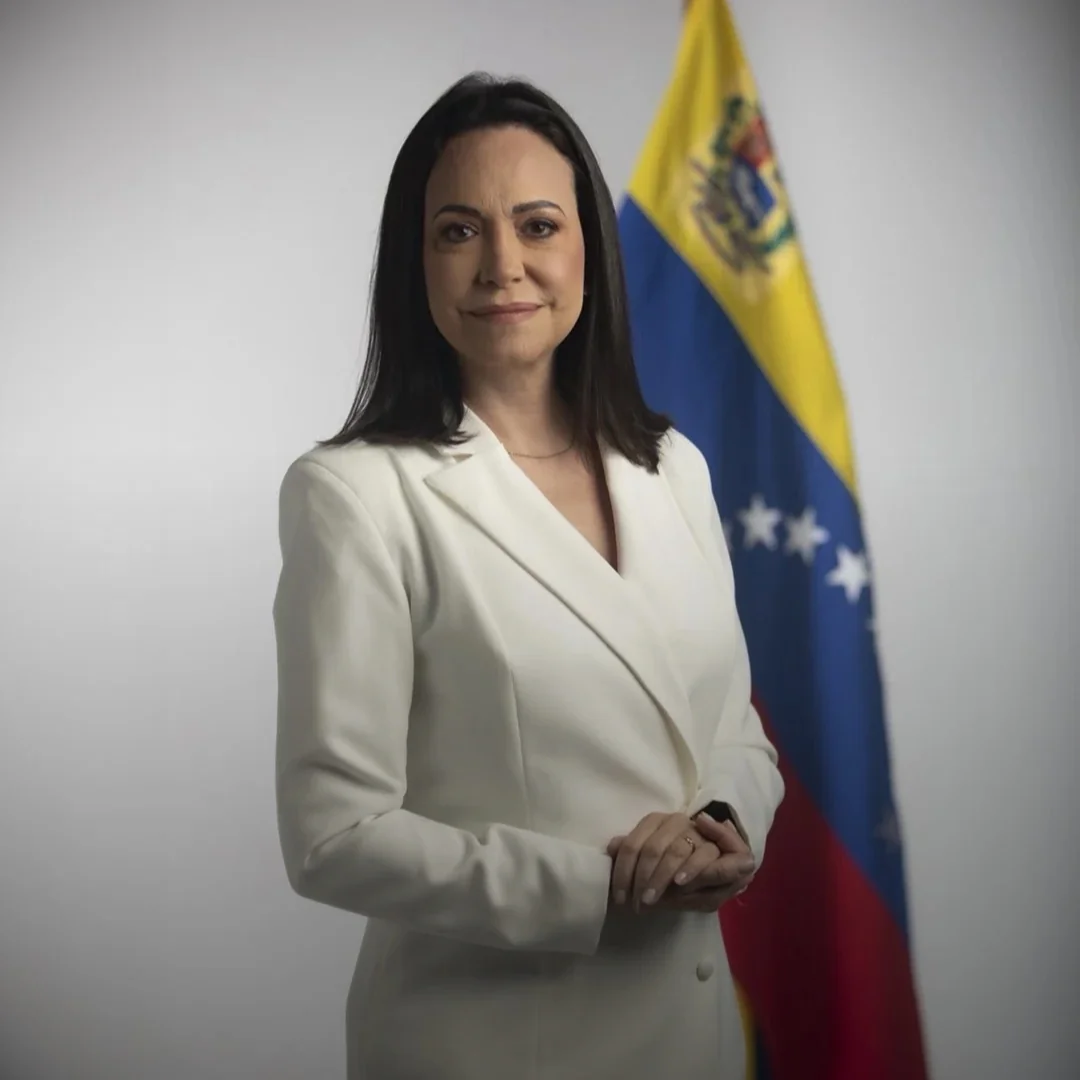
Tensions are quietly rising between the White House and one of the most recognizable faces of Venezuela’s opposition.
White House advisers and people close to President Donald Trump are increasingly frustrated with María Corina Machado, viewing her recent public comments about the timing of Venezuelan elections as potentially undermining U.S. strategy in the country.
A White House adviser, granted anonymity to speak freely, said Machado’s remarks to POLITICO suggesting that a transparent election process could be carried out in under a year rubbed some officials the wrong way, even as she remains personally well liked in administration circles.
“All María Corina Machado does is try to negate all of this … she’s selfish,” the adviser said. “None of this is ‘Operation María Corina Machado.’ It’s ‘Operation U.S. national security.’ She’s a spoiler and she’s working against U.S. national security goals.”
The adviser accused Machado of trying to position herself as the singular face of the Venezuelan opposition at a moment when the Trump administration wants credit for tangible developments following the capture of former Venezuelan leader Nicolás Maduro. Those include the release of political prisoners, cooperation on law enforcement operations, and early steps toward stabilizing a country the administration has described as “on life support.”
Machado’s office rejected the criticism as “media noise” and rumors, insisting she remains closely aligned with Washington.
“We are the first to be invested in ensuring that this process moves forward in a firm and stable manner,” her office said in a statement. “The interests of the United States administration and those of the Venezuelan people are the same: a Venezuela that is prosperous, secure, free, and democratic.”
Still, the irritation inside the White House appears to be real. Another person close to the administration said Machado’s public speculation about election timelines was strategically unhelpful.
“Twenty-four months is a more realistic time frame,” the person said. “She shouldn’t be opining on a time frame at all.”
The White House has emphasized that Trump’s priority is rebuilding Venezuela before any vote takes place. In a statement, an administration official said elections would come “at the right time,” but warned against rushing the process.
“When the country has recovered to the point where it can hold clean, transparent elections, it will be up to the Venezuelan people to choose their leader,” the official said. “This cannot happen overnight.”
Machado, for her part, has said she is not calling for immediate elections. In her POLITICO interview, she said a credible process with manual voting and full audits could theoretically be completed in nine to ten months, but stressed that it depended on when preparations began and did not urge the technical process to start now.
Her comments nevertheless reopened concerns that have been simmering for months. According to one adviser, the administration initially tried to be patient and respectful, hoping Machado would stay quiet as U.S. policy reshaped Venezuela’s political landscape. Instead, her election remarks were interpreted as an effort to remain central as the transition unfolds.
Those tensions briefly surfaced publicly after Trump said Machado “doesn’t have the respect” to lead Venezuela, alarming her supporters. The president softened his tone after an Oval Office meeting in which Machado presented him with the medal she received from the Nobel Committee. Days later, Trump said he had “a lot of respect” for her.
Machado insists that relationship remains strong, but her continued presence in Washington weeks after Maduro’s capture has fueled questions about her future role — and whether the United States will actively help facilitate her return to Venezuela.

Meanwhile, Republican hawks, particularly those representing South Florida’s Cuban and Venezuelan diaspora communities, are pushing for elections sooner rather than later. They argue that delays risk allowing Maduro’s allies to entrench themselves behind the scenes.
Secretary of State Marco Rubio addressed those concerns in January testimony before the Senate Foreign Relations Committee, warning that elections without media access, fair ballot access, and real opposition participation would be elections in name only.
Before her POLITICO interview, Machado herself had urged caution, saying it would be irresponsible to set dates or a calendar for elections.



