
Feb 8, 2026; Cortina d’Ampezzo, Italy; A helicopter air lifts Lindsey Vonn of the United States from the course after a crash in the women’s downhill alpine skiing race during the Milano Cortina 2026 Olympic Winter Games at Tofane Alpine Skiing Centre. Mandatory Credit: Michael Madrid-Imagn Images
Lindsey Vonn’s terrifying Olympic downhill crash has reignited a heated debate: should she have been allowed to race at all while competing on a severely injured knee? While critics online quickly questioned the decision, the skiing world has largely rallied behind Vonn and defended her right to take the risk.
Vonn’s Olympic run ended almost immediately on Sunday when she clipped a gate and violently spiraled out of control at high speed. The crash left her screaming in pain as medics rushed in, and she was later airlifted off the course. After initially being taken to a clinic in Cortina, she was transferred to a larger hospital in Treviso, where doctors performed surgery to stabilize a fracture in her left leg.
The incident sparked backlash, with many wondering whether officials or her team should have stepped in to prevent her from competing. Vonn had entered the Olympics after rupturing her ACL during a training crash in Switzerland on Jan. 30. She also suffered a bone bruise and meniscus damage, yet still completed multiple training runs at the Games before deciding to race.
But fellow skiers argue that the crash wasn’t caused by her knee injury at all.
Teammate Keely Cashman pushed back against public assumptions, explaining that Vonn’s fall happened after she got tangled with the gate at around 70 mph—an unlucky mistake that could have taken down even a healthy athlete. Cashman, who has experienced a major crash herself, said critics simply don’t understand how ski racing works and are wrongly blaming the injury.

Dec 13, 2024; Beaver Creek, Colorado, USA; US Ski Team member Keely Cashman talks during a press conference at The Osprey. Mandatory Credit: Michael Madrid-Imagn Images
Other athletes echoed the same view: Vonn made an informed decision and deserved the freedom to compete. Italian skier Federica Brignone said the choice should always come down to the athlete, since they understand their own body better than anyone else. American downhiller Kyle Negomir agreed, emphasizing that Vonn is an experienced champion capable of making her own call, and that one disastrous outcome doesn’t erase the possibility she could have succeeded.
Officials also defended the process. Vonn previously said she consulted doctors and trainers before racing, and the International Ski and Snowboard Federation does not require injury checks for competitors. FIS President Johan Eliasch called the crash a rare and extreme accident, describing it as the kind of unpredictable danger that comes with the sport. He added that nearly every skier competing carries some kind of injury, making the question of who “should” race complicated.

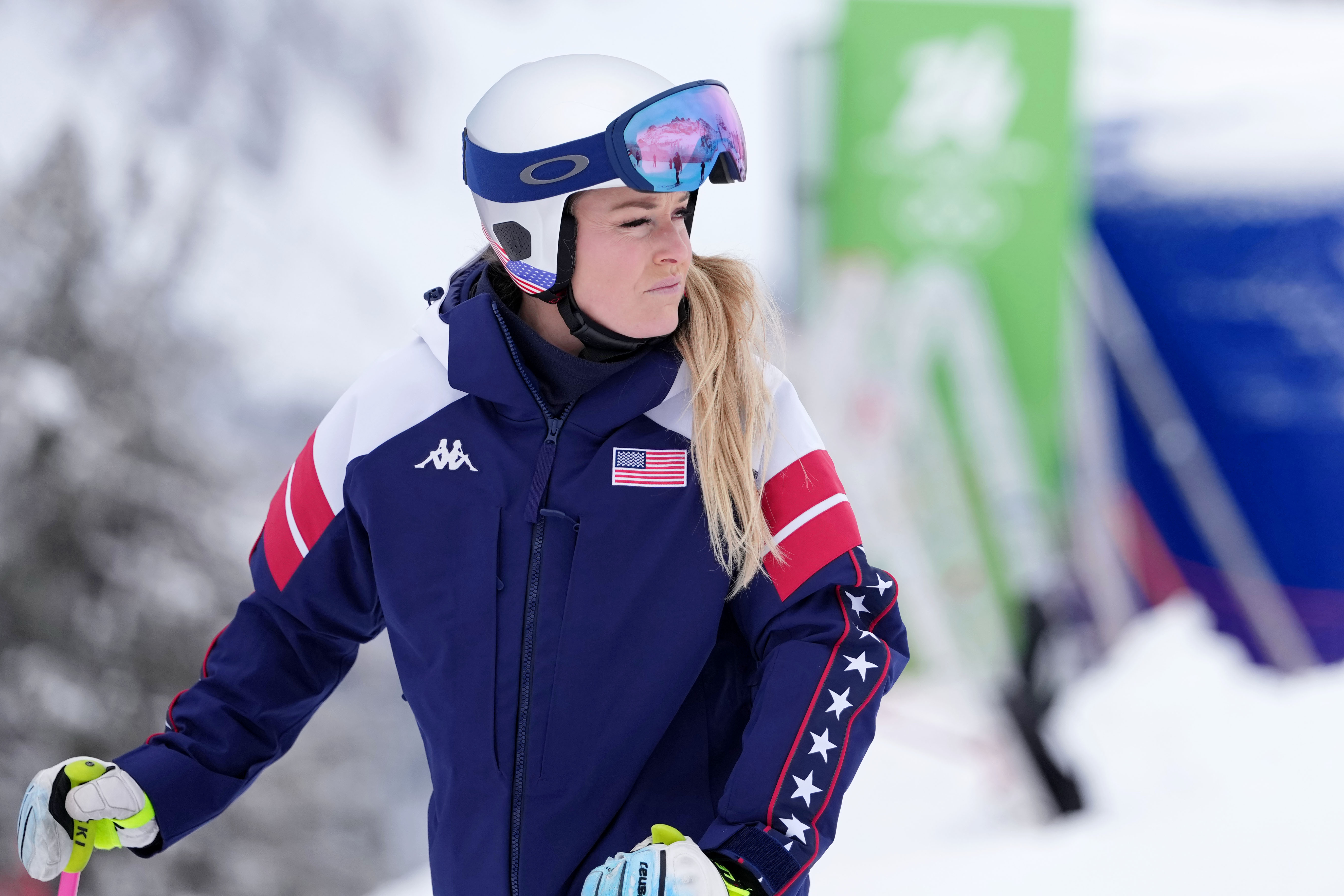
Feb 6, 2026; Cortina d’Ampezzo, ITALY; Lindsey Vonn of the United States looks on during downhill training session during the Milano Cortina 2026 Olympic Winter Games at Tofane Alpine Skiing Centre. Mandatory Credit: Eric Bolte-Imagn Images
Even the International Olympic Committee weighed in, noting that Vonn was able to train and had medical experts advising her, meaning the decision was ultimately hers to make.
In the end, Vonn’s crash may have ended her medal hopes, but within the skiing community, support remains firm: Olympic racing is dangerous, and the risk belongs to the athlete.