
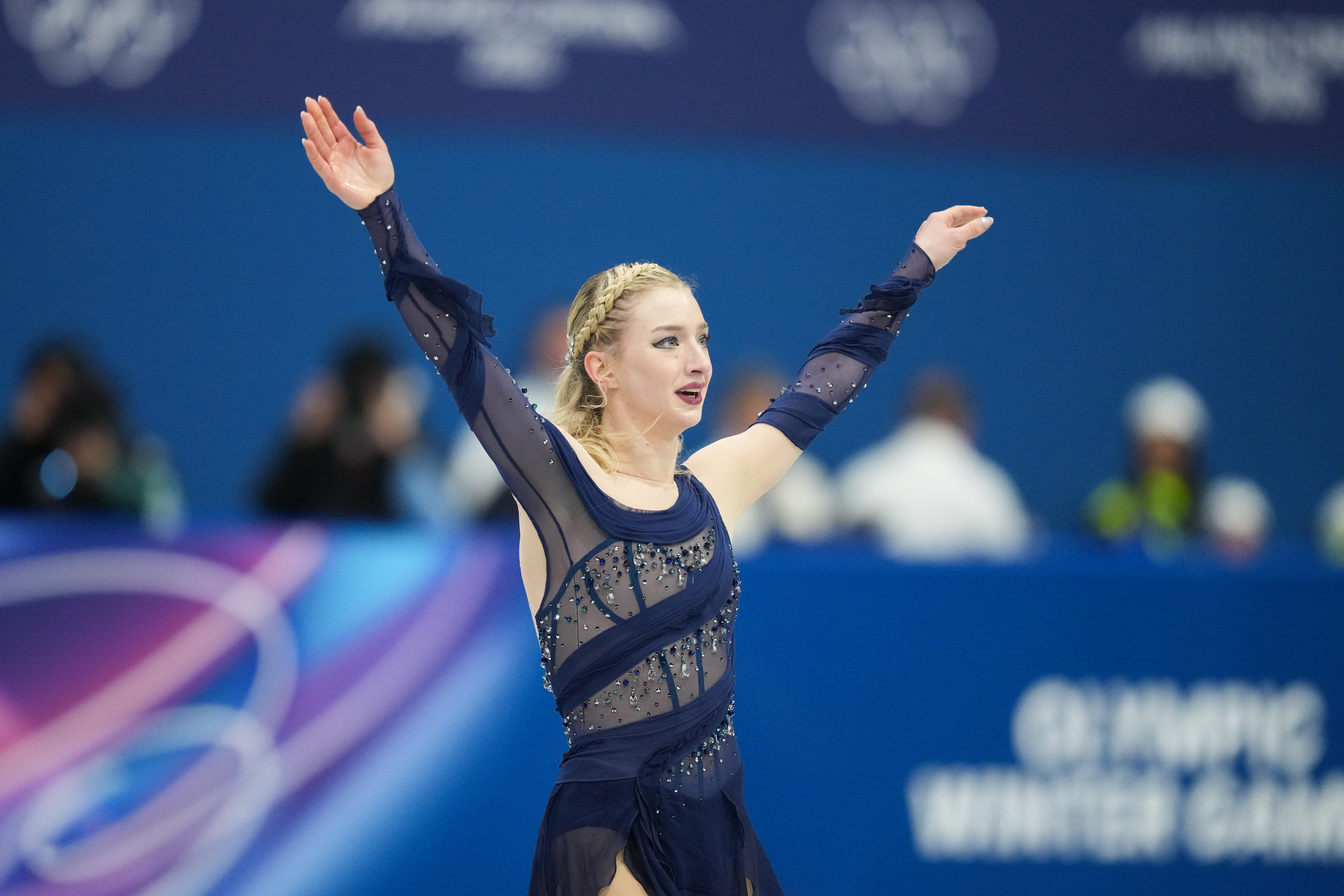
For a few fleeting hours, it looked like everything had gone right for Amber Glenn.
The American figure skater stood atop the podium in Milan, an Olympic gold medal hanging from her neck after the U.S. women helped clinch victory in the team event at the Milan Cortina Games. It should have been the kind of day athletes dream about for a lifetime.
Instead, it became one of the most emotionally exhausting days of her career.
On the same day she won gold, Glenn quietly stepped away from social media after being flooded with threats and abuse over comments she made about politics and LGBTQ+ rights. And just as that storm was cresting, another controversy broke — this one involving the music she skated to.
Late Sunday, Canadian artist Seb McKinnon, who releases music under the name CLANN, posted on X that Glenn had used his song “The Return” without permission during her free skate, which aired worldwide during Olympic coverage.
“So just found out an Olympic figure skater used one of my songs without permission for their routine. It aired all over the world … what? Is that usual practice for the Olympics?” McKinnon wrote.
The song has been part of Glenn’s program for the past two years without any public issue. But the Olympics amplify everything, including copyright questions that usually stay buried in paperwork and licensing agreements.
In figure skating, music permissions are required — yet rarely simple. Rights can belong to a label, a producer, the artist, or multiple parties at once. Skaters often use edited versions or layered cuts, and third-party clearinghouses sometimes handle approvals. According to McKinnon, his agreement with his label gives him sole authority to approve licenses, and he says he never granted permission.
Glenn was not immediately available for comment on the music dispute. She planned to take a day away from training before leaving Milan to prepare elsewhere ahead of the individual women’s event, which begins Feb. 17 with the short program. Messages left with U.S. Figure Skating about the copyright issue were not immediately returned.
The dispute was only the latest weight added to an already heavy day.
In the lead-up to the Games, Glenn — an outspoken LGBTQ+ advocate — said during a press conference that the queer community was going through a “hard time” under the political climate of President Donald Trump. The comments sparked a wave of online harassment that escalated into threats.
“I was disappointed because I’ve never had so many people wish me harm before, just for being me and speaking about being decent — human rights and decency,” Glenn said Sunday night, wearing an LGBTQ+ pin on her team jacket during the medal ceremony.
She admitted the backlash dulled what should have been a euphoric Olympic moment. “So that was really disappointing,” she said. “And I do think it kind of lowered that excitement for this.”
Glenn has also been vocal about her frustration with how copyright disputes surface during major competitions. “It’s never been an issue and then suddenly it is, and I don’t understand why,” she said ahead of the Games, referencing past Olympic controversies involving music rights. “It feels like a cash grab for different companies, and it’s really upsetting that they can’t just appreciate that their music has inspired something creative.”
U.S. Figure Skating’s director of high performance, Justin Dillon, said the organization has tried to help athletes navigate copyright issues, though it remains unclear whether the governing body played any role in clearing Glenn’s music.

Feb 8, 2026; Milan, Italy; Amber Glenn of the United States of America performs in the women’s free skate during the Milano Cortina 2026 Olympic Winter Games at Milano Ice Skating Arena. Mandatory Credit: James Lang-Imagn Images
As the debate played out online, many fans and fellow skaters rushed to Glenn’s defense, pointing out that figure skating is inseparable from music. Retired Canadian pairs skater Meagan Duhamel said she would be honored to have her music used on the Olympic stage, recalling how an artist once flew out to watch her Olympic performance live.
The sport has seen moments where musicians embraced the exposure. After Nathan Chen won gold at the Beijing Games skating to “Rocket Man,” Elton John publicly praised the performance, later collaborating with Chen on a music video.
“We really rely on our music,” said Alysa Liu, part of the gold-medal U.S. team. “Without music, we’re not really our sport.”



