
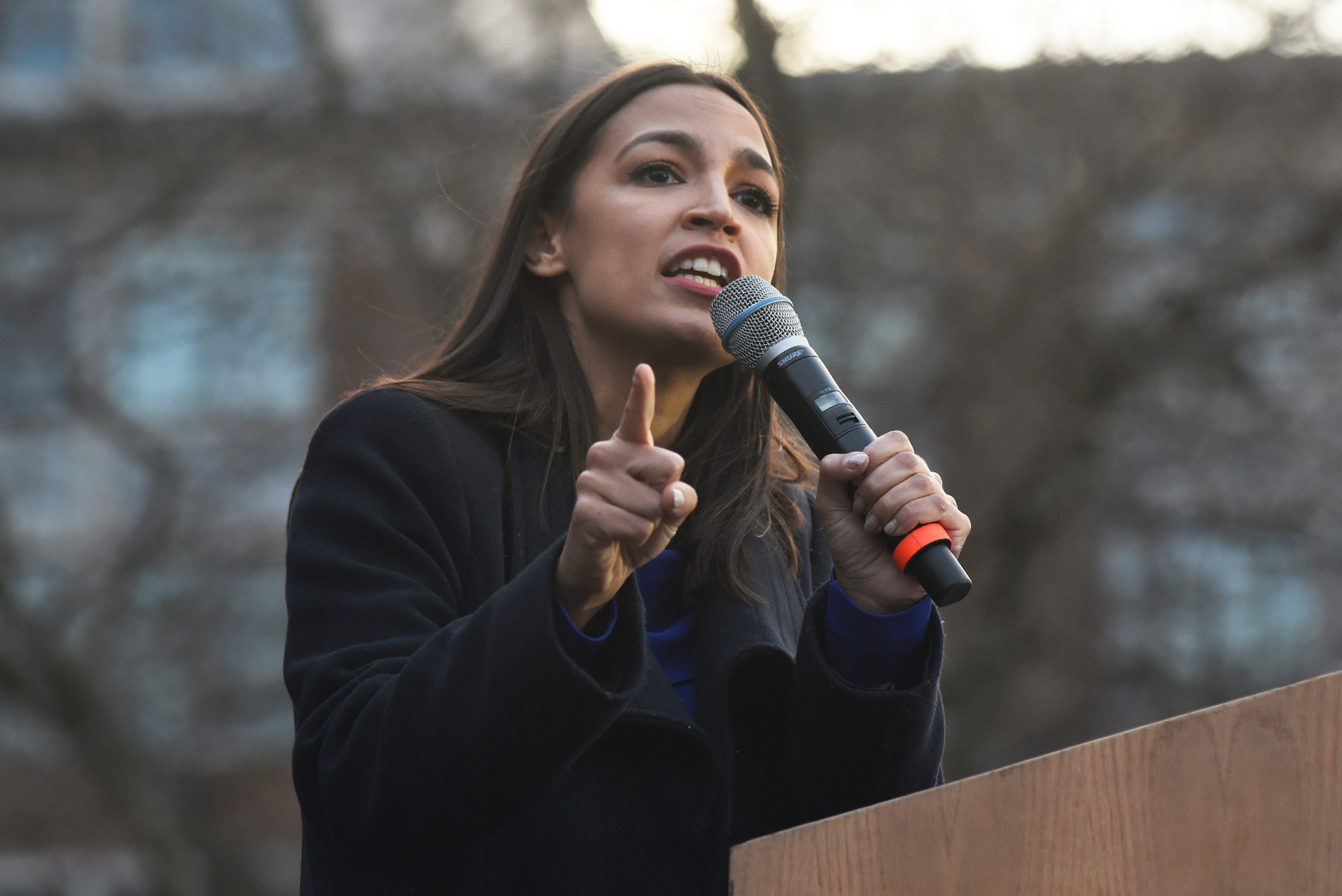

U.S. Representative Alexandria Ocasio-Cortez addresses the crowd before U.S. Senator and presidential candidate Bernie Sanders came on stage on the campus of The University of Michigan, Sunday, March 8, 2020 in Ann Arbor, Mich. Alexandria Ocasio Cortez
Rep. Alexandria Ocasio-Cortez forcefully pushed back this week after influencer Jake Paul sparked controversy by attacking Bad Bunny ahead of the rapper’s Super Bowl LX halftime performance, igniting a wider debate about patriotism, culture, and who gets to define “American” identity.
The clash began when Paul announced on social media that he planned to intentionally skip the halftime show, urging followers to do the same as a form of protest against corporate decision-making tied to viewership numbers. His comments escalated when he accused Bad Bunny—who was born in Puerto Rico—of being a “fake American” and claimed the global music star harbored anti-American views. The remarks drew swift backlash, particularly given Puerto Rico’s status as a U.S. territory whose residents are American citizens.
Ocasio-Cortez, who is of Puerto Rican heritage, responded sharply. She contrasted Paul’s criticism with Bad Bunny’s philanthropic work, pointing out that the artist has invested heavily in programs that provide low-income youth with access to arts and sports. She also took aim at Paul personally, referencing his decision to live in Puerto Rico for tax reasons, and argued that his attacks revealed insecurity rather than principle.

Jan 19, 2026; Miami Gardens, FL, USA; Jake Paul on the sidelines during the College Football Playoff National Championship game at Hard Rock Stadium. Mandatory Credit: Mark J. Rebilas-Imagn Images
The controversy quickly spread beyond the two figures. Logan Paul publicly distanced himself from his brother’s comments, affirming that Puerto Ricans are Americans and celebrating the opportunity for talent from the island to be showcased on one of the world’s biggest stages. Facing mounting criticism, Jake Paul later attempted to clarify his stance, saying his words had been misunderstood and acknowledging Bad Bunny’s citizenship. He reframed his argument as a disagreement with the artist’s values rather than his nationality.
Bad Bunny has been outspoken in recent weeks about immigration enforcement and Latino identity. At the Grammy Awards earlier this month, he openly criticized Immigration and Customs Enforcement, emphasizing the humanity and Americanness of immigrant communities. That message carried into his Super Bowl performance, which concluded with a blessing for the United States, a roll call of nations across the Americas, and a pointed tribute to Puerto Rico.
The halftime show drew massive attention, while a competing conservative livestreamed performance organized by Turning Point USA also attracted millions of viewers online. Together, the dueling reactions underscored how the Super Bowl stage has once again become a flashpoint for cultural and political tensions—this time centering on language, identity, and who gets to claim belonging in America.



