
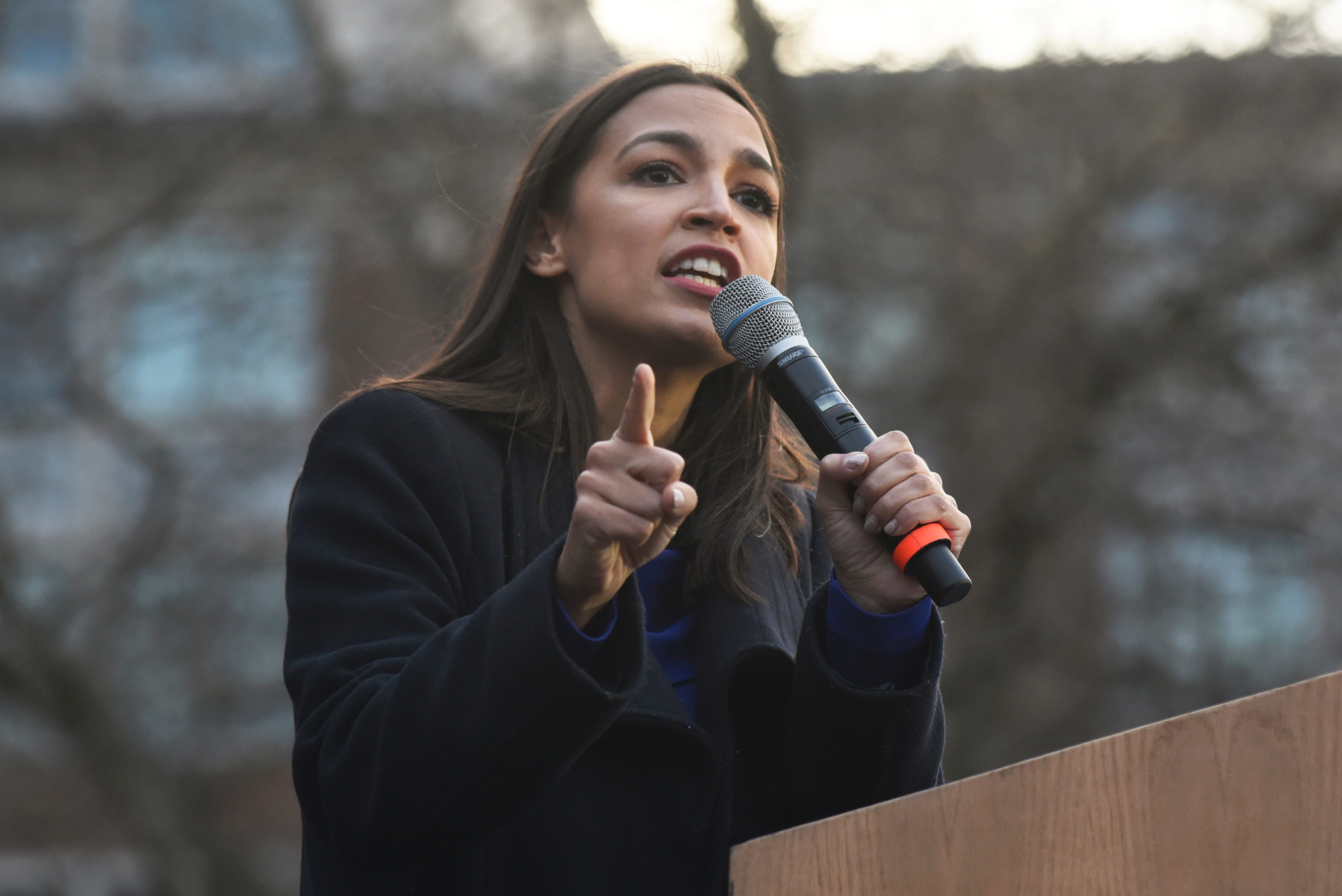

U.S. Representative Alexandria Ocasio-Cortez addresses the crowd before U.S. Senator and presidential candidate Bernie Sanders came on stage on the campus of The University of Michigan, Sunday, March 8, 2020 in Ann Arbor, Mich. Alexandria Ocasio Cortez
Rep. Alexandria Ocasio-Cortez spoke about immigration enforcement, election security, and political strategy in a recent discussion focused on negotiations around the Department of Homeland Security (DHS) and potential reforms involving Immigration and Customs Enforcement (ICE).
Ocasio-Cortez began by addressing concerns tied to the upcoming November elections. She referenced public comments from figures such as Steve Bannon and members of the administration who have floated the idea of placing DHS personnel near polling locations. Ocasio-Cortez said she believes this issue should be directly included in any DHS funding negotiations. In her view, Congress should use its authority to prevent DHS or ICE agents from being stationed near polling sites, arguing that their presence could intimidate voters or create unnecessary risk during elections.
She described the DHS funding process as a major political leverage point, noting that lawmakers may not get another opportunity before the election to influence how the agency operates. She explained that the next major funding decision will likely be a continuing resolution, or “CR,” and that another round of negotiations might not occur until after November. Because of that timeline, she framed the upcoming DHS funding debate as a critical moment for lawmakers and voters who want changes to immigration enforcement policies.
Ocasio-Cortez also discussed how political pressure can affect decision-making in Washington. She pointed to past legislative fights, including a debate over a shutdown, saying that public outrage and organizing earlier in the year influenced lawmakers who initially wanted to compromise quickly. She suggested that the backlash lawmakers received for “folding” gave some moderates, particularly in the Senate, more motivation to take a stronger stance later on. In her view, public mobilization can shift what elected officials are willing to do.
Throughout her remarks, Ocasio-Cortez emphasized the importance of grassroots organizing. She praised her constituents in Queens and the Bronx, saying their activism gives her political strength when negotiating in Congress. She explained that she has faced pressure from Democratic leadership at times to stay quiet or soften her position, but she resists that pressure by pointing to the expectations of her district. She said the political culture of her community is well known in Washington, and that colleagues understand she cannot easily back away from issues her voters care strongly about.

She also argued that national attitudes toward ICE have changed significantly. According to Ocasio-Cortez, the political conversation around ICE has shifted enough that even lawmakers once seen as more moderate are now more willing to speak out. She claimed Republicans have also been pushed into responding defensively, which she interpreted as a sign that the debate has become more serious and more visible.
While she noted she could not discuss election politics in detail in an official setting, she suggested that organizing efforts have broader impacts beyond a single district. She said mobilization not only influences policy debates but also helps lawmakers travel and support efforts in other parts of the country.
Overall, Ocasio-Cortez’s message focused on using the DHS funding process as leverage, encouraging voter and community activism, and pushing for limits on how immigration enforcement agencies operate—especially in sensitive areas like polling sites.



