
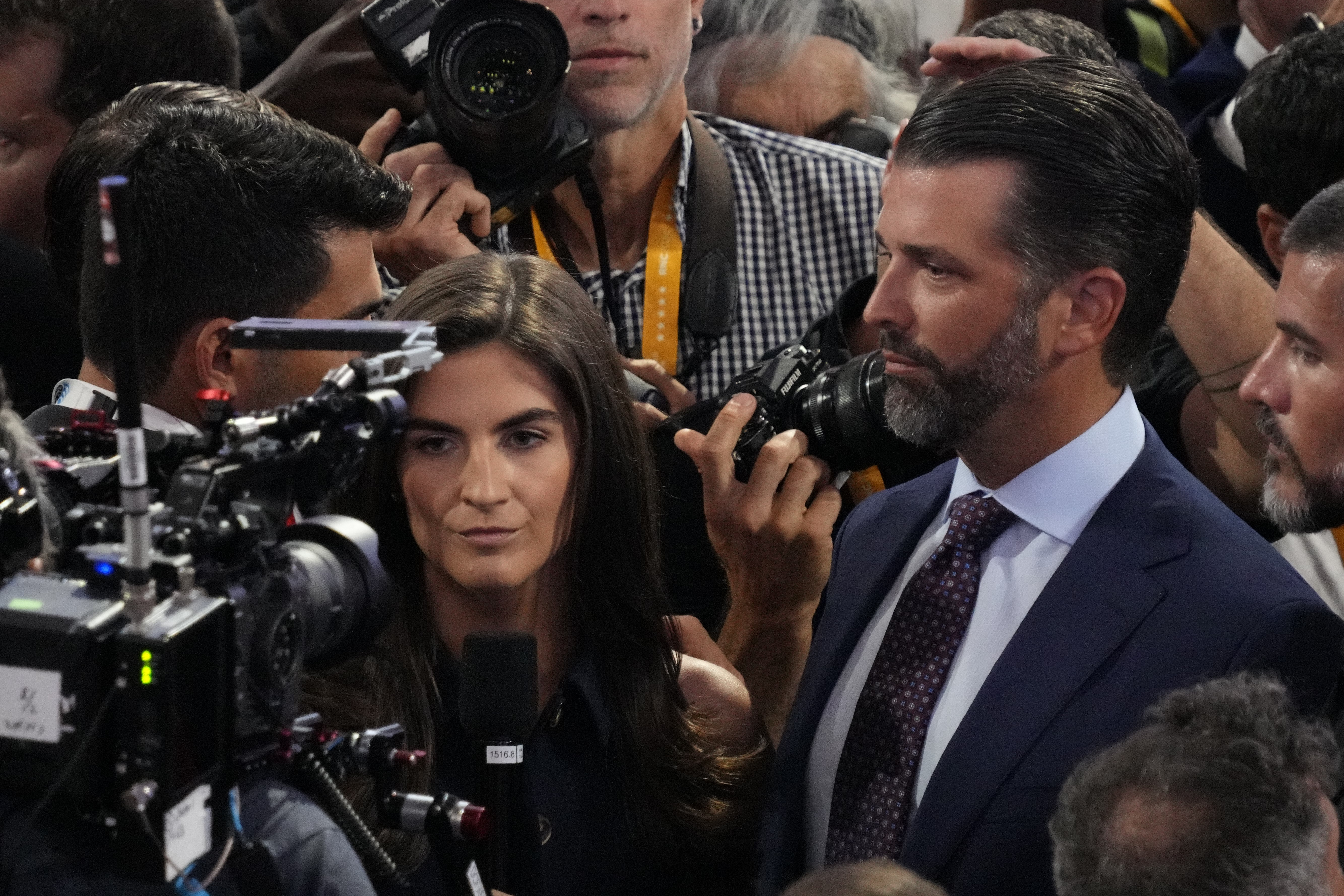

Jul 15, 2024; Milwaukee, WI, USA; CNN anchor Kaitlan Collins interviews Donald Trump Jr. on the floor during the first day of the Republican National Convention. The RNC kicked off the first day of the convention with the roll call vote of the states. Mandatory Credit: Jasper Colt-USA TODAY
President Donald Trump sharply criticized CNN correspondent Kaitlan Collins during an Oval Office exchange Tuesday, turning what began as a routine question-and-answer session into a tense confrontation that quickly drew national attention.
The moment occurred as Collins attempted to ask Trump about the latest release of government files connected to Jeffrey Epstein, the financier who was once acquainted with Trump and who faced sex trafficking charges before his death in custody in 2019. Collins, CNN’s chief White House correspondent, raised questions about the documents and the impact on Epstein’s sexual assault victims.
At first, Trump responded calmly to two of her questions about the release of the Epstein-related materials. But when Collins pressed further with a third question that referenced victims, the president abruptly shifted tone and began attacking her personally rather than addressing the substance of her inquiry.
Trump mocked Collins for what he described as her lack of warmth, telling her sarcastically that he had never seen her smile. He suggested that her expression reflected dishonesty, accusing her of not telling the truth. Collins responded by emphasizing that her question concerned Epstein’s victims, but Trump continued to interrupt and escalate his criticism.
The exchange became less about the documents and more about Trump’s longstanding adversarial relationship with certain members of the press, particularly reporters from outlets he frequently labels as hostile. Trump called Collins “the worst reporter” and claimed CNN’s ratings problems were due to journalists like her.
The incident added to a pattern of Trump publicly singling out journalists, including women, with insults or dismissive remarks. The article notes that Trump has previously directed harsh language toward female reporters, including an episode last year in which he abruptly silenced a Bloomberg News journalist with a derogatory comment.
Collins is not a new figure in Trump’s orbit. She has covered him closely since his rise in national politics in 2016 and has often been present during contentious press briefings and interviews. Trump has repeatedly criticized her in the past, including a December post on his Truth Social platform in which he attacked her personally and referred to CNN as “fake news.”
Following Tuesday’s confrontation, CNN released a statement defending Collins and praising her work. The network described her as an exceptional journalist who reports with depth and persistence. The statement was similar to responses CNN has issued on previous occasions when Collins or other correspondents have been targeted by Trump.
The tense moment did not end when the cameras stopped rolling. As reporters were escorted out of the Oval Office, Trump could be heard continuing to comment about Collins to Sen. John Barrasso of Wyoming, again remarking that she never smiles while gesturing toward the press.
The episode highlights the ongoing friction between Trump and major news organizations, particularly CNN, which he has frequently criticized throughout his political career. It also underscores how discussions of sensitive topics—such as the Epstein case and its victims—can quickly become entangled in broader conflicts between the White House and the media.
While Collins’ questions focused on accountability and the release of government records, Trump’s response centered on her demeanor and credibility, reflecting a familiar dynamic in his interactions with reporters. The confrontation drew immediate reaction not only because of the subject matter, but because it showcased the personal nature of Trump’s approach to press scrutiny.
As the administration continues to face questions about high-profile investigations and public transparency, moments like this illustrate the charged atmosphere surrounding presidential press access—and the challenges journalists face when pushing for answers in an increasingly combative media environment.



