
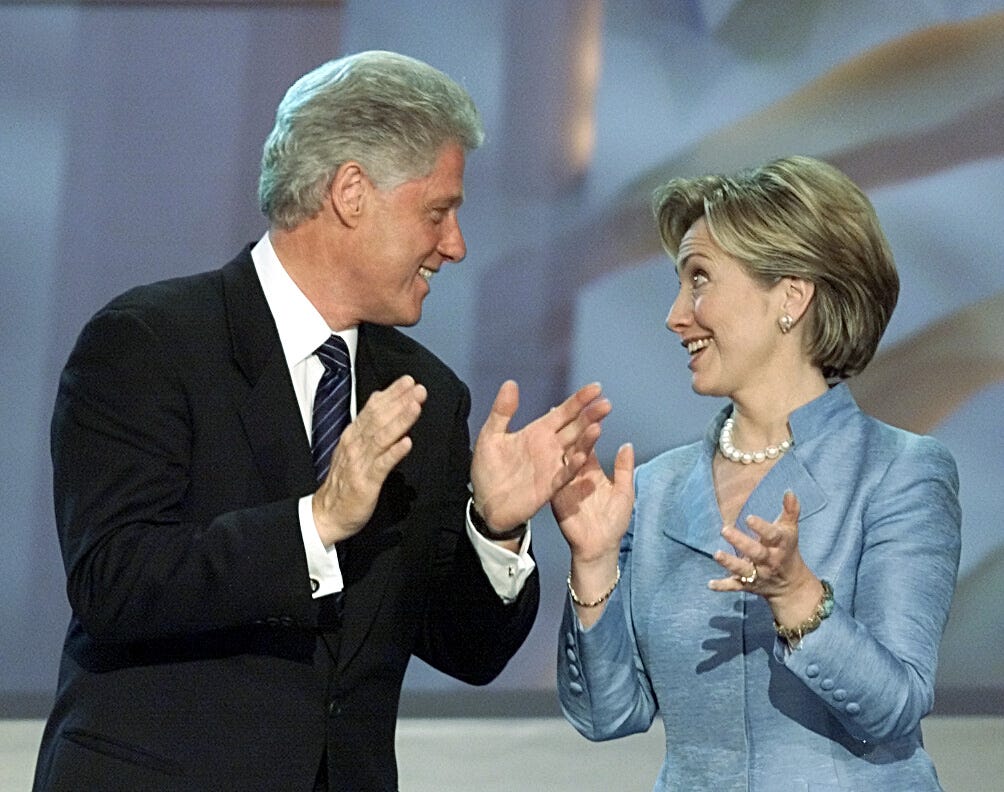

President Clinton and wife Hillary Rodham Clinton on stage at the Democratic National Convention in Los Angeles on Aug. 14, 2000.
Scandal rocked Capitol Hill Monday night as, in a dramatic showdown, Bill and Hillary Clinton finally agreed to testify before Congress over their ties to the late Jeffrey Epstein—just as they teetered on the verge of being cited for contempt of Congress. This high-stakes standoff pits political legends against lawmakers determined to get answers, with jail time and hefty fines hanging in the balance.
Tensions reached fever pitch as attorneys representing the Democratic power couple made a surprise late-night announcement: Bill, the former President, and Hillary, the ex-Secretary of State, will appear for depositions regarding their connection to notorious sex offender Jeffrey Epstein. A blistering congressional probe into Epstein’s network has recently zeroed in on high-profile associates, and the Clintons’ names have long circulated in the storm of controversy surrounding the convicted financier.
Yet, despite the Clintons’ sudden willingness to comply, Rep. James Comer, the hard-charging Kentucky Republican who chairs the House Oversight Committee, wasn’t exactly rolling out the welcome mat. Comer made it crystal clear that nothing was settled just yet: “We don’t have anything in writing,” he flatly told a throng of reporters camped outside his office late Monday. While Comer admitted he might accept their offer, he cautioned, “it depends on what they say.”
For weeks, the Capitol had been abuzz with whispers about where the investigation would head next. On Monday evening, the drama escalated as the House Rules Committee moved toward a vote that would put Bill and Hillary in the unprecedented position of being cited for criminal contempt of Congress. If advanced, the measure could mean fines—and a real risk of locking up a former President and Secretary of State—if prosecuted by the Justice Department.
The fierce game of chicken erupted when lawyers for the Clintons attempted to hash out a compromise. According to sources with direct knowledge of negotiations, the Clinton legal team contacted Oversight Committee staff and announced the couple “will appear for depositions on mutually agreeable dates,” throwing the ball back in Comer’s court. But there was a catch: the requested understanding that the looming contempt proceedings would be dropped in return for their cooperation.
Comer, however, proved tough as nails—he refused to back down just yet. With the threat of handcuffs still on the table, he kept the pressure up: “The Clintons do not get to dictate the terms of lawful subpoenas,” he thundered, refusing to budge even after the last-minute overture.
Earlier in the day, Comer had already shot down a separate offer from the Clinton camp. That deal would have allowed Bill Clinton to participate in a four-hour transcribed interview covering “matters related to the investigations and prosecutions of Jeffrey Epstein,” while Hillary would have gotten off with submitting just a sworn declaration. That, to Comer, simply didn’t cut it. He insisted both must appear, in-person, for under-oath questionings at the committee—a move that would set Capitol Hill abuzz with anticipation and set a precedent for subpoena enforcement.
As the standoff continued, the usually obscure House Rules Committee was thrust into the spotlight, suddenly holding the power to either advance or freeze the contempt resolution against the Clintons. The committee temporarily hit the brakes while Comer and the Clinton legal team haggled over terms. Observers wondered if the delay was a sign of an impending breakthrough, or just another twist in an escalating political battle.
This saga didn’t begin overnight. The House Oversight Committee’s investigation into Jeffrey Epstein’s alliances stretches back several months, but it’s in recent weeks that the focus has shifted squarely to the Clintons’ interactions with the disgraced financier. While no criminal wrongdoing by the Clintons has been confirmed in the Epstein case, persistent questions about the nature of their associations have dogged the power duo since Epstein’s arrest and subsequent death.
The Clintons’ legal team, for their part, appeared eager to put accusations of stonewalling to rest. By agreeing to appear for depositions, they seem to be betting that transparency will clear their names. But critics, especially in the GOP, remain unconvinced and insist all the facts must come out under oath.
The saga is especially dramatic given the unprecedented possibility: never before has Congress held a former President in contempt for ducking a subpoena. The very notion of Bill Clinton, the 42nd President and key figure in modern Democratic politics, subject to a possible jail sentence if convicted of contempt, was enough to send shockwaves through Washington.
Epstein’s explosive saga, since his arrest in 2019 on federal sex trafficking charges and subsequent death in federal custody, has continued to cast a long shadow over America’s elites. Frequent speculation about which figures might be implicated has fueled numerous investigations and reams of tabloid fodder. The Clintons, due to their global prominence and longstanding ties to Epstein—Bill Clinton, in particular, flew on Epstein’s private jet—have repeatedly been forced to respond to speculation about their relationship with the financier. Both have denied any knowledge of Epstein’s criminal behavior.
So what’s next for the former First Family? With negotiations now under the harsh glare of national attention, any agreement for the Clintons’ depositions will almost certainly be matched by sky-high stakes and media scrutiny. Staffers for the Oversight Committee have begun drafting a long list of potential questions, sources told reporters, and anticipate marathon sessions once the Clintons finally take the hot seat.
Should the House and Comer accept the latest offer, contempt proceedings would likely be put aside—for now. But if talks break down or the Clintons back out, lawmakers may once again bring forward a contempt resolution and set up an extraordinary vote in the full House. At stake is much more than the reputations of Bill and Hillary Clinton—it’s a test of Congress’s power to enforce its investigative demands, even against the nation’s most powerful figures.
One thing’s certain: with the public’s attention riveted on every new development, the next chapter in the political drama surrounding the Clintons and the long, dark shadows of Jeffrey Epstein’s crimes has yet to be written. Will these headline-making depositions finally put rumors to rest—or only fuel new ones? All eyes are on Capitol Hill as the saga continues to unfold.



