
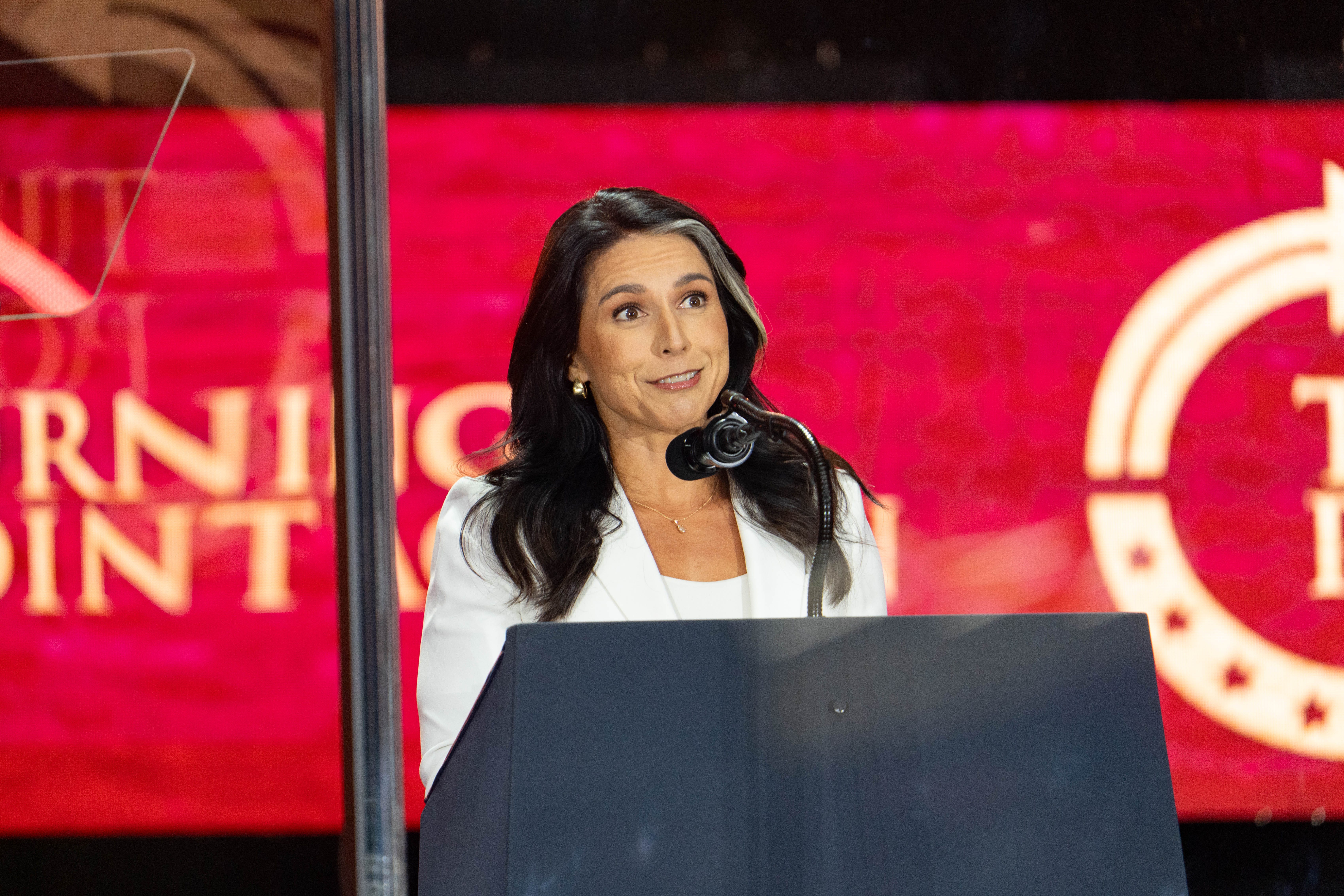
A whistleblower complaint alleging wrongdoing by Tulsi Gabbard is so highly classified that it is being physically kept locked inside a secure safe — and has yet to be shared with Congress months after it was filed, according to a bombshell report.
The Wall Street Journal reports a “continuing, behind-the-scenes struggle” over how to handle the complaint, with one official warning that disclosing its contents could cause “grave damage to national security.” The level of secrecy is so extreme that even the whistleblower’s own attorney has not been permitted to review the full complaint.
The complaint was filed last May with the intelligence community’s inspector general and is understood to implicate Gabbard directly, along with at least one other federal agency. It also reportedly raises potential claims of executive privilege, suggesting possible involvement by the White House.
Andrew Bakaj, the whistleblower’s attorney, has accused Gabbard’s office of effectively stonewalling the complaint by refusing to provide guidance on how it could be securely transmitted to congressional intelligence committees. Without that guidance, the law prevents the whistleblower from sharing the complaint directly with lawmakers.
Ordinarily, the inspector general must determine within two weeks whether a whistleblower complaint is credible and, if so, forward it to Congress within days. In this case, more than six months passed before members of the House and Senate intelligence committees even learned the complaint existed — and they still have not seen it.
Democratic staffers have since tried unsuccessfully to obtain further details, according to congressional aides. The complaint remains locked away under special handling procedures reserved for the most sensitive intelligence materials.
A spokeswoman for Gabbard’s office confirmed that the complaint involves the director of national intelligence but dismissed it as “baseless and politically motivated.” The office said Gabbard has cooperated with the inspector general and provided guidance to “support the eventual transmission of appropriate details to Congress.”
The secrecy surrounding the complaint has only heightened scrutiny of Gabbard, who last week drew bipartisan alarm for personally attending an FBI search of an election office in Fulton County, Georgia — an action critics say falls well outside her normal role overseeing the nation’s 18 intelligence agencies.
“I think much of the American public is quite reasonably alarmed,” said Jon Ossoff, after Gabbard was spotted inside an FBI evidence truck during the operation. He urged lawmakers to determine whether she is “straying far outside of [her] lane.”

Mar 26, 2025; Washington, DC, USA; Tulsi Gabbard, director of National Intelligence, at the House Intelligence Committee Annual Worldwide Threats Assessment hearing on Wednesday, March 26, 2025 in Washington, DC. Mandatory Credit: Jack Gruber-USA TODAY via Imagn Images
While intelligence employees file roughly a dozen “urgent concern” complaints each year, officials told the Journal that this case stands apart due to the extraordinary sensitivity of the material involved.
“Some complaints involve exceptionally sensitive materials necessitating special handling and storage requirements,” a representative for the inspector general said. “This case is one of them.”
Bakaj, who previously advised the CIA whistleblower whose complaint led to President Trump’s first impeachment, said the delay and secrecy are unprecedented — and deeply troubling.
For now, the complaint remains unseen, unread, and unresolved — a locked file at the center of Washington, containing allegations so volatile that Congress itself has been kept in the dark.



