

Imagn / Megan Smith-USA TODAY
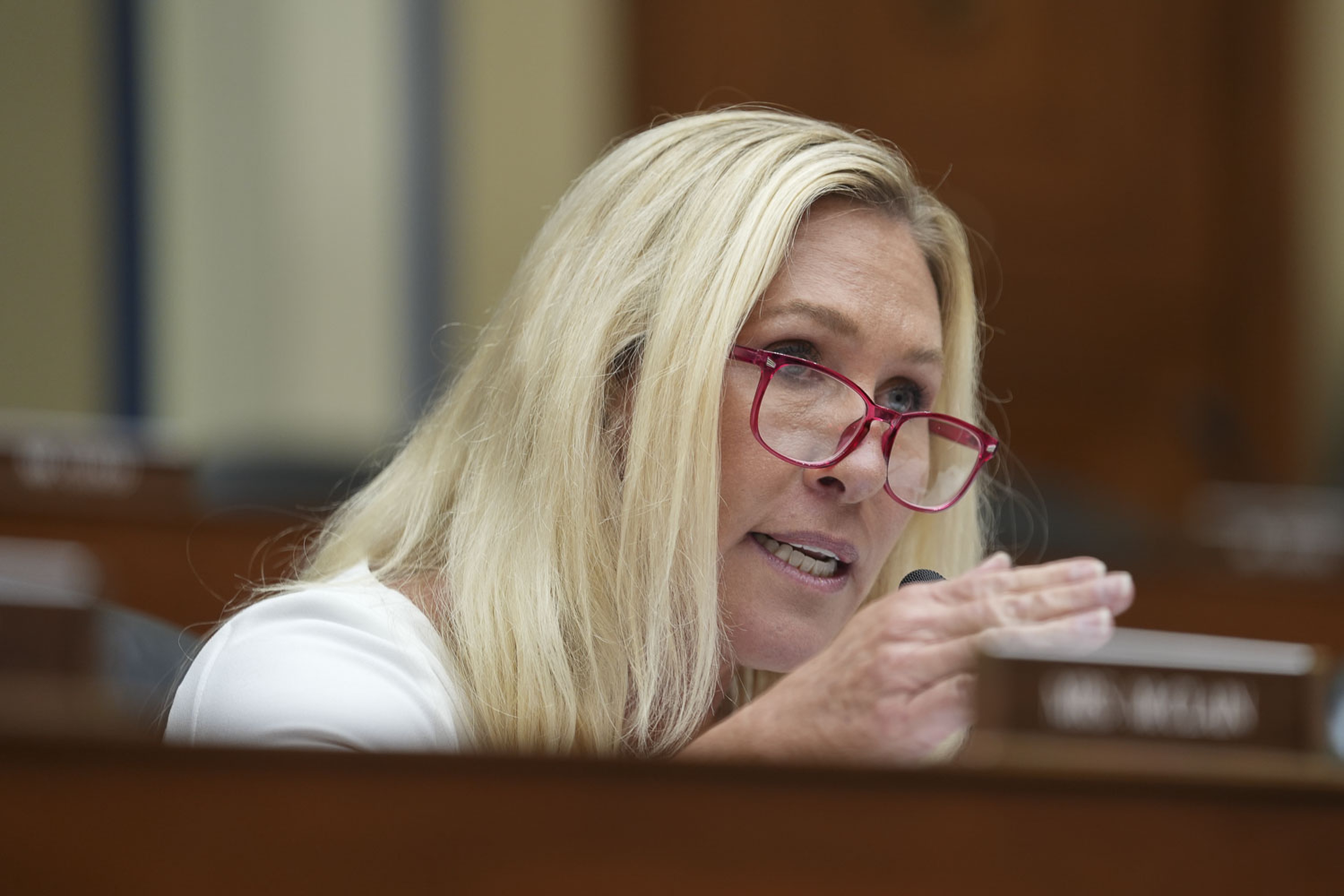
High drama erupted Friday night as Marjorie Taylor Greene, never one to shy from controversy, waded into the fierce debate swirling around Don Lemon’s sensational arrest. The former CNN primetime star found himself in handcuffs after federal agents nabbed him for his live coverage of an explosive anti-ICE protest that rocked a Minnesota church — and Greene’s fiery defense turned up the heat even more on HBO’s “Real Time with Bill Maher.”
The political theater unfolded as Lemon’s arrest sent shockwaves through both media and political worlds. Charged with a slew of civil rights violations — including conspiracy to deprive civil rights and obstructing the free exercise of religion — Lemon’s situation marks a rare and controversial collision of journalism, activism, and federal law enforcement.
The situation began simmering back on January 18, when a group of left-wing demonstrators swept into St. Paul’s Cities Church. The activists, fueled by suspicions that the church’s pastor was collaborating with U.S. Immigration and Customs Enforcement (ICE), stormed the religious service. Their challenge to authority got nationwide attention the moment Don Lemon, phone in hand, went live from inside, beaming the chaos out to his legions of followers.
But Lemon’s choice to embed himself among the protestors — and live stream their antics — landed him in the federal crosshairs. Law enforcement asserts that his livestream didn’t just document the commotion but actively contributed to the disruption of worship and intimidation of congregants.
While many in the media condemned the arrest as a dangerous attack on press freedom, Greene stunned audiences by siding with the crackdown. “I don’t think that’s journalism. That’s not [the] First Amendment,” she declared from across the panel on Maher’s popular late-night show. As the debate raged, Greene doubled down, insisting that Lemon’s actions crossed a line from reporting into outright activism.
The discussion heated up when host Bill Maher objected to Lemon’s treatment by federal agents. “It’s not good to arrest [Lemon],” Maher pointed out, clearly uncomfortable with the sight of a prominent journalist hauled into court. But Greene, referencing the tough federal rules around religious freedom, shot back that Lemon had violated the law — the FACE Act, in fact, which is supposed to protect houses of worship from interference.
“Well, I’m going to say he violated the FACE Act,” Greene insisted, her words slicing through the studio tension. She then spelled out her case: “He went into a church, disrupted their worship and then later in an interview compared them to White supremacists.” Her bottom line? “That’s not journalism. That’s activism.”
But the controversy didn’t stop there. Maher, always probing, pressed her: “But does it warrant getting arrested?” The question lingered in the air as Greene built her argument, painting Lemon not just as a journalist but as a participant in the chaos.
Drawing on accounts from inside the church, Greene insisted that Lemon’s livestream emboldened the activists. “He joined ‘activists’ in ‘harassing people’ in the middle of church, provoking children to cry,” she argued, doubling down yet again during the freewheeling panel exchange. According to Greene, this was not just aggressive reporting, but a breach that justified law enforcement’s severe response.
Meanwhile, seated nearby was Joe Scarborough, co-host of “MS NOW,” and longtime TV news figure, who wasn’t buying Greene’s version of events. Instead, Scarborough mounted his own robust defense of Lemon, focusing on the essential role journalists play in covering protest and conflict. “I think there has to be sort of a differentiation between if somebody’s going in there and saying, ‘I’m not with them, can I ask you some questions?’” he said, highlighting the grey area where reporting sometimes overlaps with activism.
According to Scarborough, Lemon’s reporting methods — however “aggressive” — did not cross the line into crime. Scarborough placed the blame squarely on the political motives of the Trump administration. He didn’t mince words, stating that the arrest was designed to “scare” other reporters away from sensitive beats like immigration and protest coverage. “Because you’re going to have embeds in war, you’re going to have embeds in protests,” Scarborough reminded the audience, drawing a parallel between covering chaotic situations abroad and intense moments at home.
The fallout from Lemon’s arrest was swift. As he exited a Los Angeles federal courthouse after his first appearance, Lemon addressed the press, flanked by attorneys and supporters. While he did not comment on the charges directly, his team released a statement the previous day, explaining how he ended up “the face” of the anti-ICE protests that swept through Minnesota.
The arrest has exposed tense divisions over the First Amendment and the responsibilities of journalists. At stake is a big question: When does reporting cross the line into activism, and who gets to decide? Greene’s argument is rooted in her reading of the law — specifically the FACE Act, a statute originally enacted to protect clinics and churches from targeted disruption. According to federal prosecutors, filming the protest was part of a “conspiracy to deprive civil rights” of those attending the church service.
Free speech advocates are alarmed, warning that the prosecution represents a dangerous precedent. Many journalists have rallied behind Lemon, saying his only crime was reporting from the front lines of a demonstration — the kind of on-the-ground journalism that has long defined American media.
Yet Greene’s voice remains a powerful counterpoint in a polarized debate. “I don’t think that’s journalism. That’s not [the] First Amendment,” she repeated on live TV. Her message: Journalists are welcome to document, but not to participate in, civil disobedience. Anything more, she suggests, might tip them from the protected role of the press into the crosshairs of the law.

Imagn / Jack Gruber-USA TODAY
The story is far from over. Legal analysts predict a lengthy legal battle ahead, with Lemon’s lawyers certain to argue that his arrest is a direct assault on press freedom. Meanwhile, lawmakers from both sides are weighing in, with some calling for an investigation into what they see as a politicized overreach by law enforcement.
For now, the nation watches as a former cable news anchor and a headline-making ex-Congresswoman spar over one of the thorniest questions in American life: just how far can a journalist go in covering protest before their own rights fall under threat? However this dramatic episode ends, one thing’s certain: the clash between activism, journalism, and the law just hit a whole new level.



