
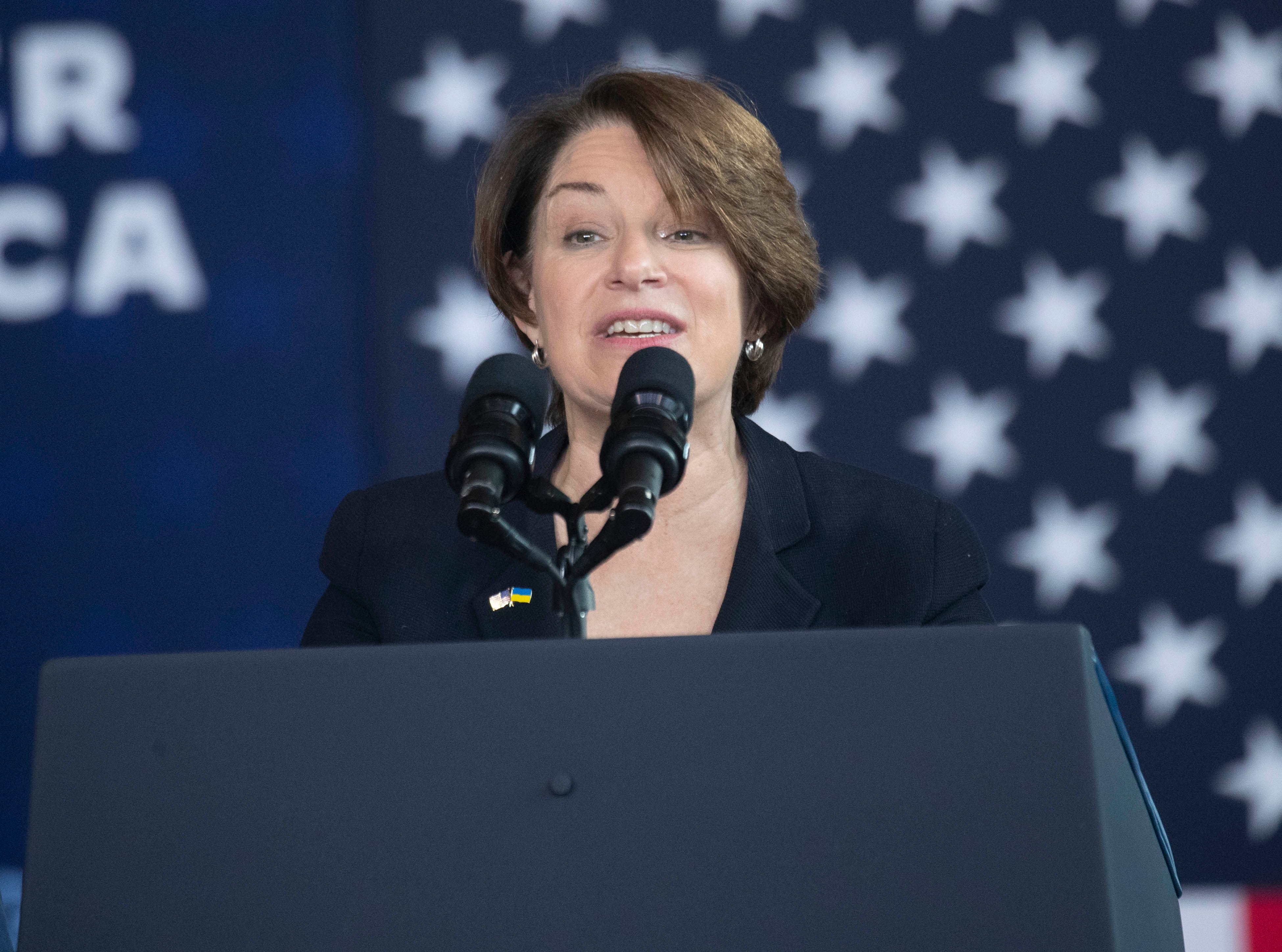

Tempers flared and political ambitions were unleashed this week in Minnesota as Senator Amy Klobuchar sent shockwaves through the state, announcing her bid to become governor just as a fierce immigration crisis grips the region. The timing is nothing short of electric—Minnesota is reeling after two U.S. citizens, Renee Good and Alex Pretti, lost their lives in an ICE operation, and the streets are crawling with thousands of federal agents. Tensions between parties have escalated to fever pitch, all shaping the path to the sizzling-hot 2026 midterms.
Sen. Klobuchar, a name already familiar from Senate halls and presidential debates, took to social media with a call to arms, slamming the federal government’s controversial surge of approximately 3,000 ICE officers. “This administration thrives on division, and it’s tearing our communities apart,” Klobuchar declared, her words ringing out in a video that quickly went viral among her supporters and political foes alike. “Let’s not mince words—Minnesota families are suffering. It’s time to fight, not hide.”
The bombshell came just days after incumbent Democratic Governor Tim Walz stunned the state by suspending his own re-election campaign for a third term, a decision that had already set tongues wagging across both parties. While speculation about possible contenders swirled, Klobuchar’s leap into the fray shifted the landscape overnight. The senator’s team wasted no time drawing a line in the sand: her campaign will face off directly with the Trump administration’s hardline immigration policies, blaming them for the chaos unfolding from Minneapolis to the Iron Range.
The deaths of Good and Pretti ignited anger across Minnesota, reopening fierce debate over how ICE operates in sanctuary jurisdictions and thrusting the state into the center of the national immigration fight. Residents described seeing federal agents in unmarked vehicles, while reports of aggressive enforcement tactics spread. Some community members said the developments have left them feeling newly unsafe, stunned that such violence could unfold close to home.
On local radio, NPR’s All Things Considered aired live from St. Paul, underscoring how the federal surge has escalated into a major political flashpoint. Hosts Juana Summers and Clay Masters portrayed Minnesota as a focal point in the country’s immigration divide. Democrats have sought to capitalize on the moment, while Republicans remain unsettled after gubernatorial candidate Chris Madel abruptly exited the race, blaming what he called a breakdown in leadership.
Sen. Amy Klobuchar has responded with sharp criticism of federal policy paired with calls for oversight. While acknowledging Democrats have limited tools to directly halt ICE deployments, she has framed the issue as a test of democratic checks and balances ahead of November. In public appearances, she has argued the situation extends beyond Minnesota and warned against fear taking hold in local neighborhoods.
The Trump administration, however, has shown no signs of retreating. President Trump contacted Gov. Tim Walz before sending Tom Homan, his newly appointed “border czar,” to oversee operations in Minnesota. Homan quickly replaced Border Patrol official Gregory Bovino and appeared at a Minneapolis press conference, presenting the federal presence as a necessary effort to enforce immigration law and restore order.
Beyond the political rhetoric, the reality on the ground remains complex. Minnesota has long cultivated an image as a welcoming state, with immigrant communities deeply rooted in Minneapolis and St. Paul. For years, leaders across party lines have tried to balance progressive values with law enforcement concerns. That fragile equilibrium now appears strained as tensions rise.
Analysts say the controversy is already shaping the midterm landscape. Voters who once focused primarily on the economy have increasingly cited public safety and immigration reform as top concerns. Social media has filled with dueling calls for action, with some warning against excessive federal force and others insisting enforcement must take priority.

Imagn: Mandatory Credit: Robert Deutsch-USA TODAY
Inside Democratic circles, Klobuchar’s allies have emphasized her prosecutorial background and deep Minnesota ties, arguing she understands the stakes for local families. Republicans, meanwhile, have struggled to regroup after Madel’s withdrawal, shifting blame toward Democratic city leaders for resisting cooperation with federal authorities and, in their view, worsening disorder.
Still, observers caution that Klobuchar’s strategy carries risks. Political outrage can fade quickly, and with months until November, it remains uncertain whether the current intensity will endure. Commentators note she is betting that public concern over the ICE surge will remain a defining issue through the fall.
Federal pressure continues to mount. Homan’s team is reportedly expanding coordination with state and local agencies even as city officials object. Advocacy groups are preparing lawsuits tied to the deaths of Good and Pretti, while demands for independent investigations grow louder. Congressional scrutiny is also a possibility.
In the months ahead, Minnesota’s campaign trail is likely to remain shadowed by the presence of federal agents and the state’s role in America’s ongoing immigration battle. Klobuchar’s run for governor is unfolding against an unusually volatile backdrop, with the outcome poised to shape both her future and Minnesota’s political direction.



