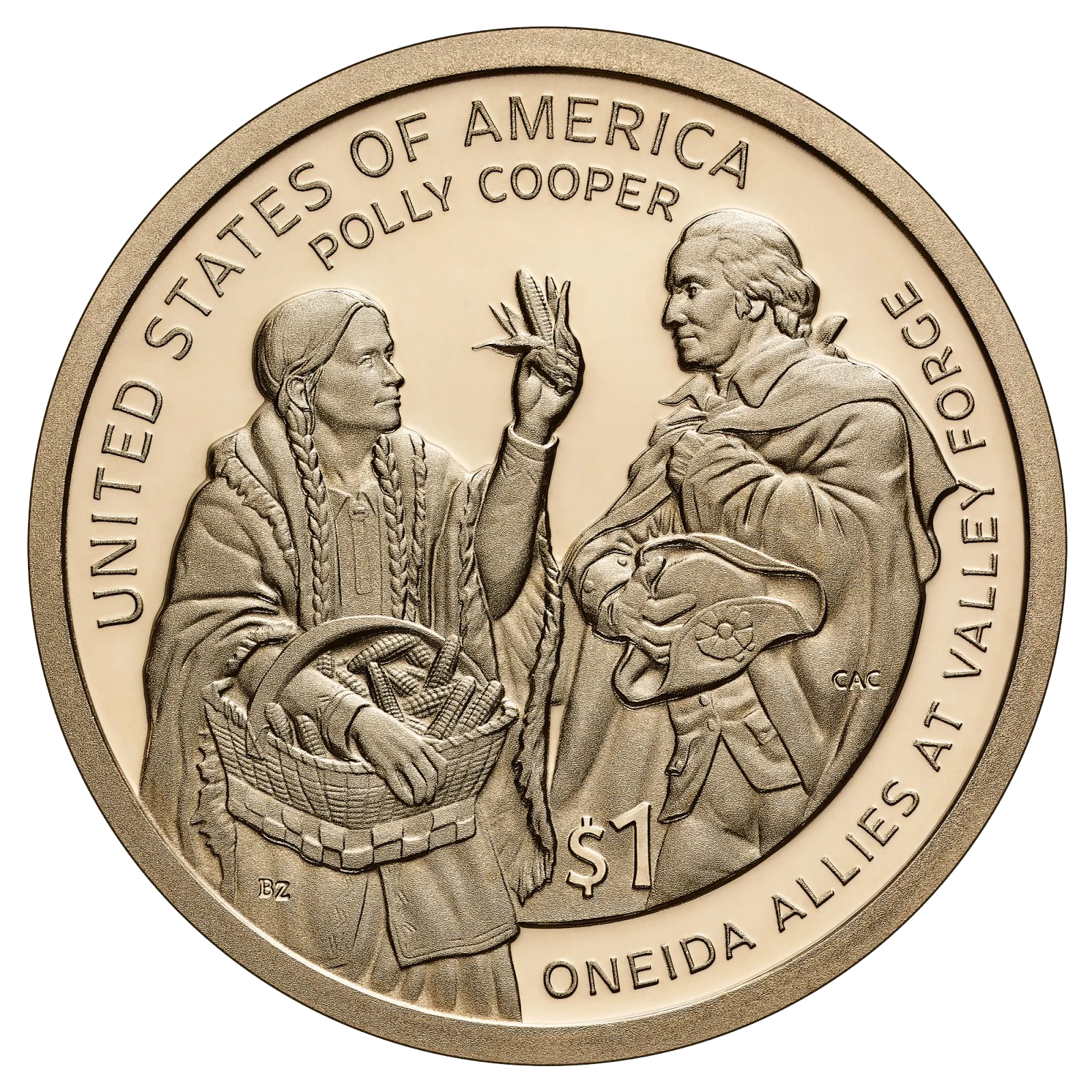

Move over, Sacagawea—there’s a new face coming to America’s iconic $1 coin, and this heroine’s story is the definition of unsung bravery. The United States Mint has pulled back the curtain on its 2026 Sacagawea coin, and history buffs are in for a treat: the reverse side is set to feature none other than Polly Cooper, a woman of the Oneida Nation whose courageous actions may have tipped the scales during the American Revolution.
This special coin is not just another piece of pocket change. The timing is electric, debuting as the nation gears up for the explosive celebration of 250 years since the Declaration of Independence shook the world back in 1776. While fireworks and parades will erupt across the country, the Mint’s new dollar tells a deeper, more complex story—one that brings Native American heroism front and center.
So, what makes Polly Cooper’s legacy coin-worthy? Flash back to a bone-chilling winter in 1778. George Washington’s army is stranded in Valley Forge, Pennsylvania. Food is nearly gone. Soldiers are starving, morale is at rock bottom, and victory looks like a distant dream. Enter Polly Cooper and a fearless band of 47 Oneida warriors, who brave a grueling journey from their homeland in central New York. Their mission? Deliver life-saving bushels of white corn and hope to Washington’s desperate troops.
According to stories preserved for generations within the Oneida community, Polly Cooper was far more than a messenger—she played a crucial role in saving struggling Revolutionary War soldiers. As troops neared collapse, many did not understand that eating raw corn could be dangerous. Cooper intervened, teaching them how to properly prepare hulled corn soup, a generous act that may have helped sustain the fight for independence. Oneida Indian Nation representative Ray Halbritter has said Cooper represents a form of courage rooted not in combat, but in compassion, hospitality, and a willingness to help others.
The official coin imagery reflects this legendary moment: Cooper cradling a basket of corn, offering sustenance to the leader of the Continental Army. Halbritter emphasized that this design wasn’t haphazard. He revealed that his community worked on it closely with the U.S. Mint to ensure authenticity and respect for their history.
On the coin’s flip side stands Sacagawea herself, the trailblazing guide who helped Lewis and Clark venture into America’s wild frontier. The Sacagawea $1 Coin Program, running since its establishment by a 2007 act of Congress, exists to spotlight individual Native Americans and tribes whose profound impacts on U.S. history are too often minimized or overlooked.
In fact, Polly Cooper now takes her place alongside a star-studded lineup. Past coins under the Native American $1 Coin Program have honored unparalleled figures like Maria Tallchief, the Osage ballerina who pirouetted her way into American cultural history. There’s also Jim Thorpe—Sac and Fox sporting legend, Olympic champ, and the original multi-sport superstar. The Mint hasn’t stopped at individuals, either: pivotal moments like the 1778 treaty with the Delaware (America’s first-ever agreement with a Native nation) have been forever etched in precious metal.
Oklahoma Senator Markwayne Mullin, a citizen of the Cherokee Nation, emphasized that the commemorative coins are meant to highlight individuals who helped shape a nation built on freedom and self-determination. However, not every proposal has moved forward. The Trump administration canceled several coin designs planned ahead of the country’s 250th anniversary, including tributes to prominent suffragettes and civil rights trailblazer Ruby Bridges. The Treasury Department, which oversees the U.S. Mint, has not publicly explained why those planned honors were dropped.
For the Oneida people, however, the spotlight on Polly Cooper is a long-overdue recognition of sacrifice and loyalty. The Oneida Indian Nation of New York, who proudly claim to be “America’s first ally,” made a fateful choice during the Revolution. Splitting from the powerful Haudenosaunee Confederacy, the Oneida sided with Washington’s rebels—a risky move with devastating consequences. Ray Halbritter, who is also CEO of Oneida Nation Enterprises, reminded the world that the alliance “came at great sacrifice.” The price? They became targets for brutal reprisal from British forces and former Native confederates. By the time the war ended, the Oneida paid dearly: an estimated third of their population was lost.
The significance of the Polly Cooper coin extends far beyond monetary value. It forces Americans to reckon with the hidden stories of minority groups who shaped the country’s fate under unimaginable pressure. Cooper’s journey wasn’t a singular act—it represented the Oneida Nation’s tradition of hospitality and empathy, values deeply woven into their identity. As the history books often focus on the generals and politicians, Halbritter and the Oneida hope this new minting will push ordinary citizens to remember those whose stories have long gone untold.
As for the coin itself, collectors and history lovers are already buzzing with anticipation. Each new release under this program has become a coveted keepsake, with past editions quickly snapped up—and this one promises to be no exception. For Native American youth especially, seeing Polly Cooper celebrated on a national symbol carries special weight. It’s proof that their ancestors’ heroism matters, that their legacies are finally being seen and honored by the world’s most powerful nation.
In a country racing toward its semiquincentennial, the 2026 Sacagawea dollar is more than currency. It’s a reminder that the American story is stitched together by countless acts of courage, big and small. With figures like Polly Cooper finally taking their place in this tapestry, perhaps the next 250 years can begin to right the wrongs of the past—and thank the quiet heroes who made freedom possible.