
Shockwaves are rippling through Florida’s political landscape as 41-year-old Titusville local Teagen Marie Targhuhanuchi finds herself at the heart of a jaw-dropping identity theft operation that has rocked the very core of the state’s election process.
Law enforcement says Targhuhanuchi — who was hired as a petition circulator by Smart & Safe Florida, the group driving the recreational marijuana amendment known as Ballot Initiative 2501 — allegedly transformed her access to voter signature sheets into a personal gold mine, pilfering private information and setting off a scandal that has triggered a thunderous official crackdown.

The bombshell allegations first surfaced this week after prosecutors charged Targhuhanuchi with a staggering 12 counts of identity theft, alongside 12 counts for submitting falsified voter registration paperwork, plus a further charge for identity theft covering more than ten individuals. Insiders say authorities are still tallying the full fallout, hinting that the number of compromised Floridians could spiral. Attorney General James Uthmeier, speaking in no uncertain terms, blasted the plot as a ‘brazen assault against the foundation of our elections’ and made it clear that anyone else involved will be aggressively pursued. The case now sits in the hands of the Office of Statewide Prosecution in the Twentieth Judicial Circuit, marking one of Florida’s largest petition fraud investigations in recent memory.

Targhuhanuchi’s alleged scheme started innocently enough. She turned up at rallies and events around the Sunshine State, clipboard in hand, under the guise of supporting Floridians’ right to vote on the legalization of marijuana. But behind the scenes, authorities claim she was doing more than collecting signatures: she was harvesting personal data directly from the forms, giving her access to names, birth dates, and addresses — all the tools needed to unleash a wave of suspicious voter registrations.
It was during routine checks carried out by the Charlotte County Supervisor of Elections that the discrepancies first came to light. Alarm bells sounded as staffers noticed a flurry of irregular applications, most linked directly to signers on Smart & Safe Florida’s petitions. Reports quickly landed on the desks of the Office of Election Crimes & Security, who, teaming up with the Florida Department of Law Enforcement, wasted no time launching a joint, multi-county investigation. What they uncovered left even veteran investigators stunned.
According to officials, Targhuhanuchi systematically used the private information collected during petition drives to forge and submit voter registrations, all without the knowledge or consent of the actual voters. Sources close to the probe describe hundreds of documents pouring in from locations across the state — from Tampa to Fort Lauderdale, and all points in between. Each form bore the unmistakable sign of fraud: nearly identical handwriting, suspicious signature matches, and addresses that didn’t quite add up. After weeks spent tracing the activity, investigators say the trail pointed convincingly to Targhuhanuchi.

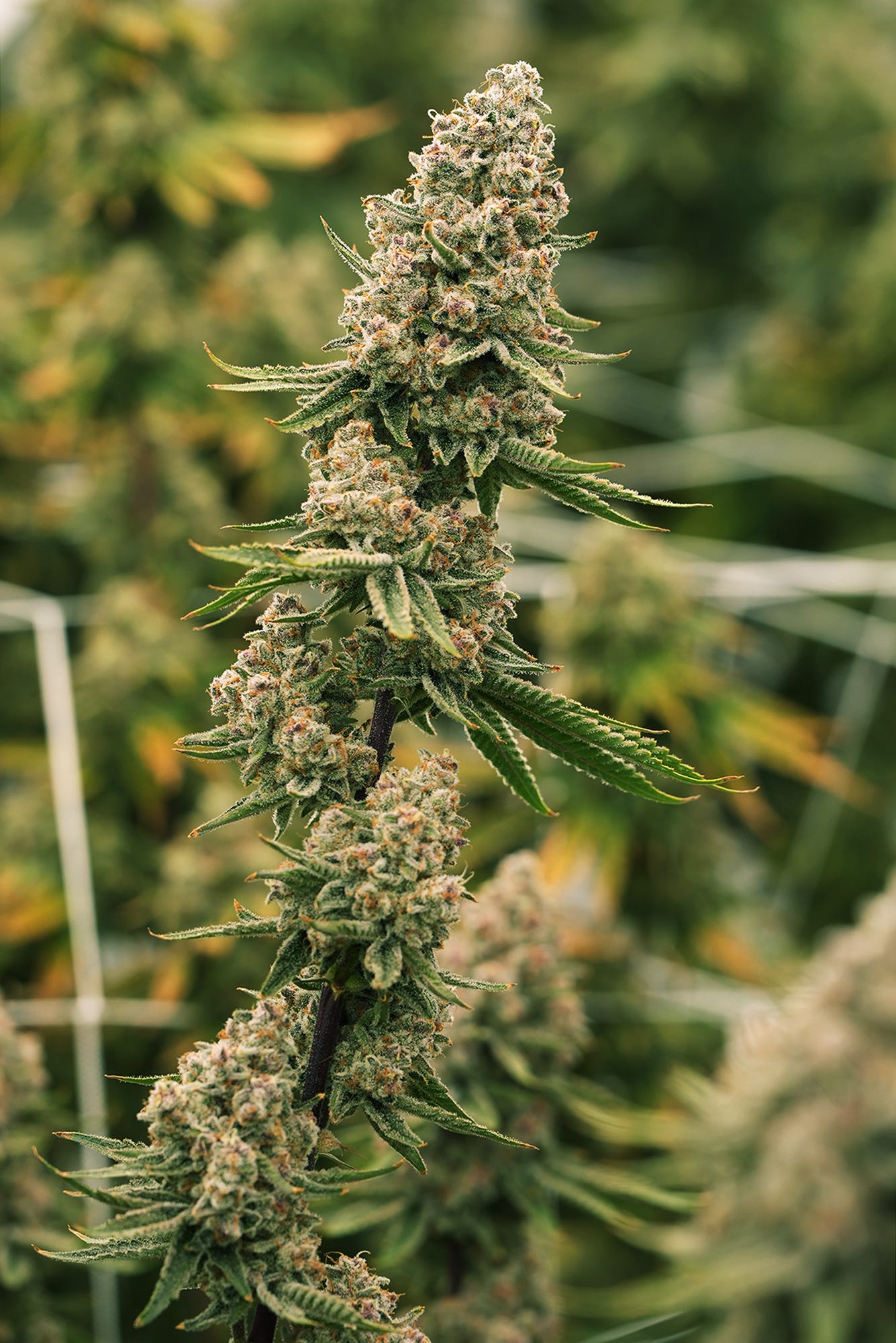
A marijuana bud grows at the Verano cultivation facility in Canton. Tuesday, Sept. 23, 2025.
News of the scandal sent shockwaves through both the pro-marijuana and election-reform communities. Smart & Safe Florida, the main group pushing for the 2026 recreational marijuana ballot measure, rushed to distance itself from Targhuhanuchi, insisting they had strict safeguards in place and condemning any illegal activity. Meanwhile, statewide concern grew after the Florida Department of State revealed it was already investigating over 7,100 suspicious petitions linked to marijuana ballot efforts — and had launched 46 new probes in the wake of this identity theft eruption.
AG Uthmeier, in a fiery press release, didn’t mince words. ‘This is nothing less than an attack on democracy itself. We will not tolerate criminals trying to undermine the will of Florida voters,’ he declared. Legal experts say the scale of the charges could mean Targhuhanuchi faces a lengthy prison sentence, with Florida law taking a particularly tough stance on election-related crimes — especially those involving the personal information of a large number of citizens.
Residents from multiple counties have already reported being stunned to discover voter registrations submitted in their name that they hadn’t authorized, sparking fears about the security of personal data whenever Floridians interact with petition circulators and election campaigns. The controversy has brought glaring new attention to the oversight of voter registration processes, the vetting of paid petition workers, and the risks surrounding ballot access campaigns, especially those connected to high-profile issues like marijuana legalization.
Election officials now face the daunting task of reviewing thousands of petition sheets, cross-checking every entry for signs of tampering or identity misappropriation. Meanwhile, cybersecurity experts have weighed in, urging lawmakers to invest in better protections for voter data and to regulate how campaign groups handle sensitive information collected during petition drives.
For Targhuhanuchi, the coming weeks promise to be anything but quiet. Sources inside the Twentieth Judicial Circuit say prosecutors are preparing an aggressive case, armed with documentation, eyewitness accounts from event attendees, and technical data analysis proving the link between the fraudulent registrations and the petition sheets she handled. Her arrest has already become a rallying point for reformers, with activists demanding greater transparency from ballot initiative operations and calling for sweeping changes to how petition workers are recruited and supervised.
In addition to the criminal charges, legal observers expect a wave of civil actions from affected individuals, raising questions about compensation and the broader responsibility of campaign organizations in safeguarding personal data. The incident could reshape not only how Florida oversees its democratic processes, but also how it approaches the question of marijuana legalization in coming years.



