
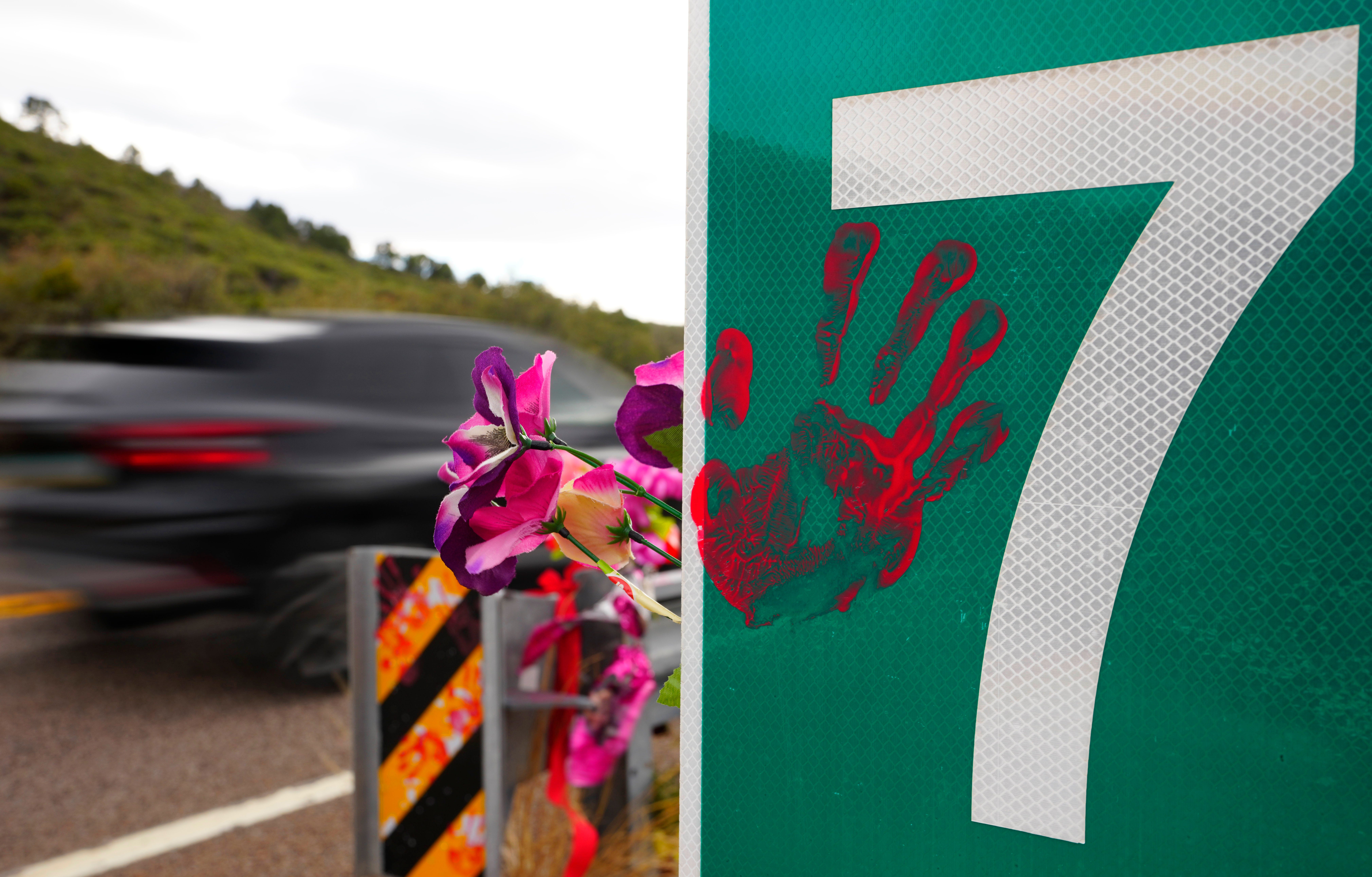

Milemarker 277 sits with flowers and a red hand print at the site of where Emily Pike’s body was recovered along Highway 60 northeast of Globe.
Tragedy continues to hang over Mesa, Arizona nearly a year after the disappearance and killing of Emily Pike, a Native American teenager whose case has shaken her community and sparked calls for nationwide reform. As the anniversary nears, loved ones and advocates gathered once again at the intersection of Mesa Drive and McKellips Road, where Emily was last seen, now marked by candles, flowers, and handwritten messages honoring her life.
On the evening of January 25, community members stood together in grief and resolve at the roadside memorial. Emily was just 14 when she ran from a local group home in late January 2023. In her final moments, she cried out for her mother and grandmother, a detail that has deeply haunted those who knew her. Nearly a month later, authorities discovered some of her remains on Valentine’s Day along U.S. Route 60 northeast of Globe. The remains had been dismembered and placed in plastic bags. Key portions of her body have never been recovered.
Nearly a year later, no arrests have been made, and the lack of answers has intensified the family’s pain. Relatives and supporters expressed the emotional weight of returning to the place where Emily vanished, emphasizing that the absence of accountability has made the grieving process even harder. They stressed that Emily’s name must continue to be spoken and remembered until justice is served.
Advocates speaking at the vigil underscored Emily’s vulnerability and the fear she experienced in her final hours, urging the public—especially parents—to recognize the urgency of protecting at-risk children. They framed Emily’s death not only as a brutal crime but as a broader failure of systems meant to keep Indigenous youth safe.
In response to growing pressure, authorities and community leaders have expanded efforts to solve the case. A combined reward of $200,000 is now being offered for information leading to an arrest. The FBI has contributed $75,000, while the San Carlos Apache Tribe has added another $75,000. Arizona Governor Katie Hobbs announced an additional $25,000 reward while signing “Emily’s Law,” legislation that created a new turquoise alert system for missing Indigenous people in the state.
The turquoise alert is designed to function similarly to an Amber Alert, but with a specific focus on Indigenous communities, which face disproportionately high rates of violence and disappearances. Advocates hope the system will prevent future cases like Emily’s from being overlooked or delayed.
Despite these steps, frustration remains high. Supporters argue that Emily’s case reflects systemic failures and insist that reform must be paired with accountability. The vigil itself was filled with tears, quiet prayers, and a shared determination to keep pressing for answers.
Law enforcement continues to ask the public for help, emphasizing that even small details could prove crucial. Tips can be directed to the Gila County Sheriff’s Office or the San Carlos Apache Police Department.
As Emily Pike’s story continues to resonate far beyond Arizona, her case has become a symbol of the urgent need to address the crisis of missing and murdered Indigenous youth. For her family and community, justice will only come when those responsible are identified, charged, and held accountable. Until then, they remain committed to ensuring Emily is never forgotten.

A banner and flowers as well as red hand prints sit at the site of where Emily Pike’s body was recovered along Highway 60 northeast of Globe.



