
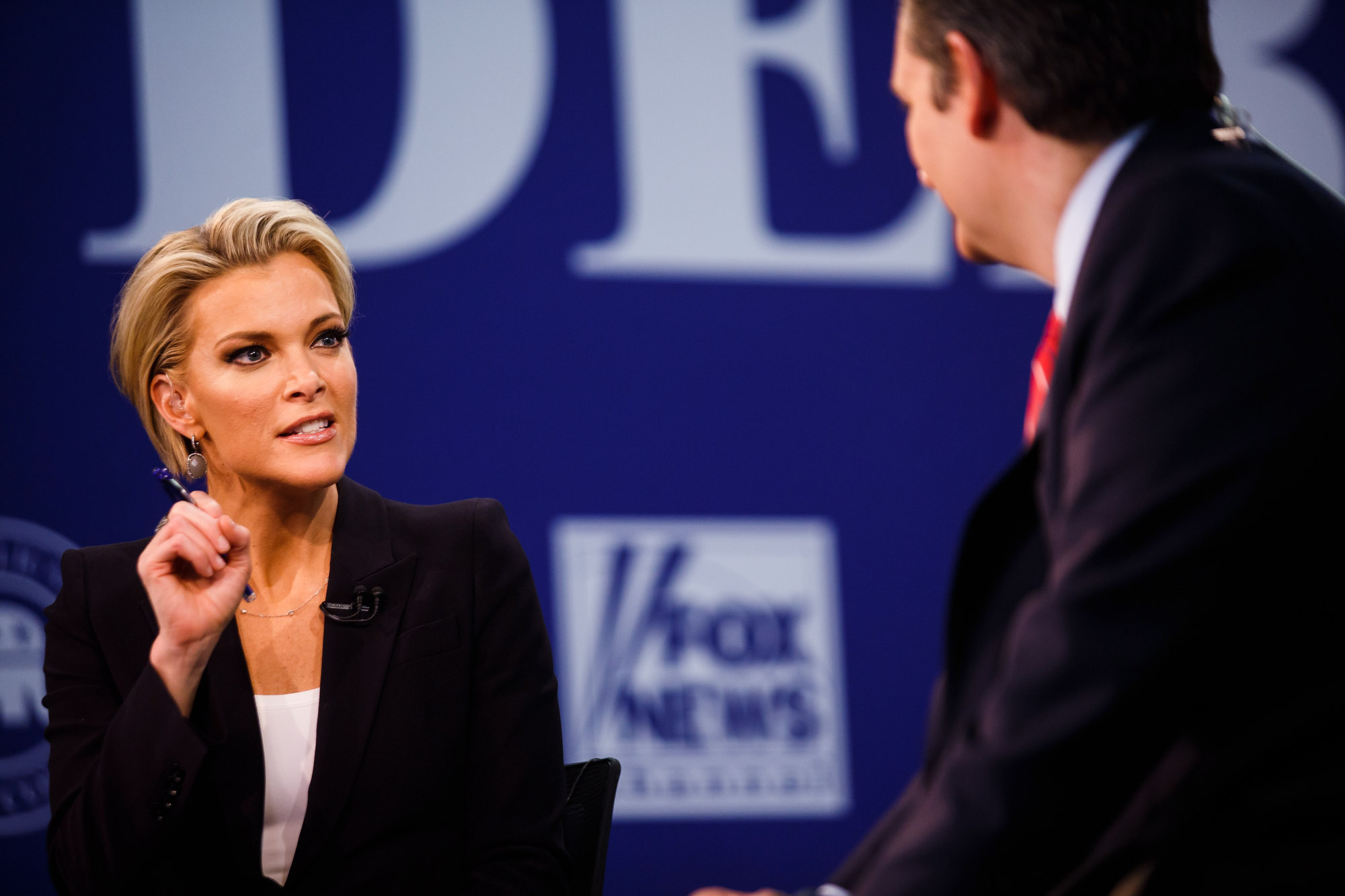

Jan 28, 2015; Des Moines, IA, USA; Fox News reporter Megyn Kelly interviews Republican presidential hopeful Ted Cruz after the Republican debate at the Iowa Events Center. Mandatory Credit: Brian Powers/The Des Moines Register via USA TODAY NETWORK
During a recent episode of The Megyn Kelly Show, journalist Megyn Kelly spoke with James O’Keefe, founder of O’Keefe Media Group, about his recent reporting in Minnesota and broader questions surrounding accountability for politically motivated crimes. The conversation focused on O’Keefe’s on-the-ground experiences, the organization of protest movements, and whether law enforcement at the state and federal levels is equipped—or willing—to respond.
O’Keefe described what he said were highly coordinated protest networks operating in Minneapolis in the aftermath of recent unrest. According to him, encrypted messaging platforms were used extensively for planning, communication, and real-time coordination. He expressed surprise at the level of organization, claiming participants were able to identify vehicles, track individuals, and mobilize quickly. O’Keefe said that during his reporting, he was confronted by multiple people shortly after arriving on site, which he interpreted as evidence of a tightly connected system.
Kelly and O’Keefe discussed whether such coordination suggests centralized funding or leadership. O’Keefe argued that, in his view, the movements function less as a single hierarchy and more as loosely connected networks of activists who are highly motivated by shared beliefs. He suggested that this ideological commitment, rather than financial backing alone, is what makes the groups difficult to contain.
The episode also touched on online rhetoric and threats. Kelly played a clip of an activist making explicit calls for armed resistance, which she and O’Keefe cited as an example of escalating language. O’Keefe said he has received frequent threats himself and believes exposure is the most effective way to deter those who engage in intimidation. Kelly noted that publicizing threats can sometimes amplify attention, though she acknowledged the seriousness of the issue.
A major theme of the discussion was accountability. O’Keefe questioned why, in his view, relatively few arrests have been made following incidents involving vandalism, disruptions of religious services, or alleged intimidation. He contrasted this with his own past experiences with law enforcement scrutiny, arguing that the disparity raises concerns about uneven enforcement of the law.
Kelly added context by describing the legal hurdles prosecutors face, including judicial oversight and evidentiary standards. She pointed out that while law enforcement agencies may seek swift action, courts often require a slower, more deliberate process. Even so, both agreed that public confidence depends on transparency and consistency.
O’Keefe suggested that institutional caution, legal risk, and political pressure can discourage decisive action. He argued that holding individuals accountable often carries professional and legal consequences for those in authority. Kelly acknowledged the tension between enforcement and restraint, noting that democratic systems are designed to balance public safety with civil liberties.
The conversation concluded with a broader reflection on leadership and institutions. O’Keefe emphasized that while he believes many people in government act in good faith, large bureaucracies can struggle to respond quickly to crises. Kelly agreed that the lack of visible outcomes has become part of the story itself, fueling frustration on all sides.
While the episode reflected strong opinions, it ultimately raised enduring questions about how democracies respond to unrest, protect free expression, and enforce the law fairly—questions that continue to resonate beyond Minnesota.



