
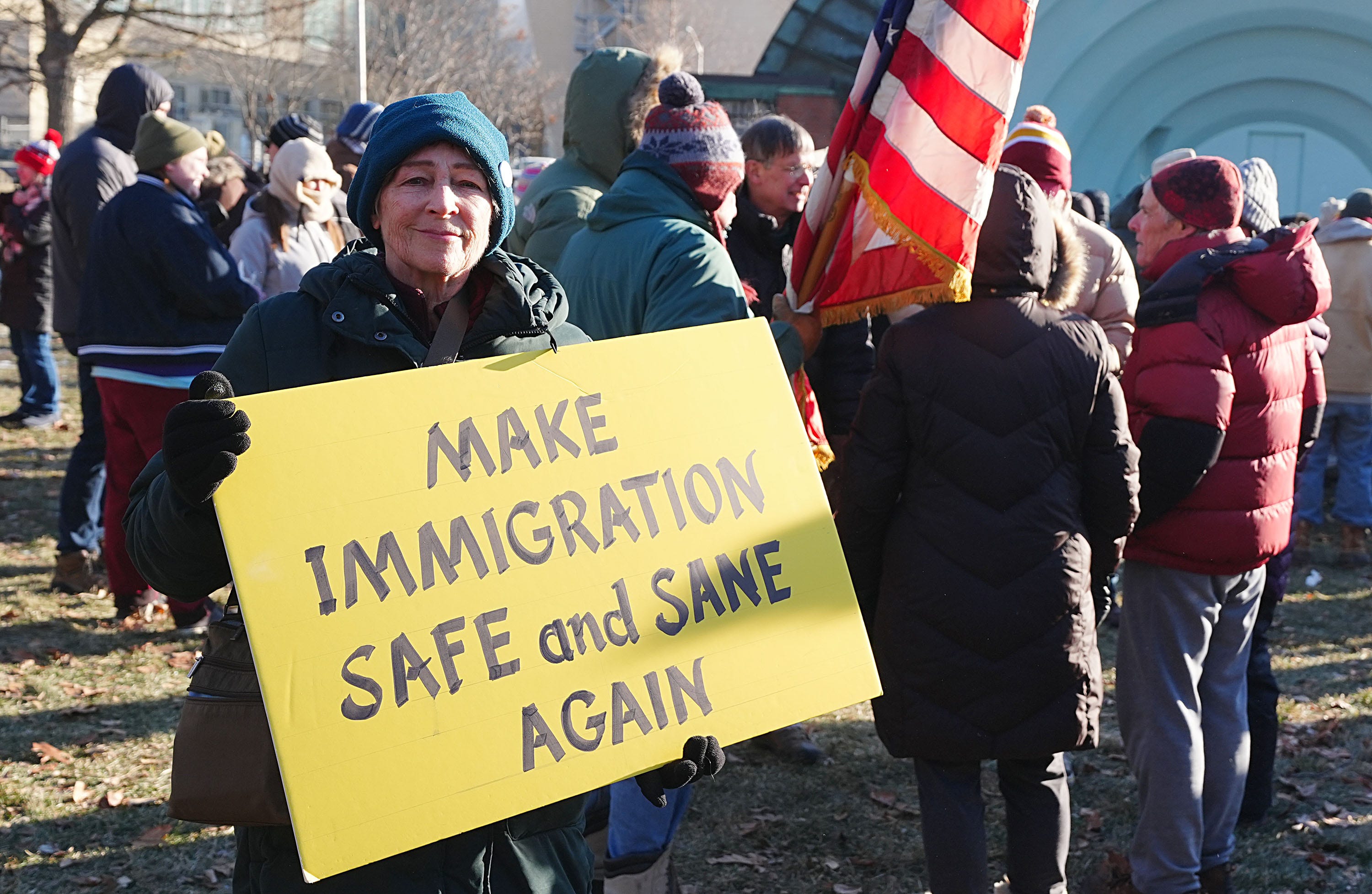

People gathered for a candlelight vigil for Alex Pretti and Renee Good on January 25, 2026, at Bandshell Park in Ames, Iowa. Pretti and Good were shot and killed by Federal agents in Minneapolis, Minnesota.
Federal authorities and Twin Cities leaders are locked in a high-stakes legal battle that could reshape the balance of power between Washington and the states. Inside the Minneapolis federal courthouse on Monday, arguments over the Trump administration’s deployment of roughly 3,000 armed ICE agents to Minnesota under “Operation Metro Surge” unfolded with unusual intensity. At the center of the case is U.S. District Judge Kate Menendez, whose rulings now carry national implications as she weighs claims of federal overreach, retaliation, and constitutional limits.
Minnesota argues that the federal operation went far beyond routine immigration enforcement. In court filings, the state describes the sweeping presence of ICE agents as an unlawful occupation designed to intimidate local governments that adopted sanctuary-style policies. According to the lawsuit, the administration’s actions were driven less by public safety concerns and more by a desire to punish political resistance.
Judge Menendez emerged as a focal point during Monday’s hearing when she ordered federal attorneys to formally respond to allegations that Operation Metro Surge was retaliatory in nature. She set a firm deadline for the government’s response while declining to preview her own thinking, a move that left both sides and courtroom observers awaiting her next step.
The case gained urgency after a series of violent incidents that intensified public scrutiny. The lawsuit followed the death of Renee Good under disputed circumstances, and tensions escalated further after Alex Pretti, a Minneapolis nurse, was killed by federal agents while reportedly documenting an immigration raid. Video footage reviewed by journalists appeared to conflict with initial federal accounts, fueling public outrage and renewed demands for transparency. With three shootings involving federal agents reported within a single month, community leaders say residents increasingly feel unsafe.
State attorneys described the federal presence as overwhelming and destabilizing. They argued that schools, businesses, and local government operations have been disrupted, with residents avoiding daily activities out of fear. According to Minnesota’s legal team, municipal services have been strained as local officials attempt to operate amid constant federal patrols.
During the hearing, the state pressed Judge Menendez to intervene quickly, portraying Operation Metro Surge as an aggressive show of force that relied on intimidation tactics. Attorneys alleged that critics of the operation faced indirect retaliation, including heightened regulatory scrutiny and the loss of travel privileges, reinforcing the claim that the effort was meant to silence dissent rather than enforce the law.
A key piece of evidence discussed in court was a letter from Attorney General Pam Bondi. Minnesota argues the letter amounted to coercion by tying any reduction in ICE activity to state cooperation in providing sensitive data, such as voter and benefits records. The state contends this maneuver violates the Tenth Amendment, which limits the federal government’s ability to commandeer state resources.
Judge Menendez did not rule immediately but made clear that the administration must justify both the scope and intent of its actions. Her decision to pause while demanding detailed responses underscores her central role in determining whether the operation crosses constitutional lines.
Beyond Minnesota, legal experts say the outcome could set a precedent for how far the federal government can go when states refuse to align with national enforcement priorities. For residents of Minneapolis and St. Paul, the case is already personal. Community leaders report widespread anxiety, citing accounts of mistaken detentions, racial profiling, and businesses disrupted by sudden investigations.
As the deadline for the federal response approaches, attention remains fixed on Judge Menendez. Her eventual ruling may not only decide the fate of Operation Metro Surge but also influence how future conflicts between state authority and federal power are resolved nationwide.



