
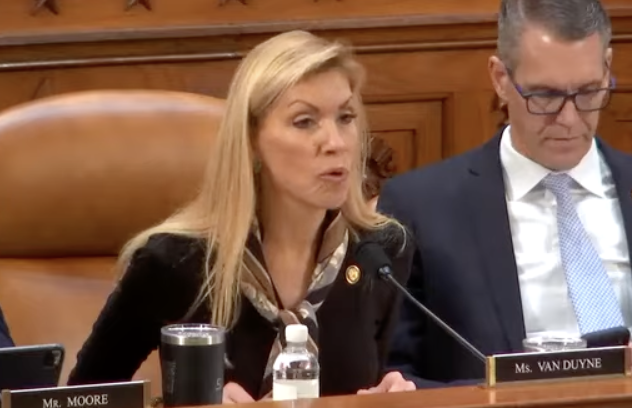

At a January 14, 2026 hearing before the House Ways and Means Committee, Rep. Beth Van Duyne spoke in support of the Ensuring Children Receive Support Act, a bill aimed at strengthening enforcement of child support obligations. Her remarks tied the proposal to broader economic conditions facing families and emphasized the importance of consistent financial support for children, particularly in shared custody situations.
Van Duyne began by highlighting what she described as a historically large tax refund season. She noted that families were expected to receive an estimated $370 billion in refunds overall, with about $91 billion issued over the coming months. According to her remarks, the average refund would be close to $4,000, and some families—such as households with two children earning around $73,000—would owe no federal income tax. She pointed to recently enacted tax provisions, including the standard deduction and the child tax credit, as sources of short-term financial relief for working families struggling with everyday expenses like food, rent, and utilities.
Against that backdrop, Van Duyne shifted to the issue of child support, framing it as a basic responsibility that should not be optional. She said that ensuring children are financially supported is especially critical in joint custody arrangements, where both parents are expected to contribute. When those obligations are not met, she argued, children bear the consequences through instability and unmet needs.
Van Duyne cited data showing the scale of the problem. In 2024, she said, more than 8 million child support cases nationwide involved unpaid obligations. She described that figure as harmful to children and a sign that stronger enforcement tools are needed to address persistent nonpayment.
The legislation she introduced builds on an existing federal mechanism: the passport denial program administered by the U.S. Department of State. Under current law, individuals who owe more than $2,500 in past-due child support can be denied a passport or have it revoked when they apply for certain consular services. Van Duyne’s bill would expand and formalize this process by requiring the State Department to revoke a passport at the time of renewal or consular interaction and notify the individual of the action.
She explained that the bill includes a limited exception for emergencies. If a person’s passport is revoked while they are abroad, the State Department would still be able to issue temporary travel authorization to allow that individual to return to the United States.
Van Duyne pointed to the program’s track record as evidence of its effectiveness. Since its launch in 1998, she said, the passport denial program has helped collect more than $600 million in overdue child support, including $30 million in 2024 alone. The proposed legislation, she noted, would codify practices already in use at the State Department while strengthening enforcement to discourage parents from deliberately avoiding their responsibilities.

She also referenced data from states such as Texas and California, which report high levels of child support arrears, as part of the rationale for federal action. Van Duyne emphasized that the bill is bipartisan, noting her work with Rep. Jimmy Panetta, and described it as a practical step to ensure children receive consistent financial support.
In closing, Van Duyne said the measure is designed to promote stability for children by helping meet basic needs, supporting academic success, and providing greater financial reliability. She framed the bill as an accountability-focused approach intended to reinforce the idea that child support obligations are a shared and enforceable responsibility.
Source: Congresswoman Beth Van Duyne on YouTube, “Rep. Van Duyne speaks on the Ensuring Child Support Support Act at Ways and Means – January 14, 2026″Miss Child Support, Lose Your Passport: Van Duyne Pushes Tough New Enforcement



