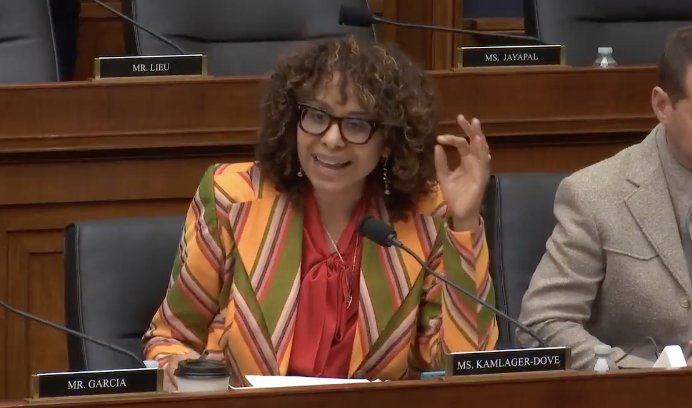

During a January 22, 2026 hearing before the House Judiciary Committee, Special Counsel Jack Smith addressed questions from Rep. Sydney Kamlager-Dove about his investigation into former President Donald Trump’s actions following the 2020 election. The exchange focused on the evidence gathered, the legal standards applied, and claims that the investigation unfairly targeted Republicans.
Kamlager-Dove opened by explaining why she believed Smith’s testimony mattered. She said persistent false claims that the 2020 election was rigged had fueled public distrust and contributed to violence, including harm to Capitol Police officers on January 6. She pointed to continued statements, including language on a White House website, asserting the election was stolen—claims that courts and election officials have repeatedly rejected. Against that backdrop, she asked Smith to explain what evidence his office developed showing that Trump knew he had lost the election.
Smith responded that investigators relied on evidence from multiple sources, including people close to Trump, campaign officials, and others who supported his reelection. According to Smith, these individuals consistently conveyed that Trump had been told he lost and that allegations of widespread fraud were untrue. Smith described the investigation as uncovering what he characterized as a conspiracy that sought to exploit party loyalty to keep Trump in office despite the election outcome.
He explained that much of the evidence involved Republicans because, as he put it, they were the people Trump and his allies attempted to persuade to take actions that could overturn the election. Smith noted that several key figures, including then–Vice President Mike Pence and state legislators, refused to go along with those efforts. He emphasized that if the case had gone to trial, many of the witnesses would have been Republicans, reflecting the nature of the alleged conduct rather than any political targeting.
Kamlager-Dove then asked why it was legally important to establish that Trump knew his claims were false. Smith said this point was central to the charge of defrauding the United States. He explained that while lying itself is generally protected speech, using knowingly false statements as part of a scheme to commit a crime is not protected under the First Amendment. Smith said this legal principle has been upheld by the Supreme Court and was directly addressed during litigation in the case.

Smith stressed that the investigation and resulting case were designed for a courtroom, not for public debate. He said prosecutors assessed the evidence and concluded it met the standard of proof beyond a reasonable doubt. That assessment, he said, reflected confidence that the case could withstand rigorous legal scrutiny at trial.
The discussion also addressed accusations from some Republican lawmakers that Smith selectively subpoenaed phone records belonging only to Republicans. Smith confirmed that some subpoenas were issued before he was appointed special counsel and explained that investigators sought records relevant to the alleged conspiracy. Because the individuals involved in the alleged scheme were Republicans, those were the records pursued. He stated that if a Democrat had engaged in the same conduct, investigators would have sought Democratic records as well.
To illustrate this point, Smith cited the interview of Rudy Giuliani, who told investigators that outreach efforts focused on Republicans because Democrats were not expected to help. Smith said this supported the conclusion that the investigation followed the evidence rather than partisan considerations.
Throughout the exchange, Smith maintained that his office applied standard investigative practices and legal thresholds. Kamlager-Dove concluded by noting that additional questions remain unanswered due to sealed materials, but emphasized the importance of addressing misinformation about elections. The hearing underscored ongoing debates about accountability, free speech, and the rule of law in the aftermath of the 2020 election.
Source: Congresswoman Sydney Kamlager-Dove on YouTube, “Special Counsel Jack Smith to Dem Rep: “We had proof beyond a reasonable doubt” to Convict Trump”