
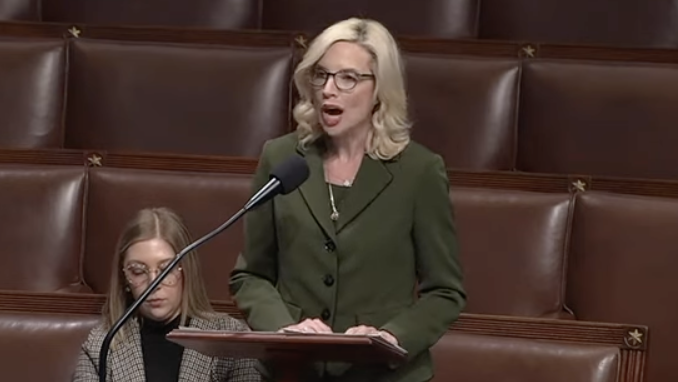

Rep. Ashley Hinson spoke on the House floor in support of her Pregnant Students Rights Act, describing the bill as a practical effort to ensure that pregnant students are informed of their rights and supported in completing their education. Her remarks focused on access to information, institutional responsibility, and the challenges faced by students balancing pregnancy and academic life.
Hinson began by thanking committee leadership for advancing the bill and explained that the legislation builds on existing protections under Title IX, which already guarantee pregnant students the right to remain enrolled and continue their studies. She argued, however, that despite those protections, many students are unaware of their rights or fear negative consequences if they disclose a pregnancy. According to Hinson, these concerns can include worries about academic standing, access to resources, or the loss of opportunities such as athletic scholarships.
Drawing on her personal experience as a mother of two, Hinson described pregnancy as a period filled with medical, financial, and emotional responsibilities. She said these pressures can be especially intense for students, who may feel forced to choose between continuing their education and carrying a pregnancy to term. In her view, this choice reflects gaps in communication and support rather than a lack of legal protections.
Hinson emphasized that colleges and universities have a responsibility to support all students, including those who are pregnant or parenting. She framed the issue as one of fairness and respect, stating that institutions should actively ensure students know what accommodations and resources are available to them. She also described this responsibility as part of a broader commitment to student success and long-term outcomes for families.
The Pregnant Students Rights Act would amend the Higher Education Act to require colleges and universities to clearly distribute information about pregnant students’ rights and available resources. Hinson explained that this information would need to be shared through common channels such as student handbooks, official emails, school websites, and orientation programs. The bill also includes accountability measures when institutions fail to meet these requirements.
In her remarks, Hinson referenced visits to pregnancy resource centers in Iowa and interactions with advocates who support pregnant women and new parents. She said these experiences reinforced her belief that students benefit when institutions provide clear guidance and practical support during pregnancy. She also noted that completing an education while pregnant or parenting can have lasting benefits, not only for students themselves but for their children and communities.
Hinson acknowledged that the bill has drawn opposition but argued that providing information about rights and resources should not be a partisan issue. She framed the legislation as a way to empower students to make informed decisions while continuing their education, rather than as a change to existing eligibility or enrollment rules.
Concluding her remarks, Hinson urged her colleagues to support the bill, describing it as a step toward greater clarity, consistency, and support for pregnant students across higher education. She emphasized that, in her view, ensuring students know their rights strengthens families, educational institutions, and the broader workforce.
Source: Congresswoman Ashley Hinson on YouTube: “Rep. Hinson delivers remarks in support of her Pregnant Students Rights Act”



