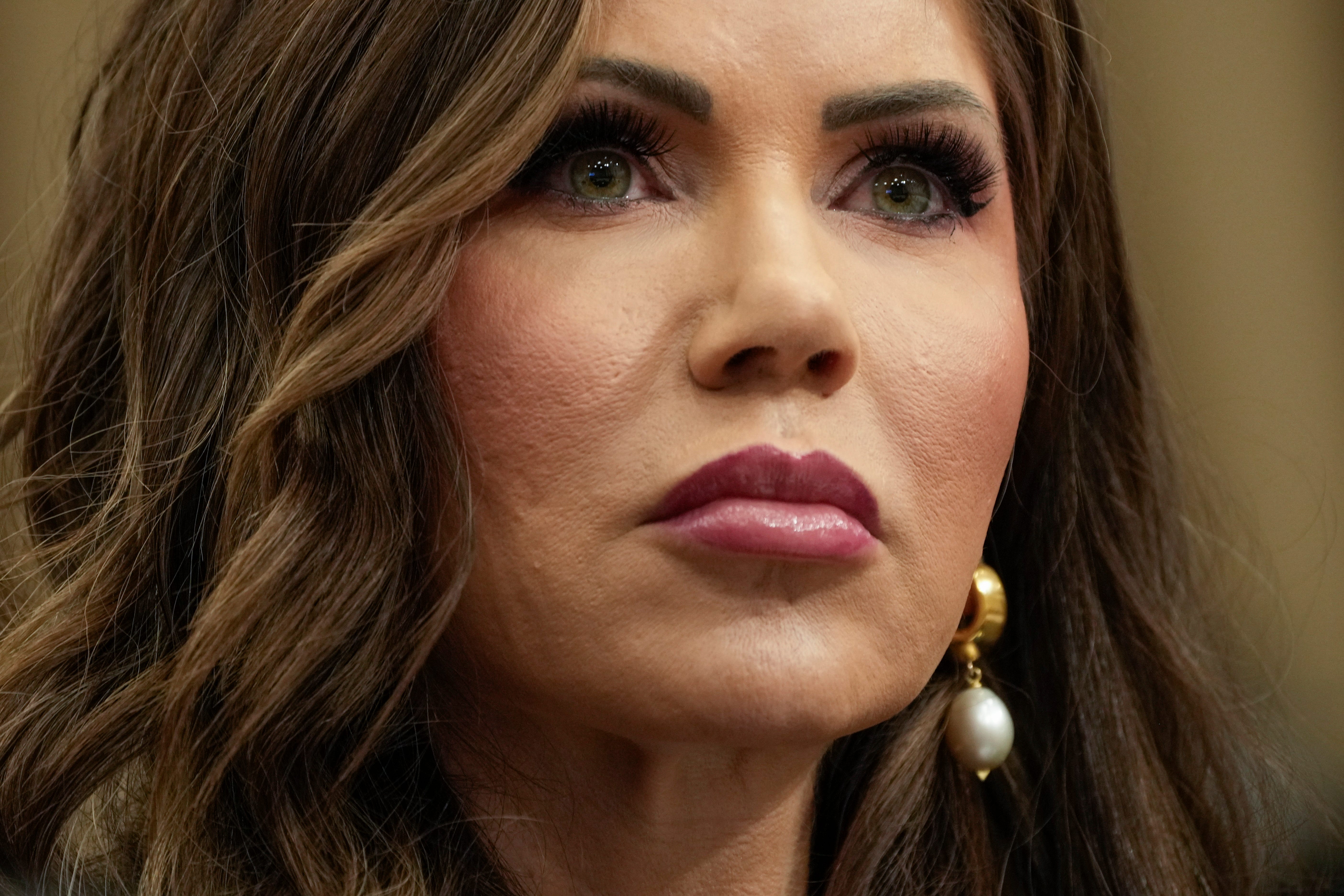
Kristi Noem tried to outrun the tape—and lost.
Appearing Sunday on Face the Nation, the homeland security secretary flatly denied that federal agents had used pepper spray or other chemical agents during immigration protests in Minnesota, dismissing a federal judge’s injunction as unnecessary and “a little ridiculous.” According to Noem, the court had barred conduct her department “already aren’t doing.”
Then the video rolled.
Confronted with footage showing federal agents deploying chemical irritants against demonstrators, Noem abruptly shifted her story. The agents weren’t at fault, she said. Protesters were. Chemical agents are “only” used when violence is happening, she insisted, even as the court record said otherwise.

On Friday, U.S. District Judge Kate M. Menendez issued a sweeping injunction after finding that chemical agents had been used against protesters on at least four occasions. The evidence, she wrote, was “uncontroverted.” Federal agents, the ruling said, used chemical irritants to punish people for exercising “protected First Amendment rights to assemble and to observe and protest ICE operations.”
The order bars agents from using crowd-dispersal tools in retaliation for protected speech and from stopping or detaining protesters in vehicles unless they are forcibly obstructing law enforcement. Judge Menendez rejected the government’s claim that pepper spray was only used after agents were attacked, finding instead that protected conduct itself “motivated” the agents’ actions.

When asked about Noem’s televised denial and reversal, DHS spokeswoman Tricia McLaughlin sidestepped the contradiction. She emphasized that assaulting or obstructing law enforcement is a felony and accused protesters of tampering with vehicles and attacking officers with fireworks and cars—claims the judge had already weighed and found insufficient to justify the blanket use of chemical agents.
The injunction stems from a lawsuit filed by Minnesota activists in December, weeks before the Jan. 7 killing of Renee Good, a 37-year-old U.S. citizen shot by an immigration agent during an operation in Minneapolis. Good had partially blocked a roadway in her SUV and did not immediately comply with commands to exit the vehicle. As she began to drive away, an agent near the front of the car opened fire, killing her.
Despite the fatal shooting and the court’s findings, the Justice Department has declined to investigate the agent. On Sunday, Deputy Attorney General Todd Blanche defended that decision on Fox News Sunday, arguing that opening an investigation would bow to “pressure from the media” and politicians. Federal prosecutors in Minnesota have since resigned over the department’s push to investigate Good’s widow instead.

Noem told CBS that DHS is conducting an internal review of the shooting, following the “exact same investigative and review process” it has used for years. Critics say that assurance rings hollow amid a crackdown they argue relies on racial and ethnic profiling and indiscriminate force.
The administration insists the operations target violent criminals. DHS has repeatedly said about 70 percent of those detained have been charged or convicted of a crime—a figure roughly consistent with independent analysis. But Noem went further on Sunday, claiming that “every single individual” arrested had broken the law and that 70 percent had committed or been charged with violent crimes specifically.
Asked to clarify, McLaughlin did not. She simply repeated the department’s broader statistic.
The tape, meanwhile, remains unblinking: denial, rewind, blame.