
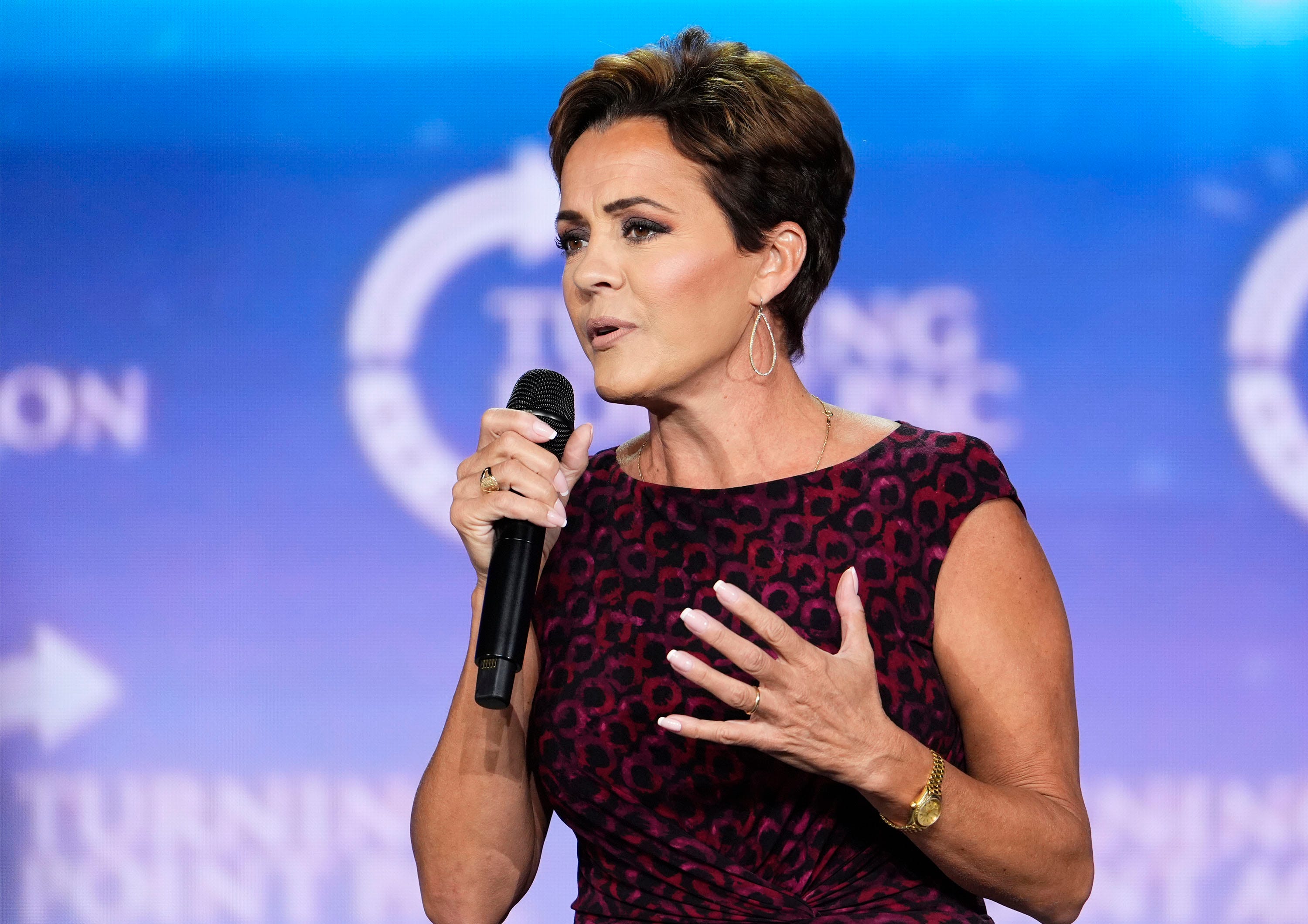
A fierce new media battle has erupted inside the Trump administration as adviser Kari Lake confirmed she blocked Radio Free Europe and Radio Liberty from using a U.S. government transmitter in the Middle East to broadcast updates from Iran’s sweeping anti-regime protests.
Lake, a longtime MAGA loyalist now serving as CEO of the U.S. Agency for Global Media, acknowledged this week that her agency restricted access to a USAGM transmitter in Kuwait, arguing the move was necessary to avoid sending “mixed messages” during a volatile moment overseas.

The confirmation came as Iran imposed a near-total communications blackout while security forces carried out a brutal crackdown that has left hundreds, and possibly thousands, of unarmed protesters dead. President Donald Trump has publicly voiced support for Iranian demonstrators, promising that “help is on the way” even as he threatens military action against Tehran.
Lake took to Facebook Tuesday night to dismiss reporting that accused her of stifling coverage.
“The fake news is in hyperdrive spreading lies right now about USAGM and RFE/RL broadcasting in Iran,” Lake wrote. She claimed that coverage into Iran had actually increased, pointing to expanded programming from Voice of America’s Persian-language service.
Lake said she personally contacted Radio Free Europe/Radio Liberty leadership, urging tighter alignment with U.S. foreign policy. According to her account, RFE/RL president Steve Capus agreed that messaging should be unified so as not to confuse Iranians risking their lives in the streets.

But Lake alleged that RFE/RL failed to follow through.
“USAGM’s commitment is to ensure coverage is consistent with American national interests,” she wrote, adding that her agency was waiting for Capus to confirm changes before restoring access to the transmitter.
Over the weekend, RFE/RL announced it had resumed shortwave radio broadcasts into Iran after the regime shut down internet access nationwide. The outlet said it was working with commercial vendors to get Radio Farda, its Persian-language service, back on the air.
“At this historic moment, when the Iranian people have been plunged into digital darkness by their government, Radio Farda’s return to the airwaves is an essential breakthrough,” Capus said in a statement, emphasizing the network’s mission to deliver lifesaving information and amplify Iranian voices.
Status News first reported that Lake was blocking RFE/RL from using the USAGM transmitter, a move critics say undercuts Trump’s public posture of solidarity with Iranian protesters. Lake did not directly say whether the restriction would be lifted, instead offering a vague assurance that USAGM was working “in close coordination” with RFE/RL.
The dispute comes amid a yearlong effort by the Trump administration to dismantle USAGM and its outlets, including Voice of America. In March, Trump signed an executive order calling for the agency’s effective shutdown, branding VOA the “Voice of Radical America” and accusing it of pushing propaganda at taxpayer expense.
Courts have repeatedly blocked attempts to fire hundreds of journalists and shutter operations, leaving many broadcasters in limbo. Despite that, some overseas outlets, including Radio Free Asia, have slowly resumed limited operations.
Now, Congress appears poised to push back. A bipartisan spending bill unveiled this week would allocate $643 million for USAGM broadcasting, far more than the Trump administration requested, though still below previous funding levels.
Two House Republicans told Politico they want the administration to fully deploy international broadcasting as tensions with Iran escalate.
“This is exactly why U.S. international broadcasting exists,” Rep. Michael McCaul of Texas said. “Now is the time to fully implement and resource our capabilities to ensure the regime cannot cut its people off from the truth.”



