
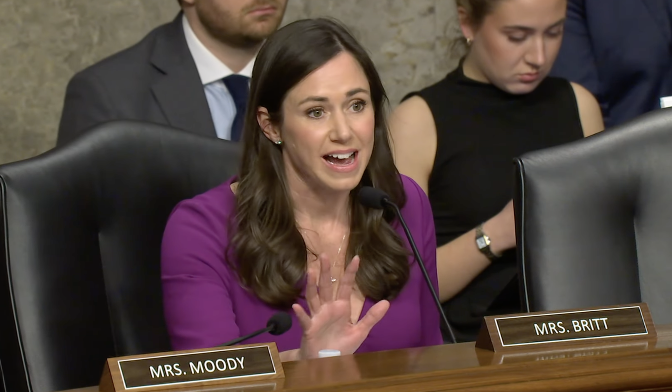
Sen. Katie Britt participated in a Senate hearing focused on the federal government’s handling of Afghan parolees following the U.S. withdrawal from Afghanistan under the Biden administration. The hearing examined how evacuees were admitted, how screening and vetting were conducted during an emergency, and what lessons should be applied to future crises.
Britt described the Biden administration’s withdrawal from Afghanistan as a moment that generated strong reactions among constituents in Alabama and across the country. She said the chaotic nature of the evacuation raised serious concerns about preparedness, leadership, and public safety. While noting that she was not serving in the Senate at the time, Britt emphasized that Congress has a responsibility to understand what went wrong and ensure that similar failures do not occur again.
A central focus of her questioning involved oversight reports produced by inspectors general within the Department of Homeland Security (DHS) and the State Department. Britt cited a DHS report from 2022 that documented significant gaps in the data collected on Afghan evacuees admitted to the United States through humanitarian parole during the Biden administration. According to the report, hundreds of individuals were admitted with missing or incomplete identifying information, including unknown names, missing surnames, and placeholder birthdates. Britt argued that these findings highlighted weaknesses in the vetting and data systems used during the evacuation.
She pressed witnesses on whether DHS had implemented key recommendations intended to address these shortcomings. One major recommendation called for DHS to develop a comprehensive contingency plan to guide screening and vetting during future emergency evacuations. Oversight officials testified that DHS did not agree with that recommendation and has not taken steps to implement it. Other recommendations, such as formalizing processes for collecting, tracking, and sharing evacuee data across agencies, also remain open.
At the same time, witnesses acknowledged that some progress has been made since the evacuation. Across two major reports on screening and vetting, inspectors general issued ten recommendations, eight of which have since been closed. These actions included improvements to recurrent vetting procedures and certain internal processes, many of which were implemented within months of the reports’ release during the Biden administration.
However, witnesses emphasized that unresolved issues remain significant. One ongoing problem is the lack of clarity among DHS components—Customs and Border Protection (CBP), U.S. Citizenship and Immigration Services (USCIS), and Immigration and Customs Enforcement (ICE)—over which agency is responsible for tracking the expiration of parole and managing follow-up actions. Oversight officials also cited persistent data quality issues, noting that inaccurate or incomplete records can undermine both security efforts and administrative accountability.
Britt asked what steps Congress could take to address these unresolved concerns. Witnesses pointed to the need for clearer statutory guidance, stronger oversight, and sustained follow-through on existing recommendations, particularly those related to interagency coordination. They also noted that the Department of Defense still has outstanding recommendations that, if implemented, could improve future evacuation and screening operations.
In her closing remarks, Britt emphasized the importance of bipartisan cooperation. She framed the discussion not as a retrospective exercise, but as a forward-looking effort to improve readiness and coordination in future humanitarian emergencies. The hearing highlighted that while the Biden administration has addressed some deficiencies identified after the Afghanistan withdrawal, significant questions remain about vetting, data management, and accountability when the federal government responds to large-scale crises.
Source: Senator Katie Boyd Britt



