
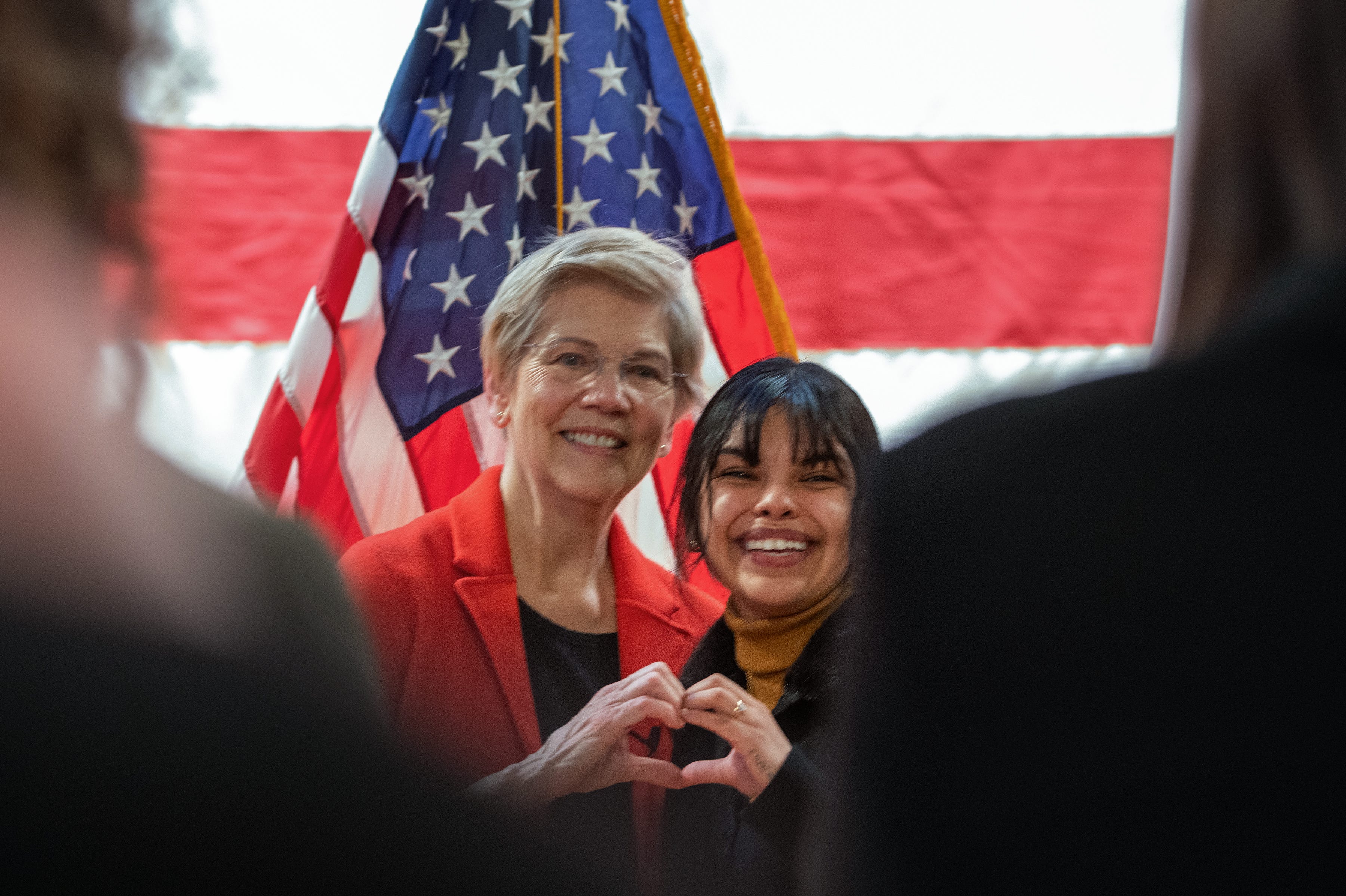
Progressive lawmakers Elizabeth Warren and Alexandria Ocasio-Cortez are seizing an unexpected political opening after President Donald Trump announced support for a temporary cap on credit card interest rates—an idea they have championed for years.
Trump said in a January 9 Truth Social post that Americans are being “ripped off” by credit card companies charging interest rates as high as 20 to 30 percent, and endorsed a one-year cap of 10 percent. While the proposal’s path through Congress remains uncertain, it has energized progressives who see a rare chance to advance long-stalled consumer protection legislation.

Warren, one of the Senate’s most vocal critics of the credit card industry, revealed that Trump personally called her after a speech in which she blasted his economic agenda for failing to bring down everyday costs.
“After my speech, the President called me, and I delivered this same message on affordability to him directly,” Warren said in a statement. She told Trump that Congress could cap credit card interest rates if he was willing to fight for it, and urged him to pressure House Republicans to pass the bipartisan ROAD to Housing Act to lower housing costs.
A White House spokesperson confirmed the two had a “productive call” focused on credit card interest rates and affordability, marking a rare moment of alignment between Trump and one of his most persistent progressive critics.

Ocasio-Cortez, meanwhile, has already laid the groundwork in the House. In March 2025, she introduced legislation mirroring a Senate bill from Bernie Sanders and Republican Sen. Josh Hawley that would cap credit card interest rates at 10 percent for five years.
“Credit cards with high interest rates regularly trap working people in endless cycles of debt,” Ocasio-Cortez said at the time. “At a time when families are struggling to make ends meet, we cannot allow big banks to shake down our communities for profit.”
The issue cuts across ideological lines because of timing as much as policy. With holiday bills landing in January, voters are acutely aware of rising interest charges. Political scientists say that makes the issue potent—even if legislation ultimately stalls.

Warren and Sanders have long argued that credit card companies profit by burying consumers in debt, while critics warn that a hard cap could restrict access to credit or push banks to raise annual fees. Industry groups including the American Bankers Association have warned that a 10 percent cap would be “devastating” for consumers and small businesses.
Still, progressives see momentum. Nearly three-quarters of Americans have at least one credit card, according to the Federal Reserve Bank of New York, and the average interest rate now hovers near 20 percent. That reality has given Warren and Ocasio-Cortez a powerful talking point—and a rare chance to force action.

While Warren continues to criticize Trump on other fronts and Sanders has questioned whether the president’s support is sincere, both lawmakers are pressing forward, betting that public anger over debt may succeed where ideology has failed.
For Warren and AOC, the moment is less about Trump and more about leverage. After years of warning about debt traps and corporate power, they now have a political opening—and they intend to push it as far as it will go.



