
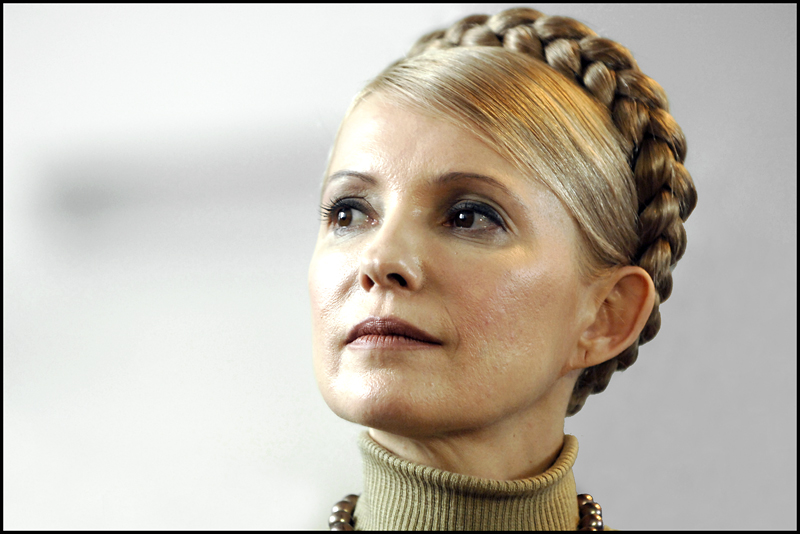
Former Ukrainian prime minister Yulia Tymoshenko has accused authorities of launching a politically motivated crackdown as corruption investigators raided her offices in a probe into alleged bribery of members of parliament.
The investigation centers on claims that lawmakers were paid to influence parliamentary votes. Tymoshenko, a senior lawmaker and longtime political heavyweight, forcefully denied the allegations, calling them a pretext for sidelining rivals ahead of future elections.
“I categorically reject all these absurd accusations,” Tymoshenko wrote in a statement posted to Facebook. “It seems the elections are much closer than it appeared, and someone has decided to begin a purge of competitors.”

Ukraine has not held presidential elections since Russia’s full-scale invasion began, with voting constitutionally barred under martial law. President Volodymyr Zelensky has said elections could take place quickly once peace or a ceasefire is achieved, though he has also suggested he may not seek another term, describing himself as a wartime leader rather than a peacetime one.
Tymoshenko, now a People’s Deputy representing the Batkivshchyna party, is widely viewed as a potential contender should elections resume—either against Zelensky himself or against one of his political allies if he steps aside.
“This is not the first political hit job against me,” Tymoshenko wrote. “Persecution and terror have been my daily reality for many years. No one can break me or stop me.”

Sept 21, 2023; Washington, DC, USA; Ukrainian President Volodymyr Zelensky meets with all 100 Senators in the Old Senate Chamber in the US Capitol in Washington, DC, on September 21, 2023. Ukrainian President Volodymyr Zelensky is in Washington meeting with members of Congress at the US Capitol, the Pentagon and US President Joe Biden at the White House to make a case for further military aid. Mandatory Credit: Shawn Thew/Pool via USA TODAY NETWORK
Zelensky was elected in a landslide victory in 2019, and his five-year term would have ended in May 2024 if not for the war. His approval ratings soared above 90 percent in the early days of Russia’s invasion and have since stabilized above 60 percent, though cracks have emerged. In July 2025, protests erupted after lawmakers aligned with Zelensky attempted to weaken Ukraine’s independent anti-corruption agencies—a move later reversed. He has also faced public anger over conscription policies and fallout from a $100 million corruption scandal in 2025 that ousted his chief of staff and longtime ally, Andriy Yermak.
Behind the scenes, Ukraine’s electoral future has already drawn international attention. In March last year, senior members of President Trump’s team held secret talks with Zelensky’s leading rivals, including Tymoshenko and former president Petro Poroshenko, to explore whether wartime elections were feasible. Both politicians confirmed the contacts but said they opposed holding elections while the country remains under attack.
Meanwhile, Russia’s invasion grinds on, with daily aerial strikes and heavy fighting along eastern front lines. The Trump administration continues to push for a peace agreement, but negotiations remain stalled over territorial control, security guarantees for Ukraine, and the future of the Zaporizhzhia nuclear power plant.



