
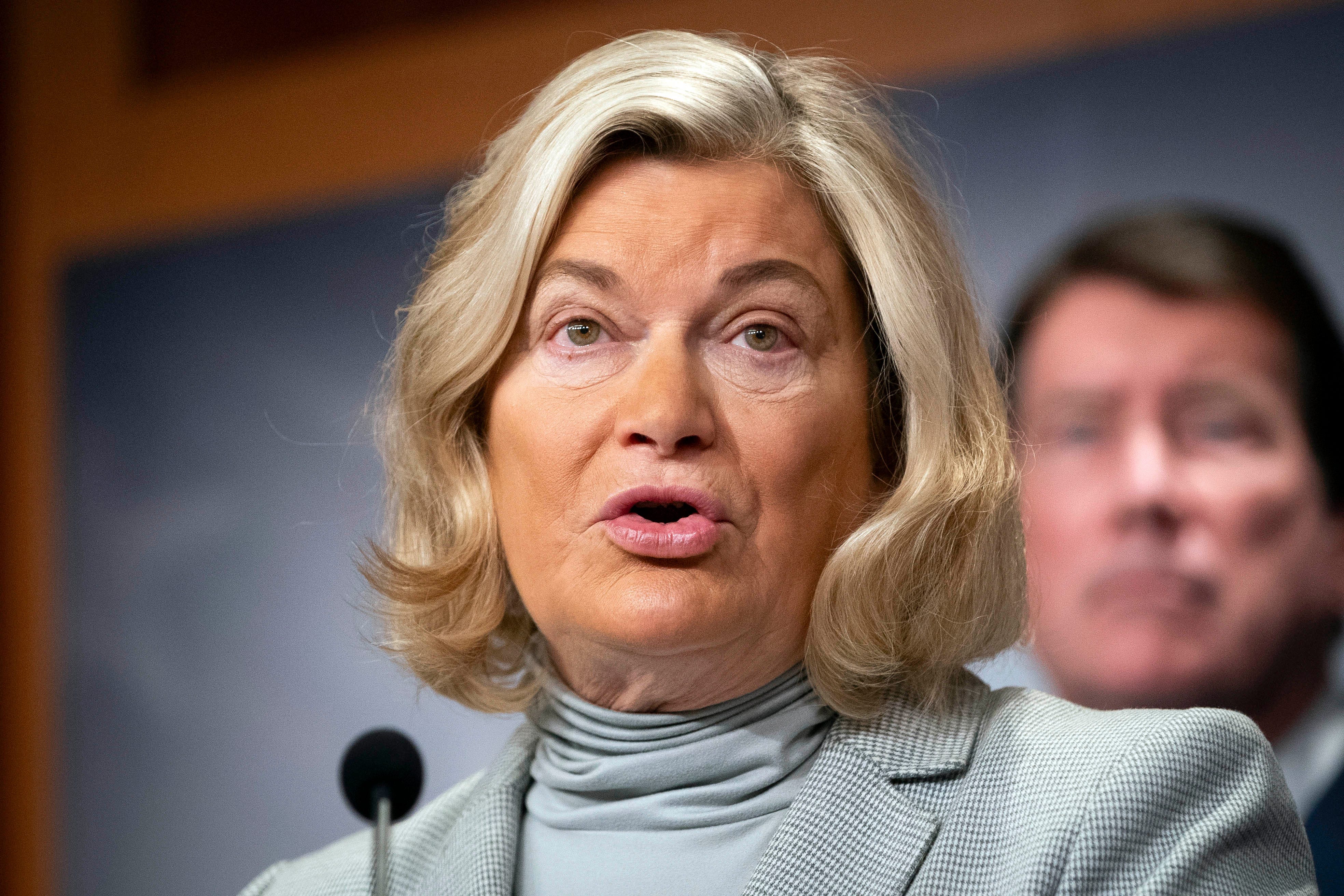
Senator Cynthia Lummis of Wyoming is stepping off the Capitol Hill treadmill.
The Republican lawmaker announced Friday that she will not seek re-election next year, ending her Senate career after a single term and opening the door to a wide-open primary in one of the country’s most conservative states.
In a blunt and unusually personal statement, Lummis cited the physical and mental toll of the job rather than political headwinds.
“Deciding not to run for re-election does represent a change of heart for me,” she said. “But in the difficult, exhausting session weeks this fall I’ve come to accept that I do not have six more years in me.”

Feb 11, 2025; Washington, D.C., USA; Senator Cynthia Lummis (R-WY) questions Jerome Powell, Chair of the Federal Reserve, during the Senate Banking, Housing, and Urban Affairs committee hearing in regards to The Federal Reserve’s Semi-Annual Monetary Policy Report. Mandatory Credit: Jack Gruber-USA TODAY
At 71, Lummis described herself as “a sprinter in a marathon,” conceding that the energy required for another term no longer matched what she could give. It was a rare moment of candor in a city where ambition usually outlasts honesty.
Her decision comes after a bruising year in Washington. Senators endured the longest government shutdown in U.S. history, followed by a cascade of all-night voting sessions, including the marathon effort to pass President Trump’s signature tax and spending cuts. By the end of the year, lawmakers had taken more than 600 roll call votes, the highest total in modern history.
Lummis is not alone in choosing the exit ramp. A growing number of Republicans have signaled they are ready to leave Congress, whether by declining re-election outright or pursuing executive offices back home. The churn reflects a party wrestling with internal divisions, relentless scheduling, and a governing style built on constant crisis.
Lummis’ political career, however, stretches far beyond her Senate tenure. She first made history in 1978 as the youngest woman ever elected to the Wyoming State Legislature, winning office at just 24 years old. She later served four terms in the U.S. House before stepping away in 2017, only to return to Washington as a senator in 2021.
On Capitol Hill, she carved out a distinct identity. Known for her ever-present smile and a Celsius energy drink rarely far from reach, Lummis became one of the Senate’s most vocal champions of cryptocurrency. Her enthusiasm earned her the nickname “Crypto Queen,” and she embraced the role fully, even adopting the “laser eyes” look favored by Bitcoin devotees on social media.

Jan. 25, 2024; Washington, D.C., USA; Senator Cynthia Lummis (R-Wyo.), left, and Senator Marsha Blackburn (R-TN), right, during a press conference talking about the Equal Representation Act. The core feature of this proposed legislation is the inclusion of a citizenship question in the decennial census, a move that aims to change the way congressional districts are apportioned. Mandatory Credit: Jack Gruber-USA TODAY
She backed and often led Republican efforts to roll back regulatory pressure on crypto companies and co-sponsored the Genius Act, which established a federal framework for stablecoins. Those efforts aligned her closely with Trump-era priorities and cemented her reputation as a trailblazer in a still-niche policy arena.
Colleagues praised her independence and energy following the announcement. Senator John Barrasso, Wyoming’s senior senator and the No. 2 Republican in leadership, called her a “straight shooter and a trailblazer,” saying the Senate will miss her presence and her unmistakable laugh.
For Wyoming Republicans, Lummis’ departure sets the stage for a competitive primary to replace a well-known figure. For Washington, it adds another name to the growing list of lawmakers quietly acknowledging what many rarely admit out loud: the job is grinding, unrelenting, and sometimes, even for true believers, no longer worth the cost.



