
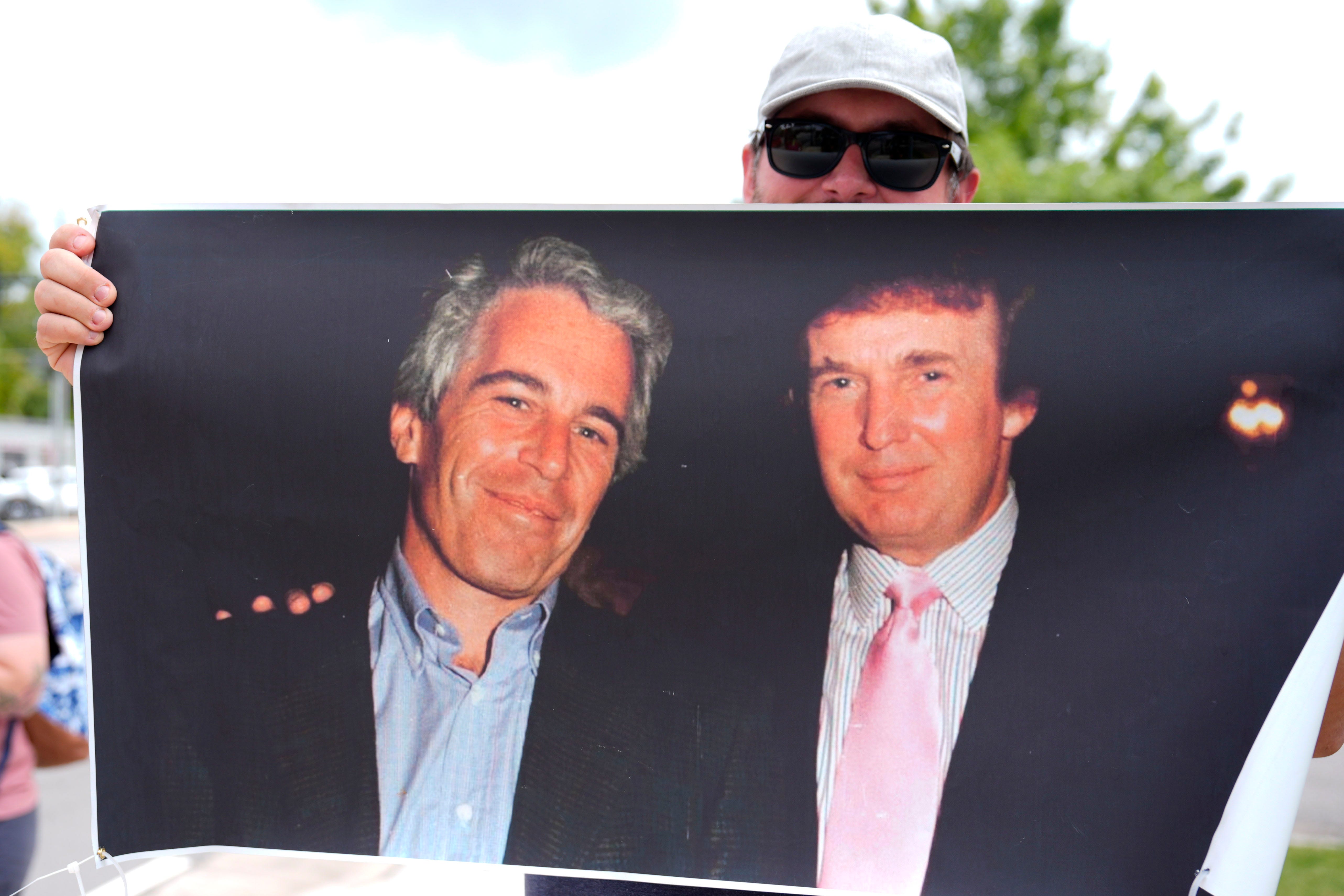
The Justice Department is insisting it has nothing to hide. Few people on Capitol Hill are buying it.
After releasing a limited, heavily redacted batch of documents tied to Jeffrey Epstein, the Trump administration now finds itself at the center of a widening political storm — one that threatens to entangle the president, fracture his party, and reopen old wounds for victims who have waited years for answers.
The partial disclosure was meant to meet a congressionally mandated deadline under the Epstein Files Transparency Act. Instead, it has fueled accusations of obstruction, incompetence, and quiet protection for powerful figures once connected to the disgraced financier, who died by suicide in federal custody in 2019.

The files that were released contained one explosive revelation: investigators identified roughly 1,200 victims or their relatives across Epstein’s sprawling network. The trove includes materials pulled from dozens of hard drives, computers, and CDs. Yet experts and lawmakers say the documents fall far short of what the law requires, with hundreds of thousands of pages still under review and many critical records missing.
Justice Department officials argue their caution is necessary to avoid exposing victims’ identities. Critics counter that the sweeping redactions go well beyond what the law permits and appear designed to shield politically sensitive information.
Democratic Rep. Jamie Raskin accused the department of acting in bad faith, saying the administration has shown little respect for survivors. He argued the limited release serves one purpose: keeping damaging details from ever seeing daylight.
On the Republican side, frustration is also boiling over. Rep. Thomas Massie, who helped lead the push to force disclosure, warned that the administration is violating both the spirit and the letter of the law. He said he would not consider the matter resolved until survivors themselves are satisfied.

That bipartisan anger is sharpening into threats. Massie’s Democratic counterpart, Rep. Ro Khanna, has warned that contempt proceedings could follow after the holidays if full compliance is not achieved, including daily financial penalties against Attorney General Pam Bondi.
Deputy Attorney General Todd Blanche dismissed those threats, saying the department is dealing with an overwhelming volume of material saturated with victim information. He insisted that no document would ever be released if it risked exposing survivors.
But the optics of the release have only deepened suspicion. The documents included references to Bill Clinton, including a photograph showing the former president in a pool next to a person whose face was redacted. Meanwhile, references to Donald Trump were scarce. A photograph that appeared to show Trump among images inside an open desk drawer briefly disappeared from a Justice Department website before being restored, with officials citing victim-protection concerns.
Neither Trump nor Clinton has been accused of criminal wrongdoing related to Epstein. Still, Clinton allies have accused the administration of using selective disclosure to deflect attention away from Trump’s past association with Epstein — a relationship Trump says he later severed.
The controversy has carved new fault lines within the Republican Party and the MAGA movement, where Epstein has long been a potent symbol of elite corruption and institutional rot. For years, Trump’s base has fixated on the case as proof of a hidden establishment protecting its own. Now, limited disclosures risk reinforcing exactly that belief.
The stakes are growing more serious by the day. Lawmakers are debating whether to escalate through appropriations pressure, contempt votes, or impeachment threats — though some warn that symbolic gestures without bipartisan backing could backfire.

For Epstein’s victims, the political maneuvering feels painfully familiar. Many say the latest release represents yet another delay, another promise of transparency that dissolves into black ink.
“The victims want answers,” survivor Lisa Phillips said. “We want to connect the dots. We want our stories to make sense.”
Instead, they are watching Washington argue while justice once again slips out of reach. And in trying to contain the Epstein fallout, the Trump administration may have only guaranteed that the storm isn’t ending anytime soon.



